
FEFCO · 2D DIELINE
Shipping Carton
FEFCO 0211-1
Reverse Tuck End Container with Dust Flaps. A glued tube with a tuck panel on the top of one long wall and another on the bottom of the other, so the two close from opposite sides. The narrow walls carry a dust flap at each end. Hand holes in the narrow walls and a thumb notch are optional.
Use this templateInteractive 3D folding is available in the studio.
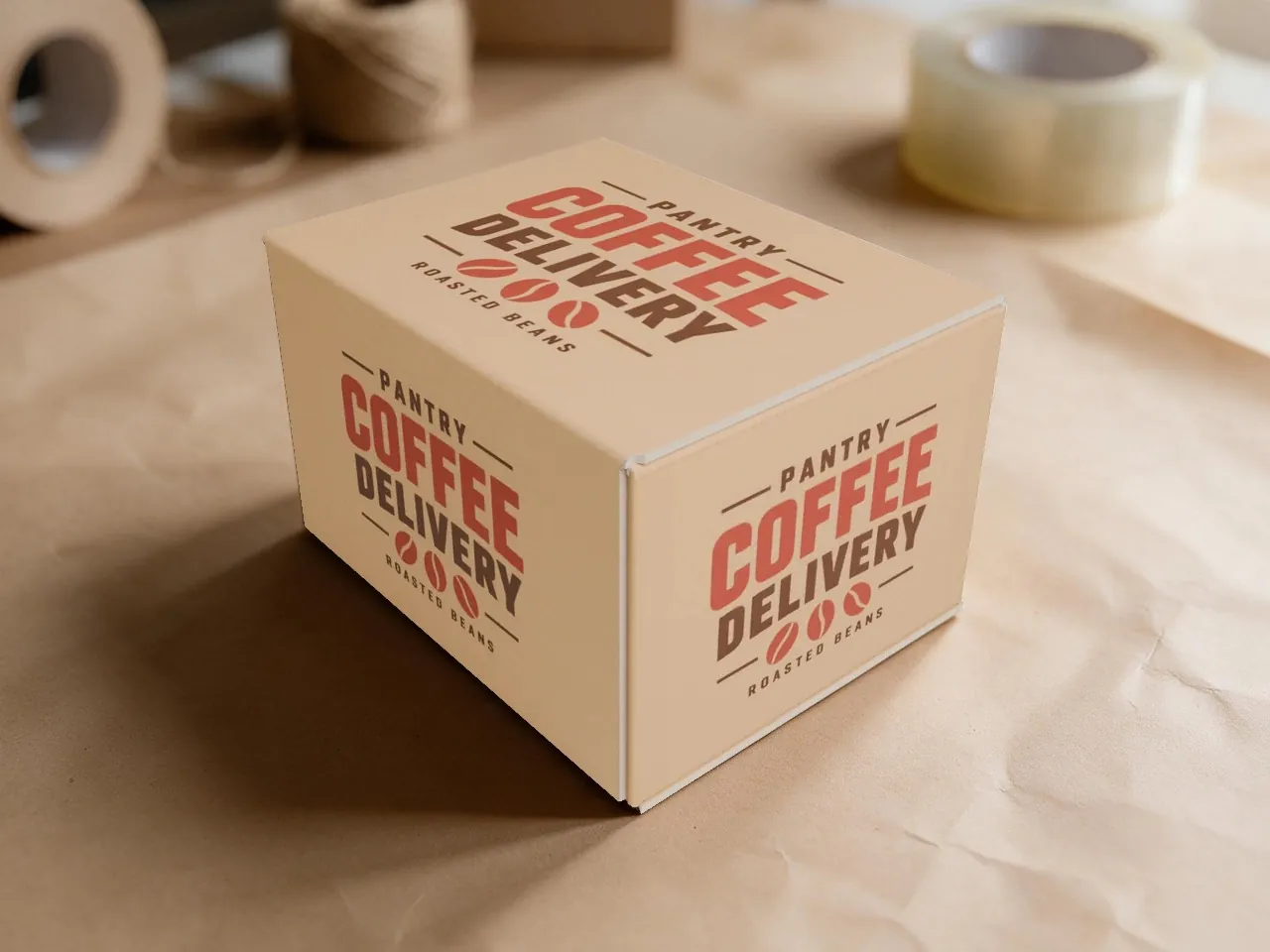
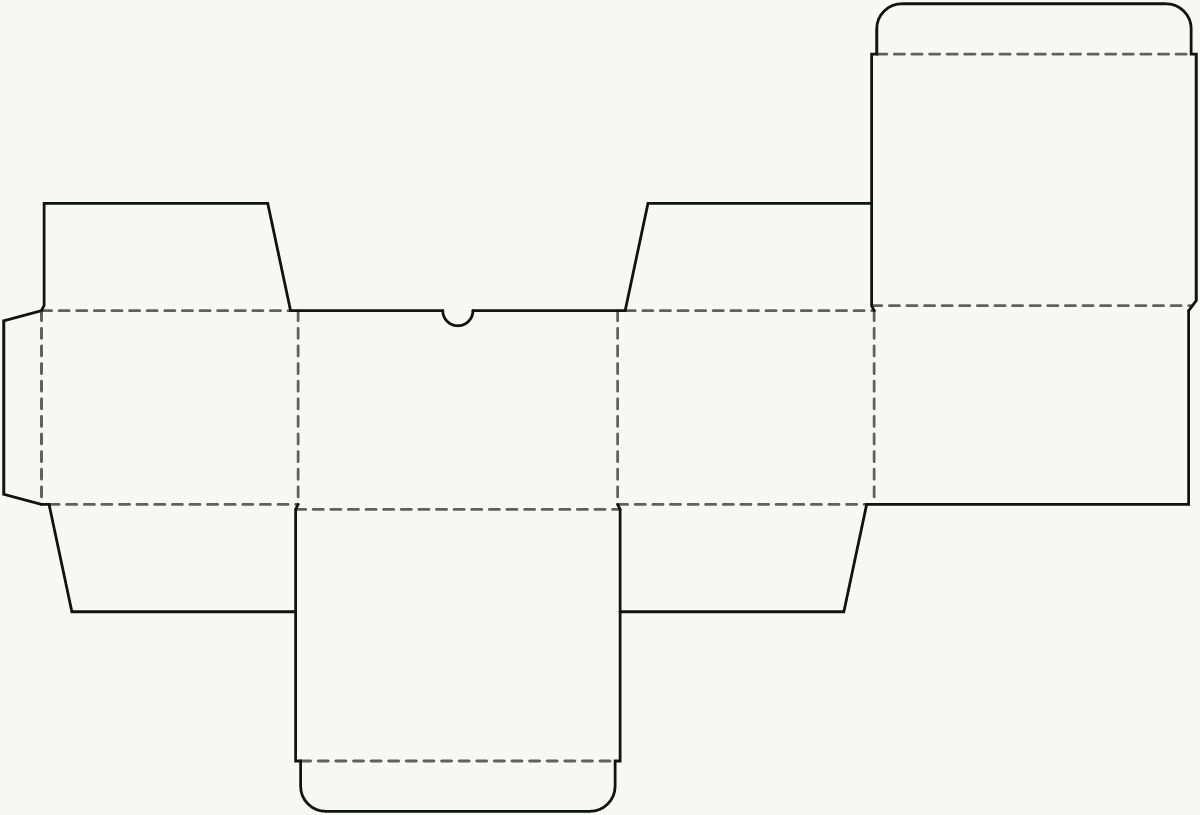
Artwork shown for illustration. Add your own in the studio.
CONSTRUCTION NOTES
About this construction.
Reading the code FEFCO 0211
The 02 series holds the slotted-type boxes: one-piece bodies die-cut from a single blank, joined with a glued, stitched or taped manufacturer's joint, and closed by flaps on the top and bottom. Slotted boxes ship flat and erect quickly, which is why this series carries most of the world's shipping cartons.
Within the series, 0211 is the design published as the Reverse Tuck End Box (tuck-in flaps top and bottom, opposite sides). The four-digit code carries the full structural intent — specify it to any converter and both sides mean the same construction; only dimensions and board grade remain to be agreed.
This template is catalogue variant 1 of the 0211 construction, with adjusted proportions or construction detail; the FEFCO code identifies the underlying design.
How the case behaves
The same tuck-and-dust-flap closure as the 0210 at each end, but the two tucks hinge from opposite panels. On the packing bench that lets one end be filled while the other is already closed.
Typical uses
The same duties as the 0210 where the packer wants the box to open from the front on the shelf and from the back on the bench, or where a design brief asks for the folding-carton look in corrugated.
Dimensions and board
The parameters above — internal length, width and depth, plus any construction-specific values this style needs — drive the whole blank: panel layout, flap depths and slot positions all derive from them, validated against the template's supported range. The 2D dieline and the 3D fold preview regenerate together from the same parametric structure.
A corrugated dieline is a starting point for production, not a substitute for converter judgment: flute profile, board grade and joint style all affect final dimensions and crush behavior. Confirm tolerances and material with your manufacturer before mass production — and erect the structure on screen first, so flap collisions and proportion problems surface before any tooling is ordered.
Industries and applications
Converters cut the Shipping Carton (FEFCO 0211-1) for shipping and transit cartons and e-commerce mailers and subscription boxes.
Shipping cartons are judged on stacking strength and the speed of closing on the packing bench.
COMMON QUESTIONS
Quick answers about this template.
What is Shipping Carton — Reverse Tuck End, Dust Flaps?
FEFCO 0211 is the reverse tuck end box: the same tuck-closed body as the 0210, but the top and bottom tucks fold from opposite sides. It is the corrugated counterpart of the folding-carton reverse tuck. This template is catalogue variant 1 of the construction.
Which dimensions does the Shipping Carton — Reverse Tuck End, Dust Flaps dieline need?
4 parameters drive the blank: L (length), W (width), D (depth), Corrugated cardboard thickness (mm). Each value is validated against the template's supported range, and the whole dieline regenerates from them.
Can I see how Shipping Carton — Reverse Tuck End, Dust Flaps folds before cutting it?
Yes. The interactive 3D fold preview and the 2D dieline are generated from the same parametric model, so the fold you watch on screen is the geometry of the sheet you cut. Open the template in the studio to fold it at your own dimensions; 3D folding comes with the Workshop and Line plans.