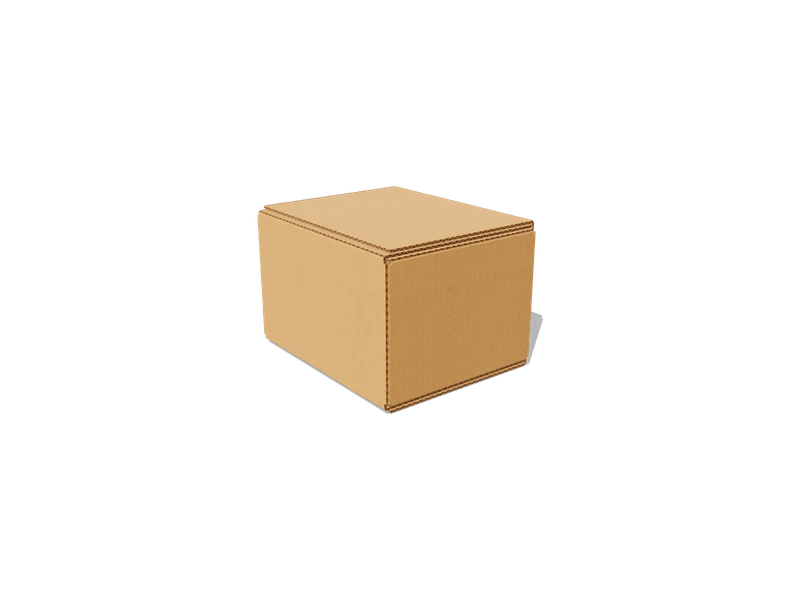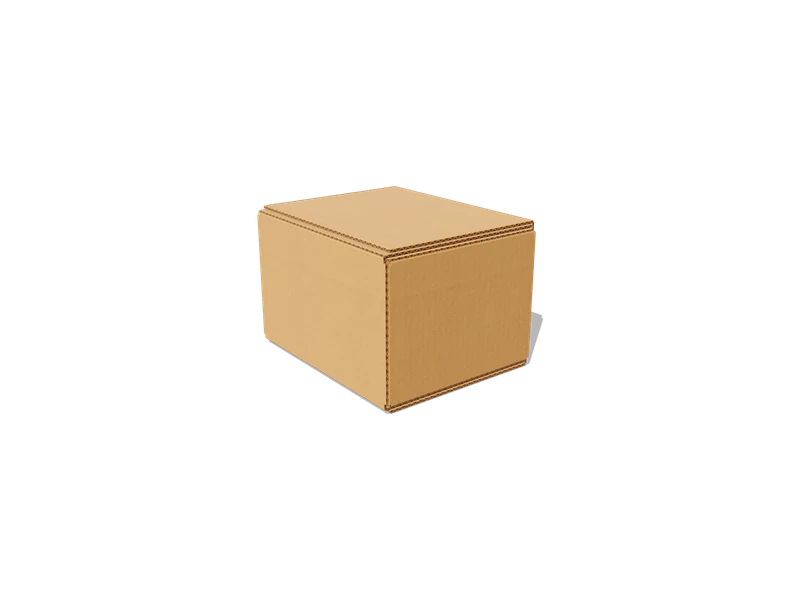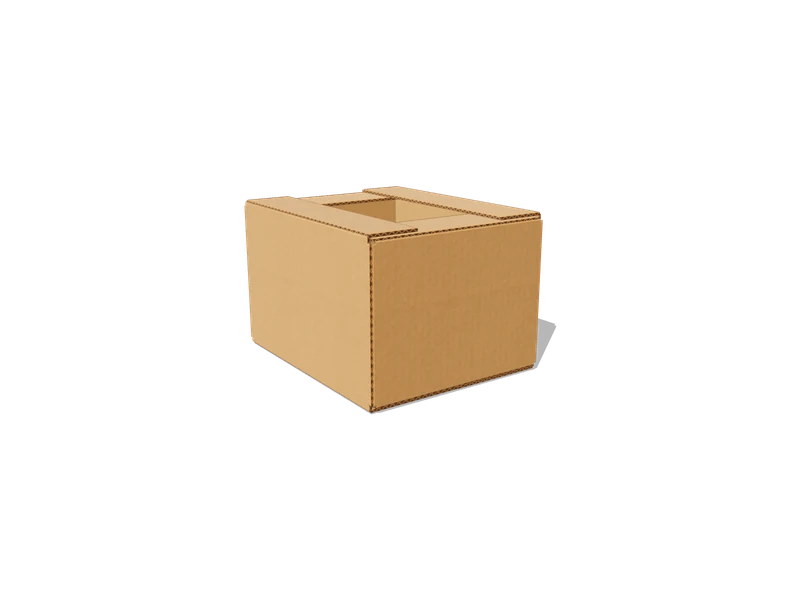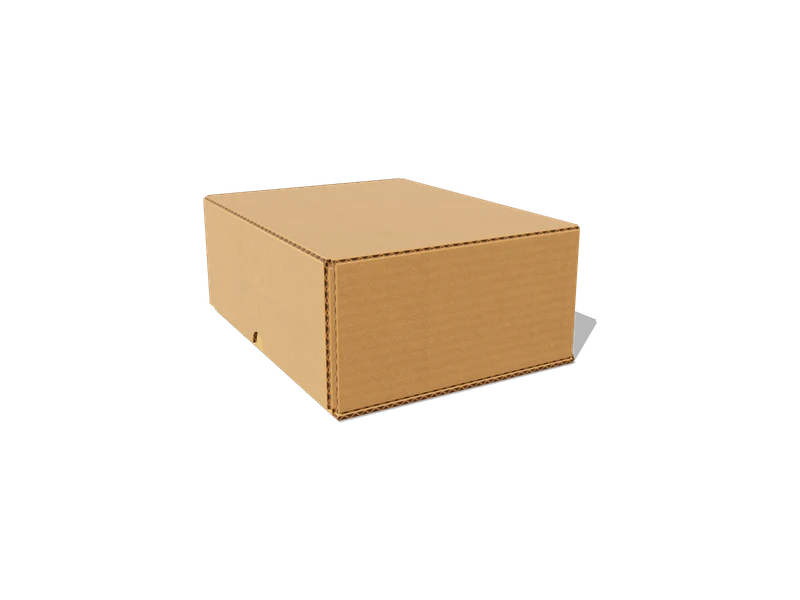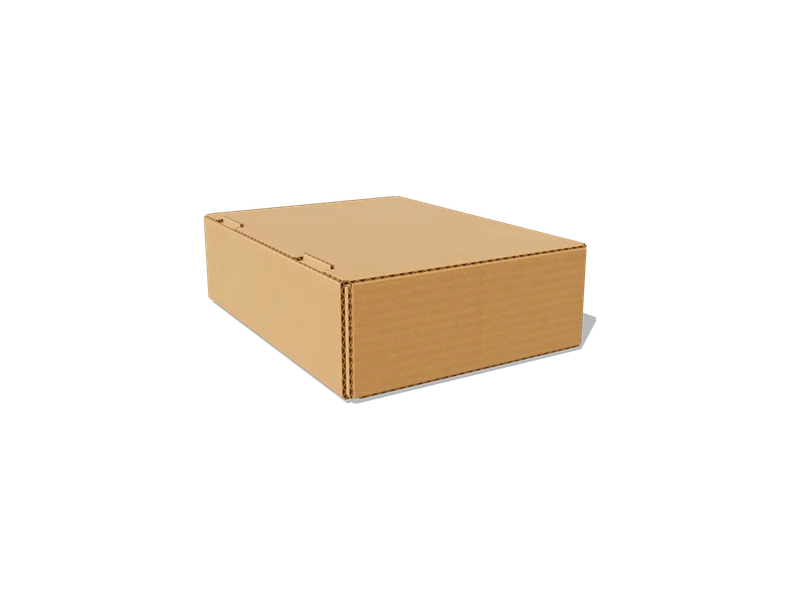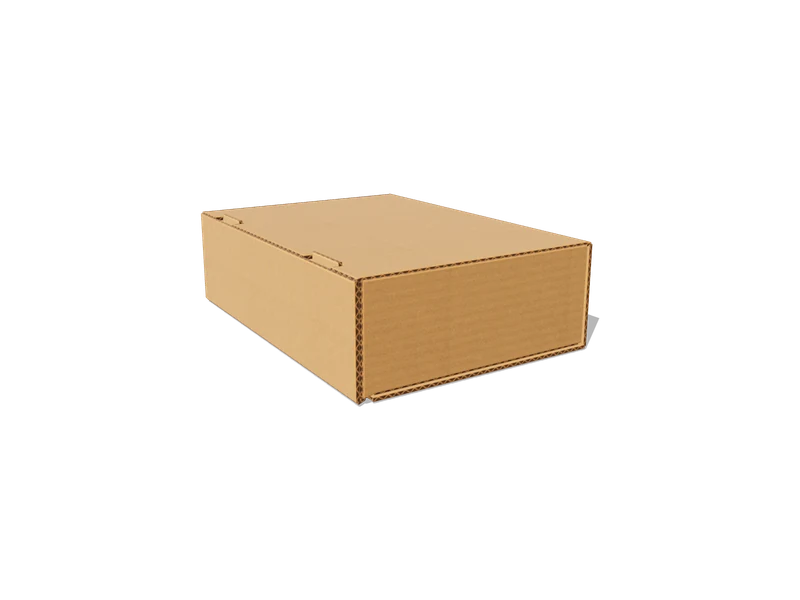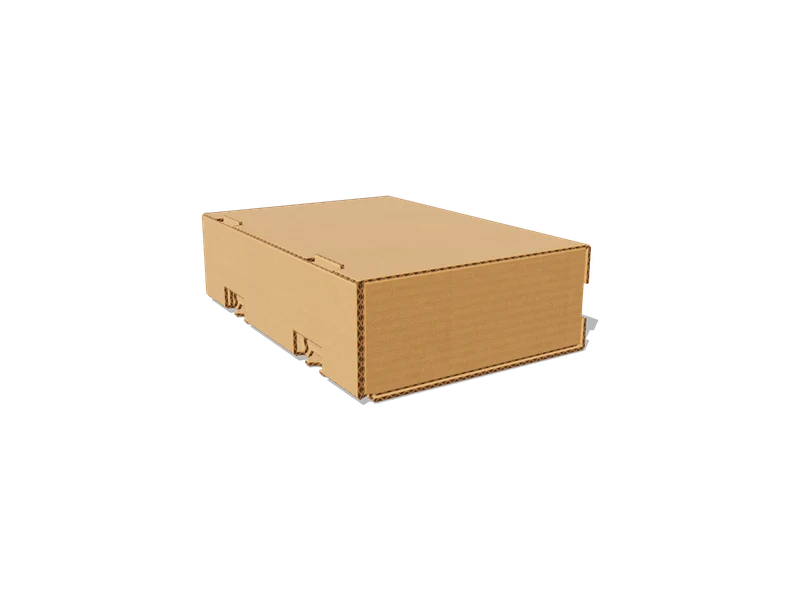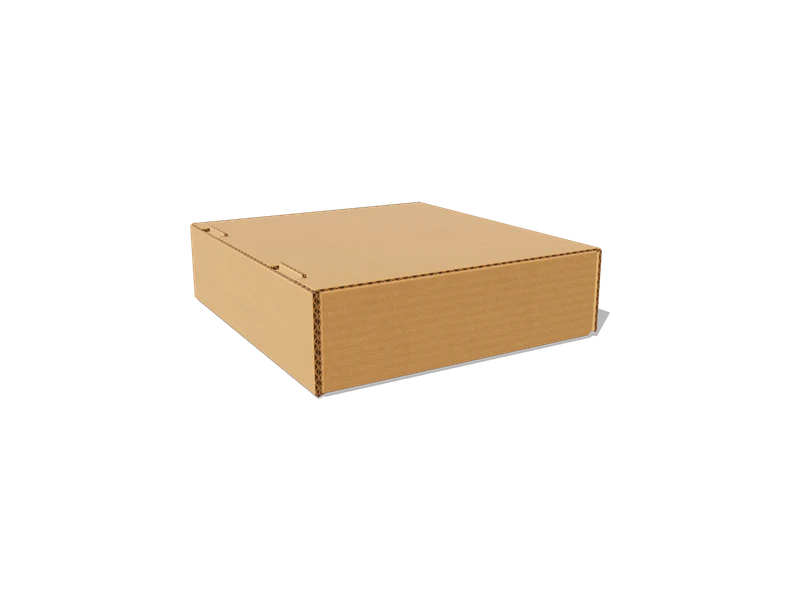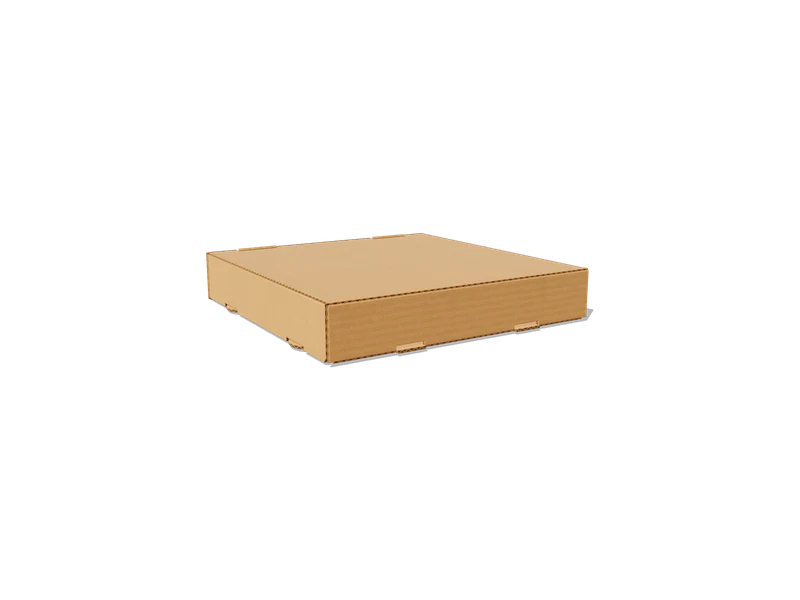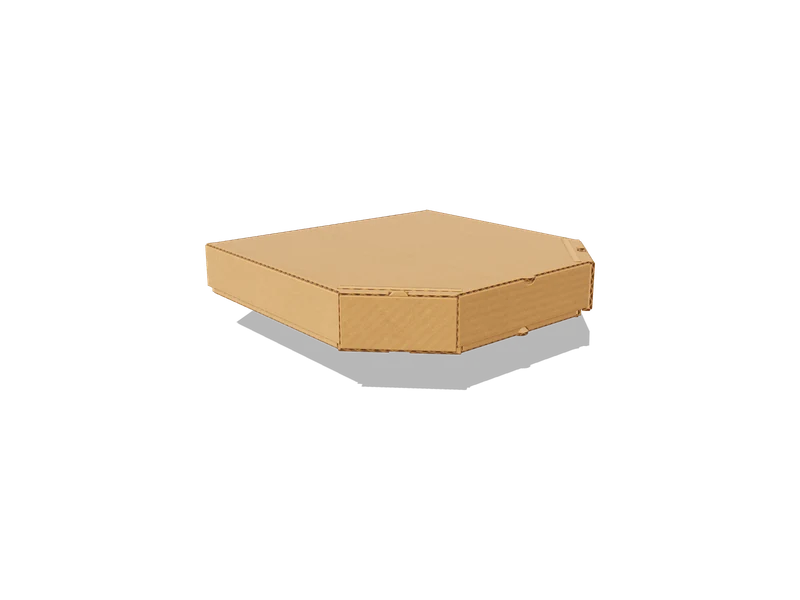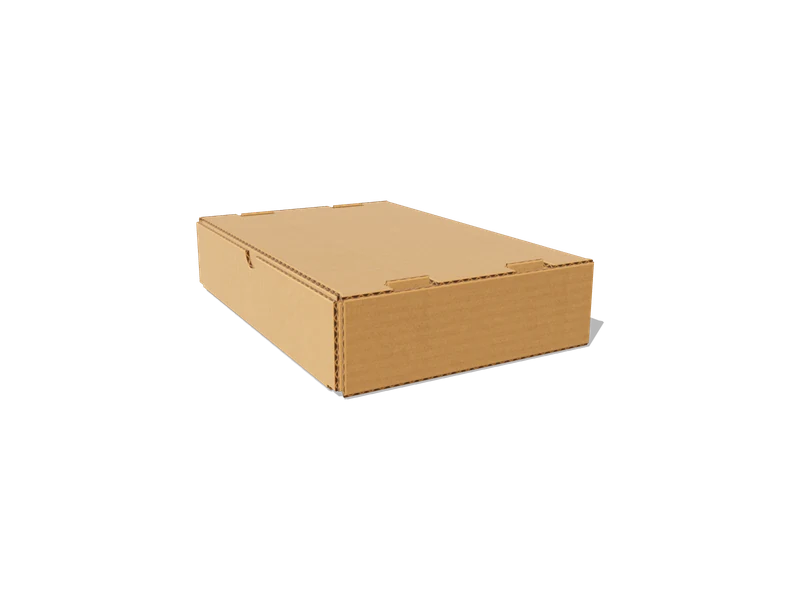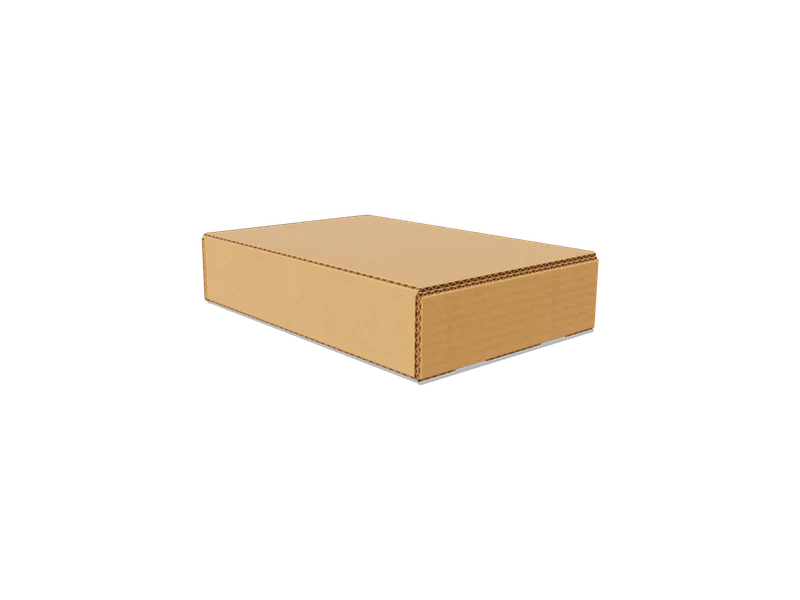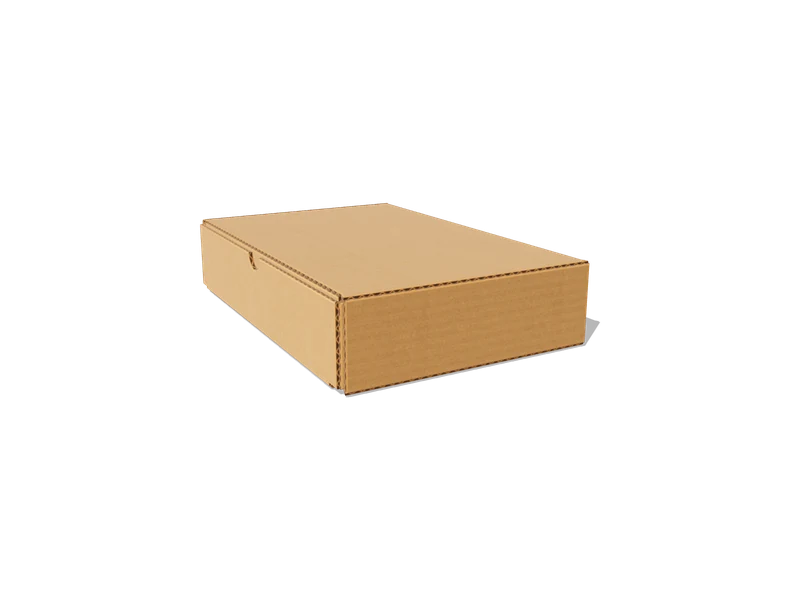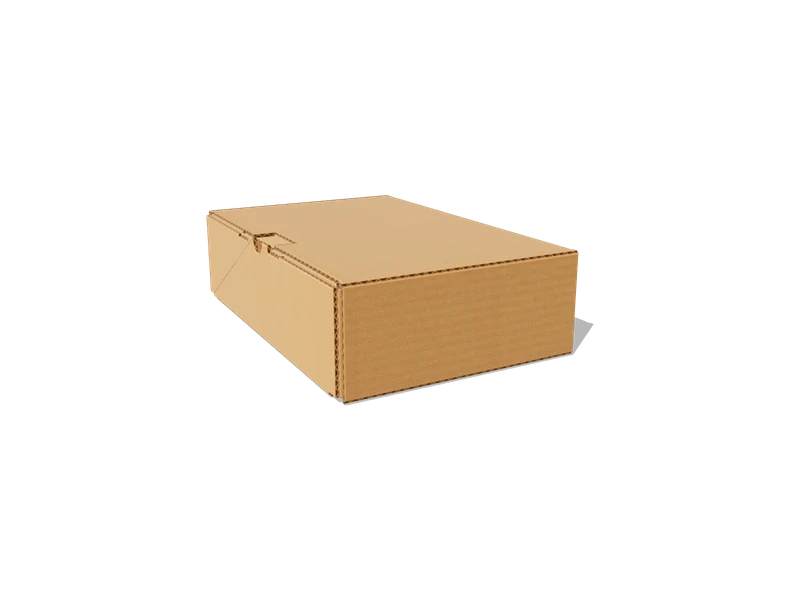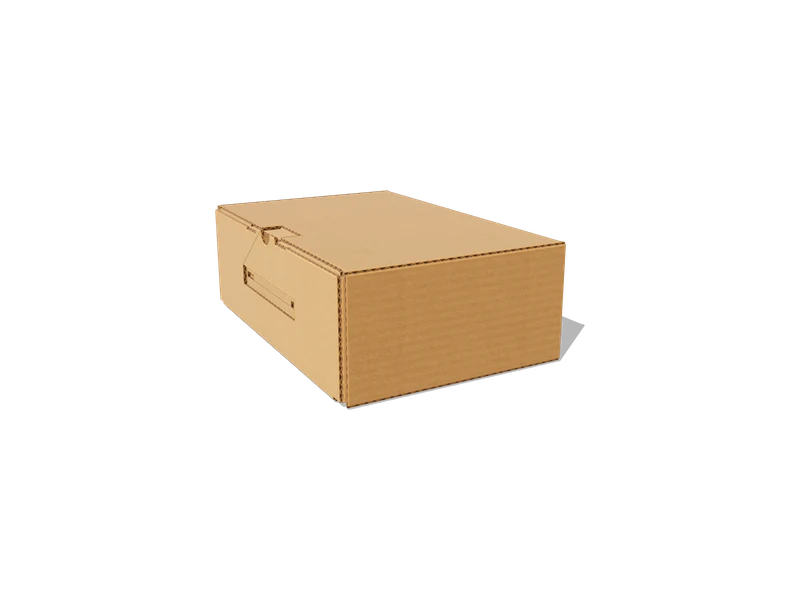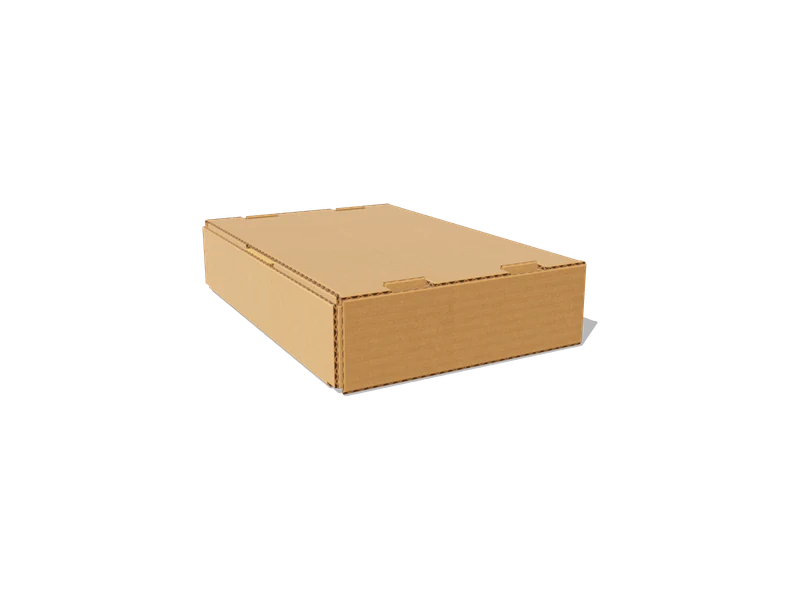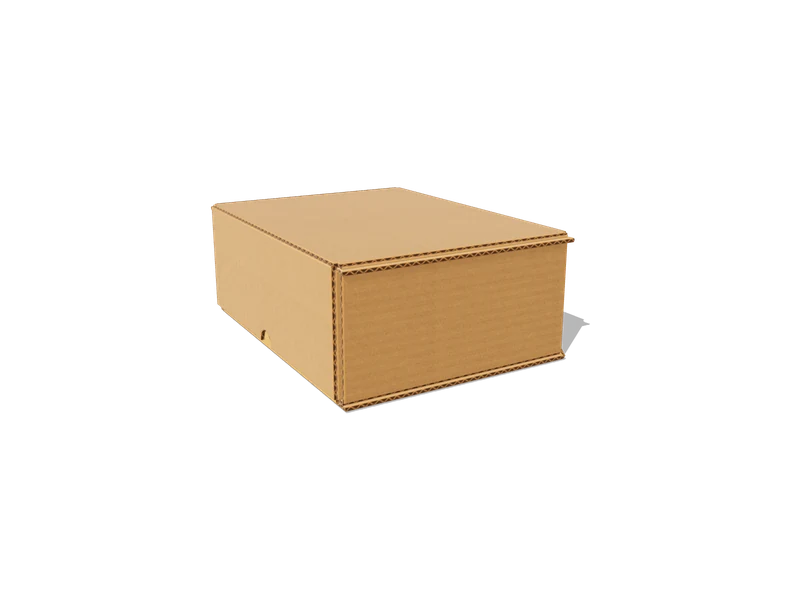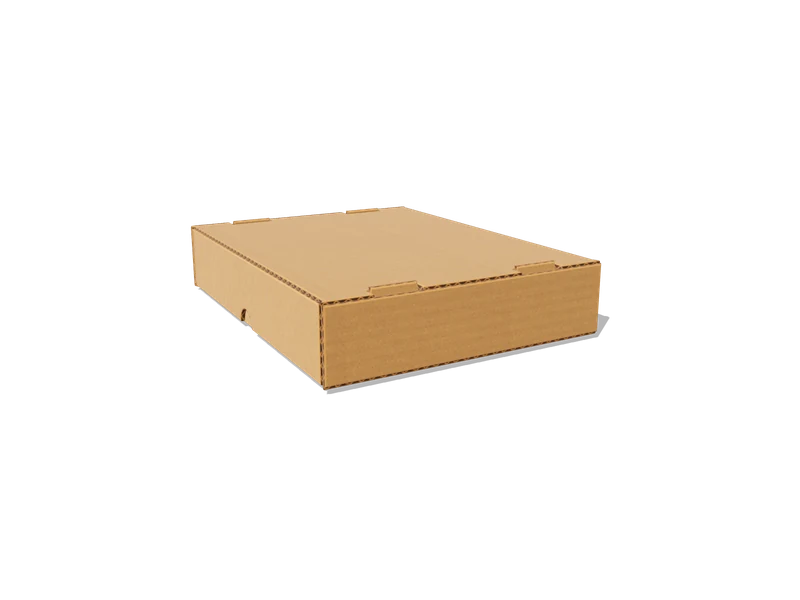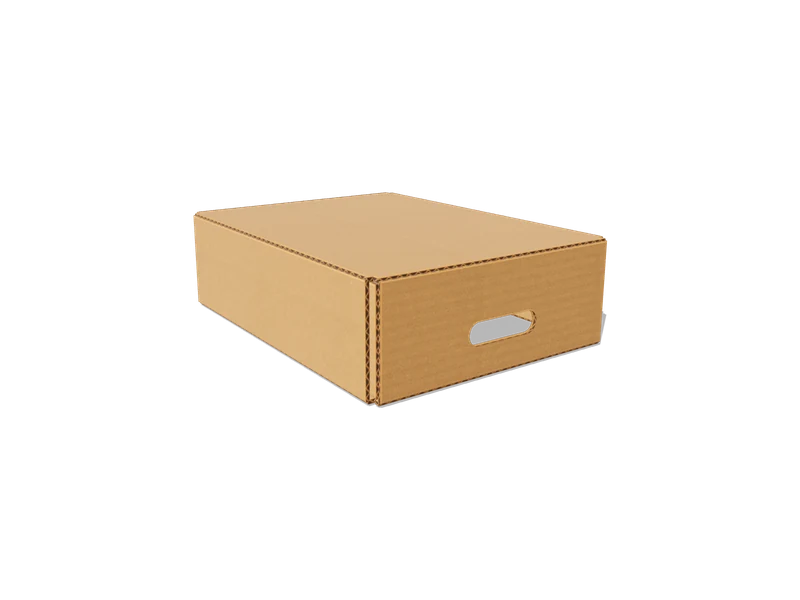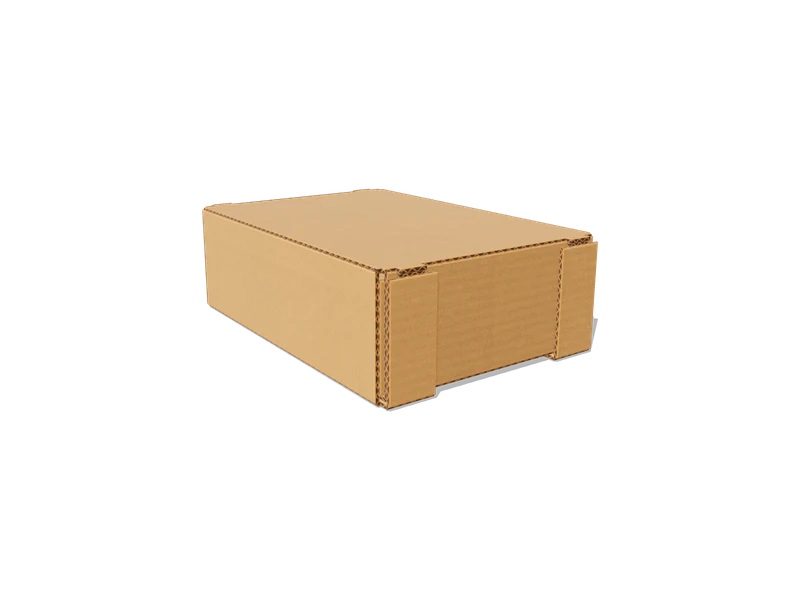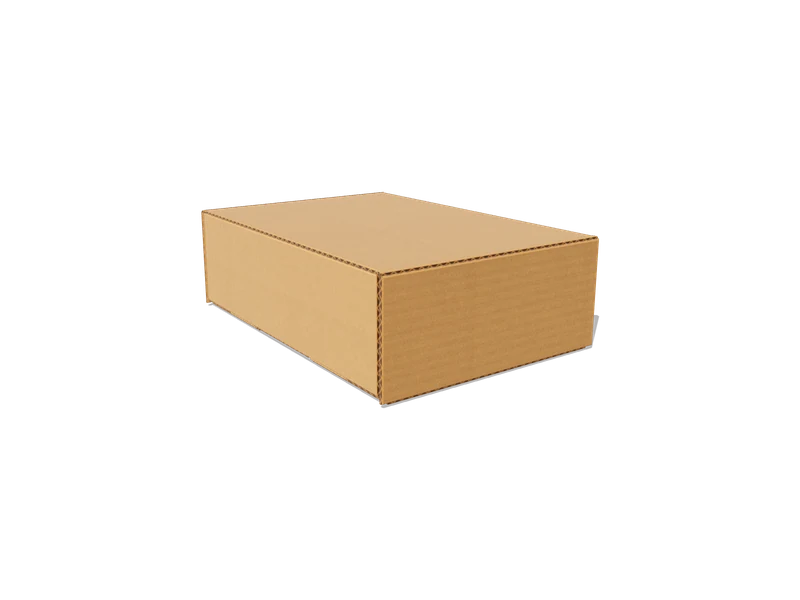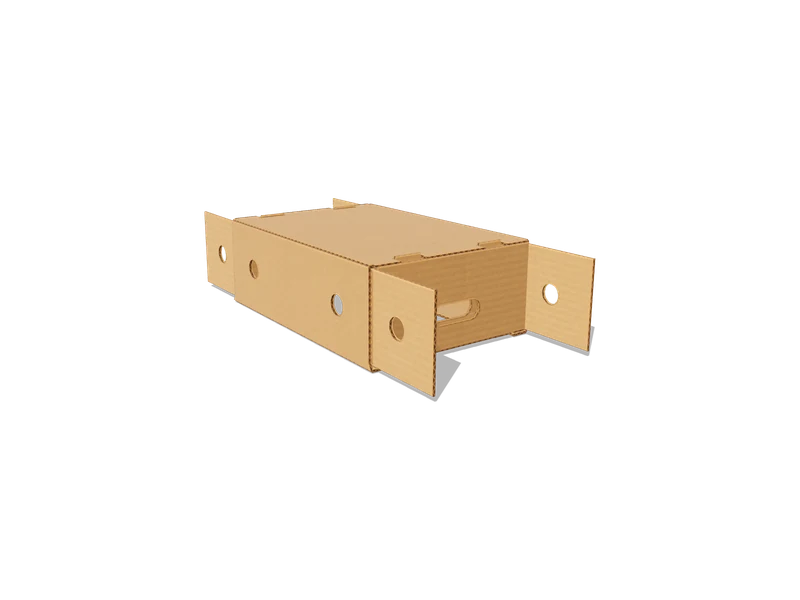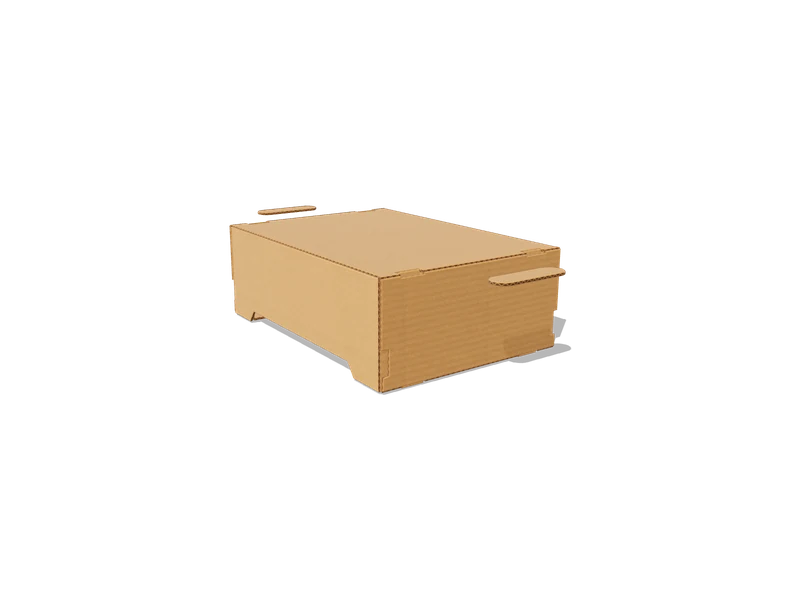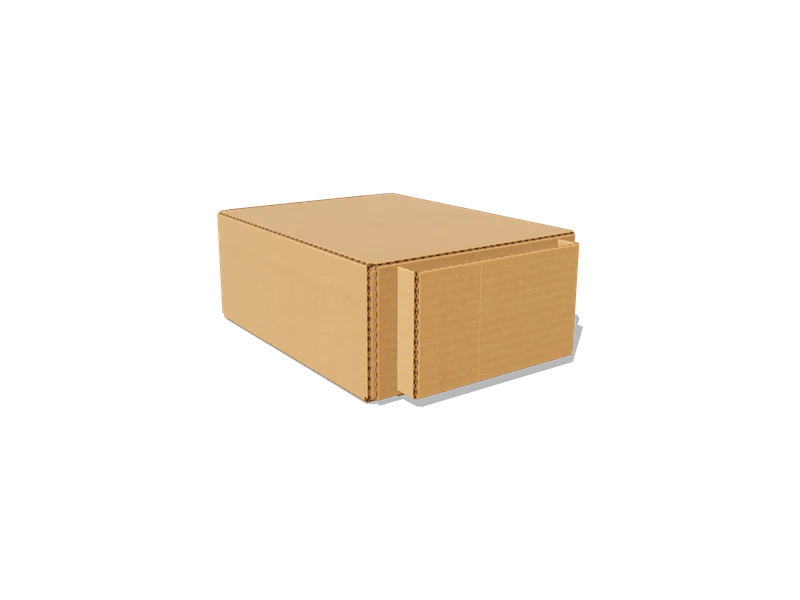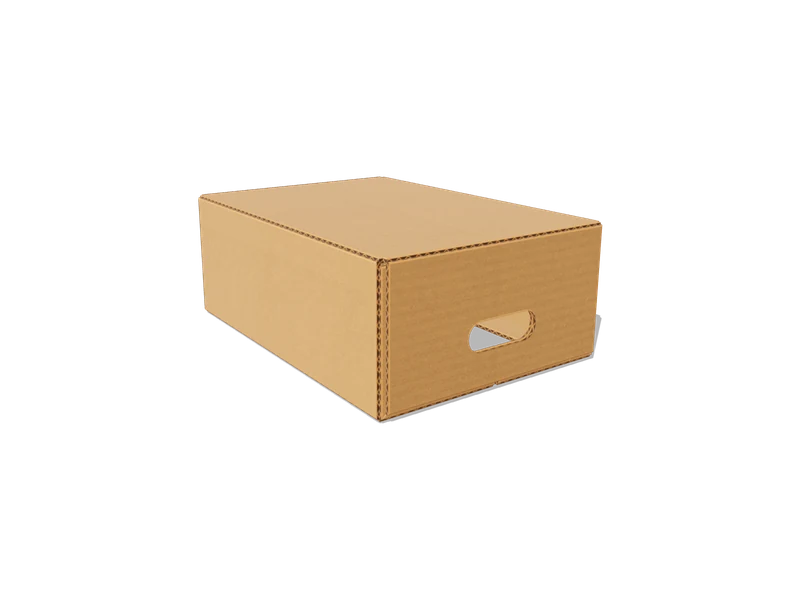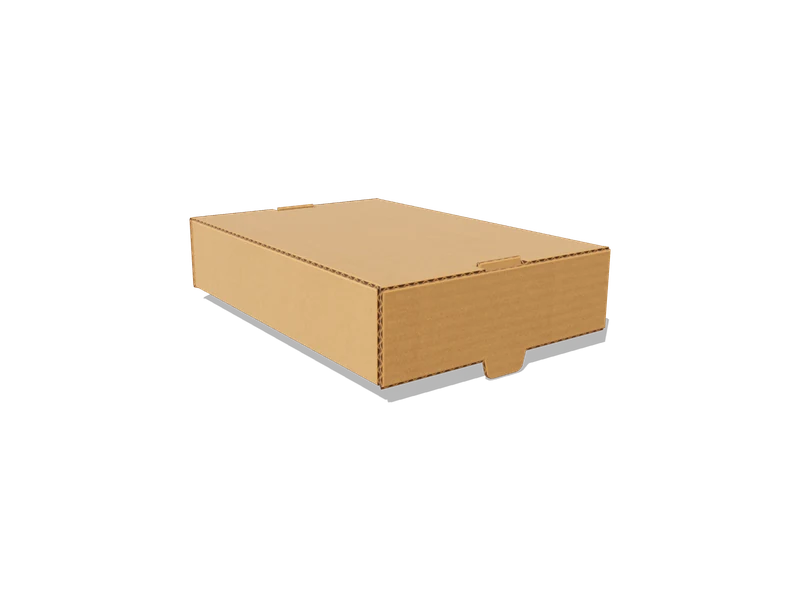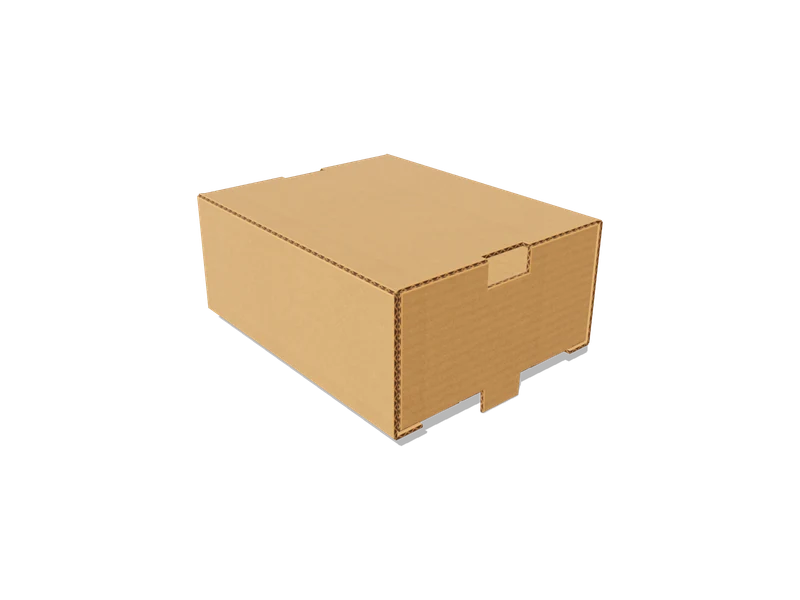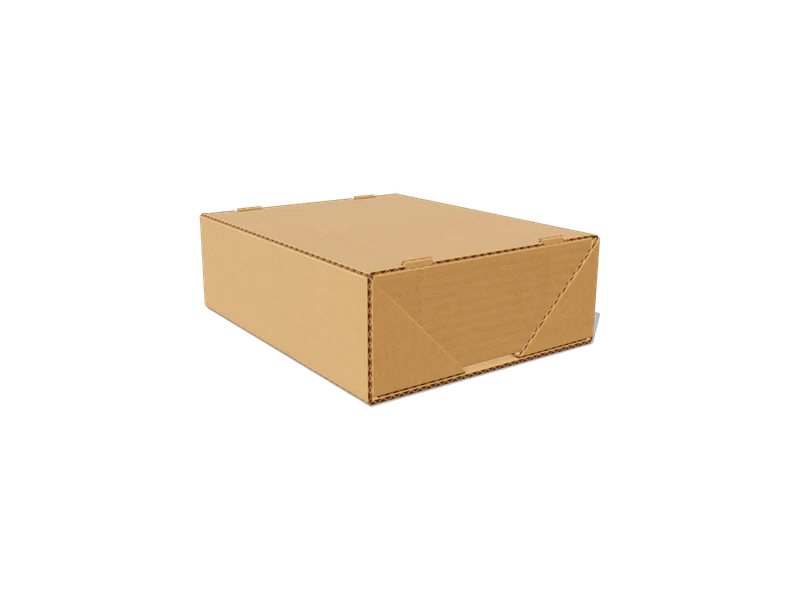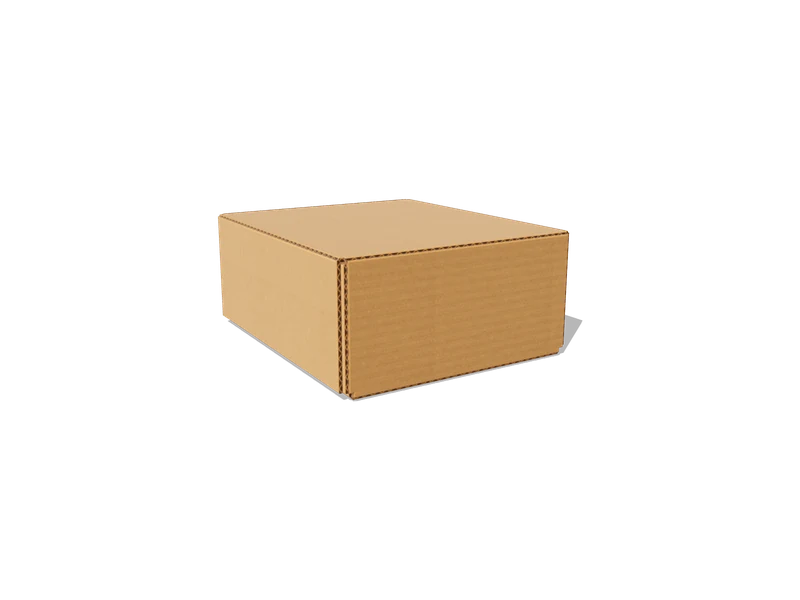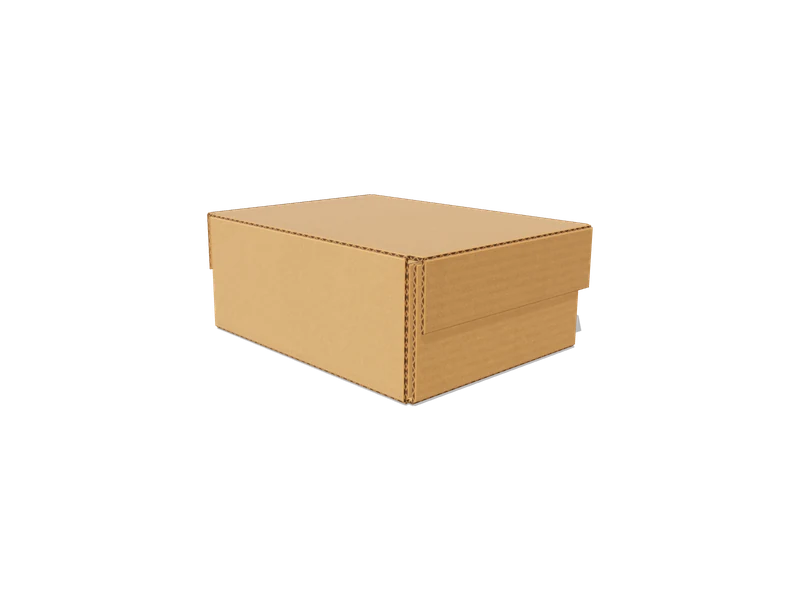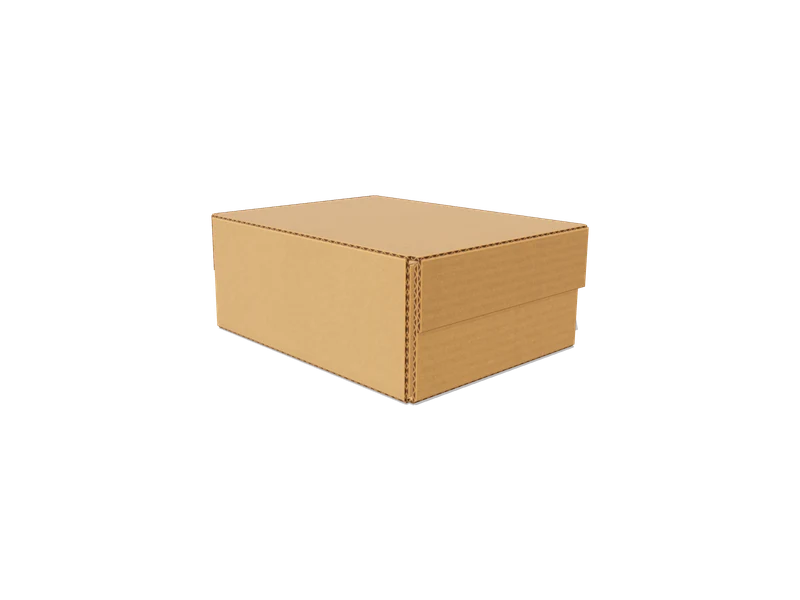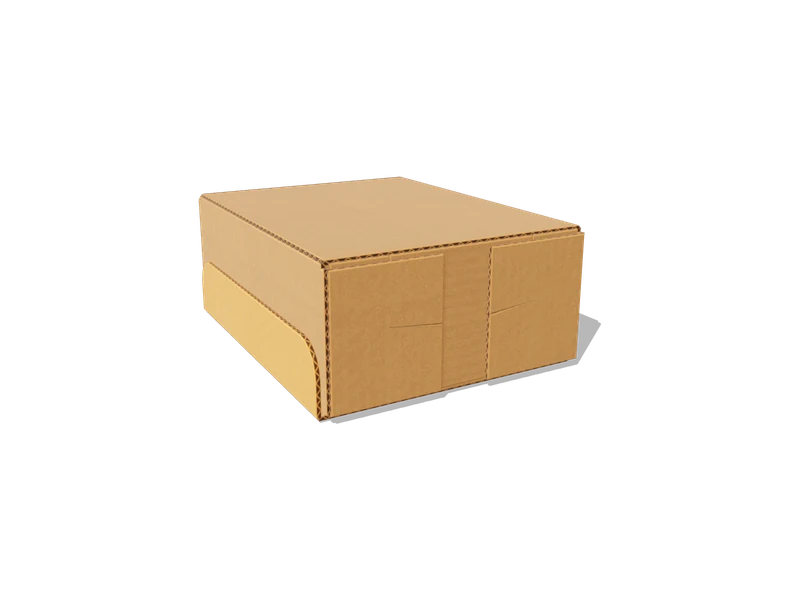

FEFCO2D DIELINE3D FOLDED
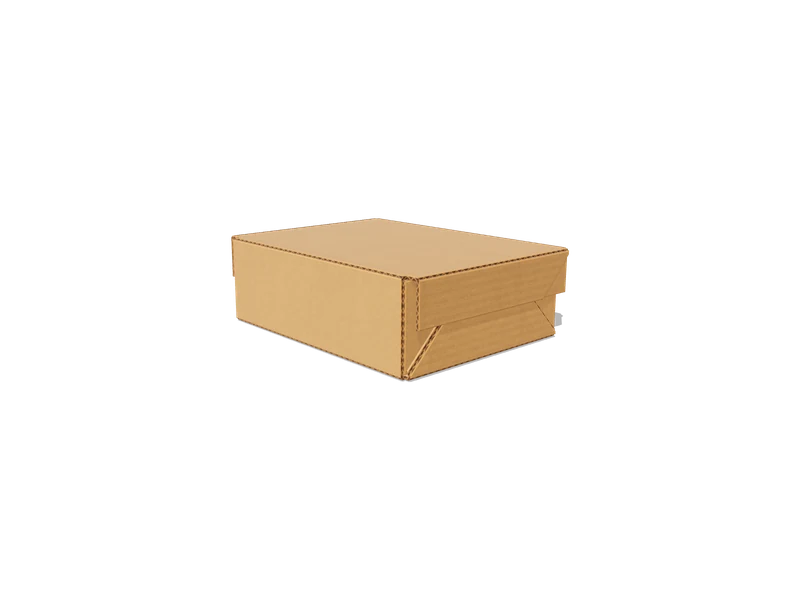
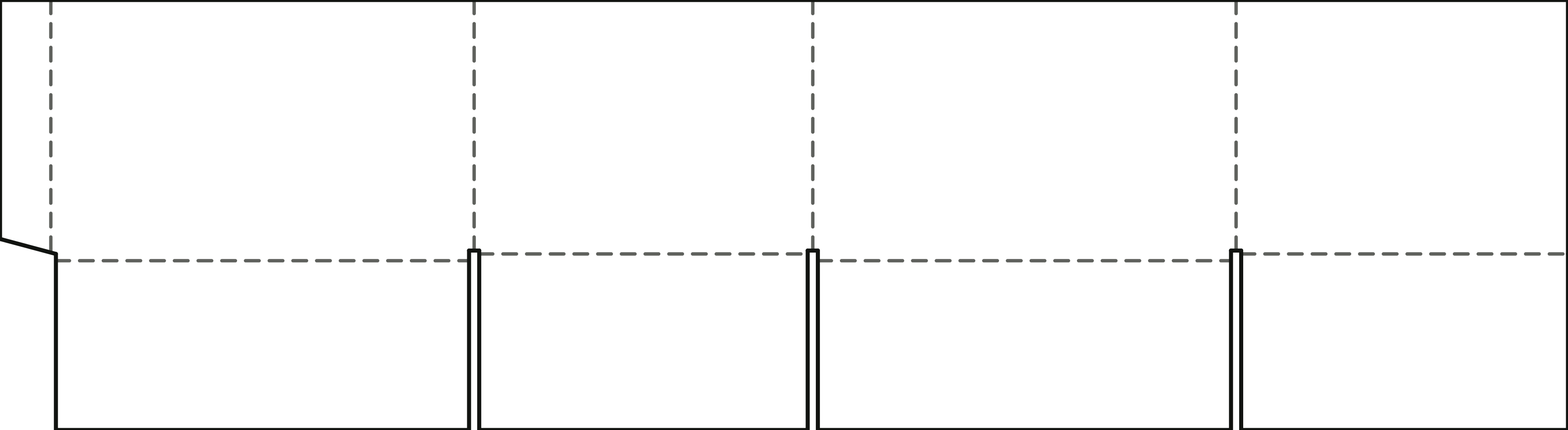
Storage & Stacking Bin — Half Slotted (HSC)
FEFCO 0200 · 4 configurable parameters
Create dielineFEFCO CATALOGUE
Parametric corrugated box templates organized by FEFCO code. Pick a style, enter your inside dimensions, and generate its dieline. Supported templates also offer a 3D fold preview.
FEFCO — the European Federation of Corrugated Board Manufacturers — maintains the International Fibreboard Case Code, the numbering system the corrugated industry uses to describe box styles without drawings or language-dependent names. Instead of asking a supplier for “a normal shipping box with flaps”, a converter specifies FEFCO 0201 and both sides know exactly which structure, which joints and which flap arrangement is meant.
That precision makes the code useful across languages: four digits identify the construction. Dimensions, board grade, tolerances, joint method and other production details still need to be agreed.
The first two digits of a FEFCO code place the design in a series. The 02 series covers slotted boxes: one-piece bodies with a glued, stitched or taped manufacturer's joint and flaps on the top and bottom — these ship flat and erect quickly. The 03 series contains telescope boxes, where a separate lid slides over a bottom part. The 04 series holds folder-type boxes and trays formed by folding a single unglued blank around the product.
Higher series continue the logic: 05 for slide-type constructions of inner and outer sleeves, 06 for rigid (Bliss-style) cases assembled from a body and two end pieces, and 07 for ready-glued cases such as crash-lock-bottom boxes that arrive flat and pop open in one movement. The catalogue concentrates on series used in everyday corrugated converting.
The 0201 Regular Slotted Container is the most manufactured box style in the world: all flaps are the same depth, the outer flaps meet at the center, and the blank is joined with a single manufacturer's joint. It uses board efficiently and runs on standard case-making equipment, which is why it is the default answer for shipping cartons.
It is also Packdroid's live homepage sample — open the 0201 template, change a dimension, and watch the same parametric model regenerate the 2D dieline and the 3D fold.
Each template in this family exposes the parameters that FEFCO style actually needs — typically internal length, width and depth, plus construction-specific values where the style demands them. Enter your dimensions and the parametric model derives the panel layout, flap depths and slot positions; the allowances that depend on board behavior are part of the structural model rather than something you calculate by hand.
Each parameter is checked against the range supported by the template. Review flaps, slots and allowances with your converter before using the dieline for production.
A corrugated dieline is a starting point for production, not a substitute for converter judgment. Flute profile, board grade and joint style all affect final dimensions and crush behavior, so confirm tolerances and material with your manufacturer before mass production.
Where a template supports it, use the 3D fold preview to inspect flap movement and overall proportions before ordering tooling. Confirm the result with your converter before you cut.
60 templates
FEFCO 0200 · 4 configurable parameters
Create dieline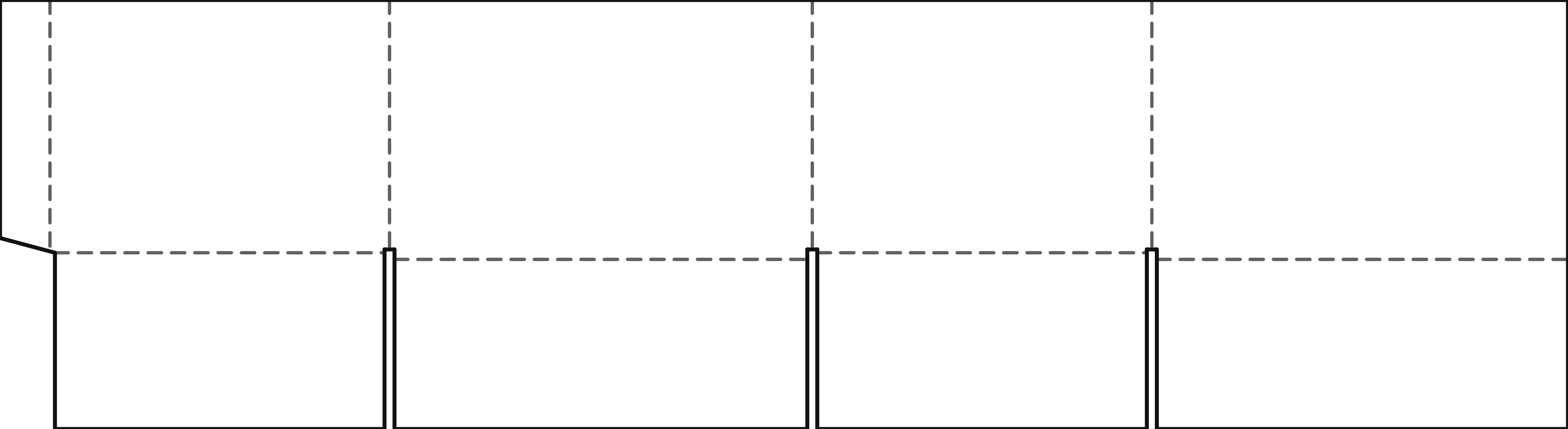
FEFCO 0200-1 · 4 configurable parameters
Create dieline
FEFCO 0200-2 · 4 configurable parameters
Create dieline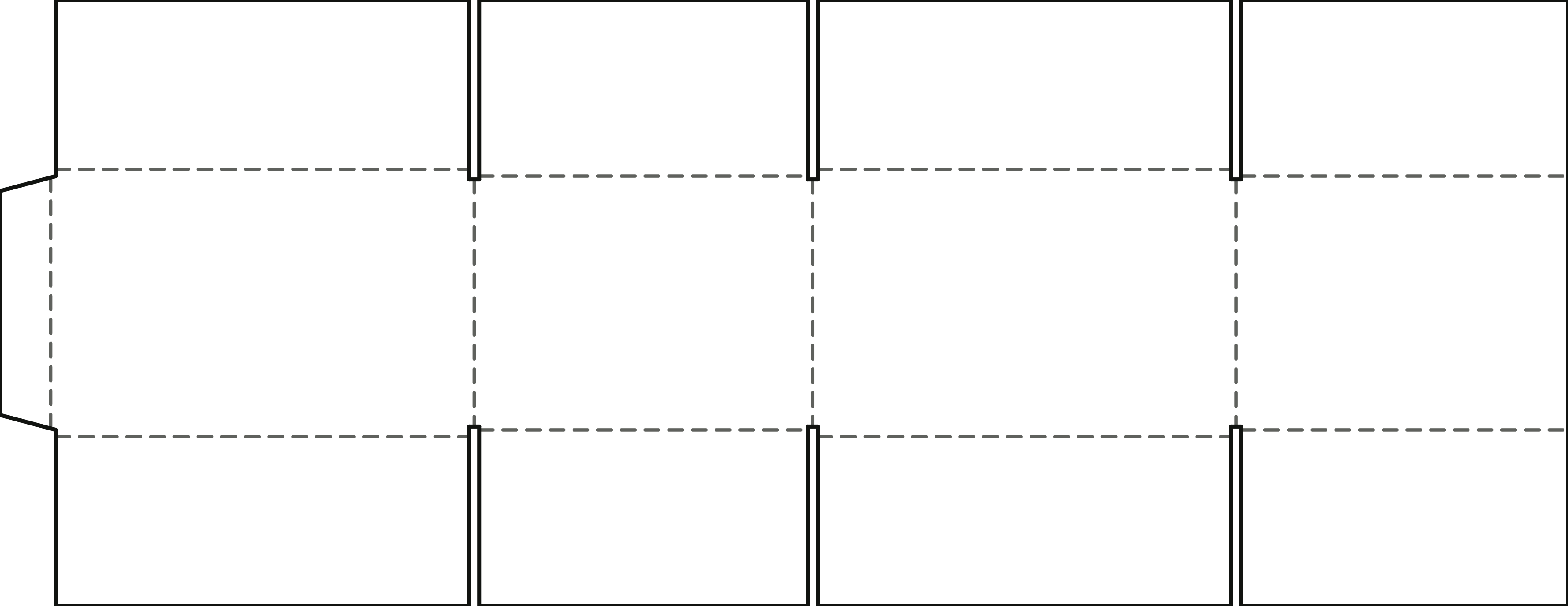
FEFCO 0201 · 4 configurable parameters
Create dieline
FEFCO 0201-1 · 4 configurable parameters
Create dieline
FEFCO 0201-2 · 4 configurable parameters
Create dieline
FEFCO 0201-3 · 4 configurable parameters
Create dieline
FEFCO 0201-4 · 4 configurable parameters
Create dieline
FEFCO 0201-5 · 4 configurable parameters
Create dieline
FEFCO 0201-6 · 4 configurable parameters
Create dieline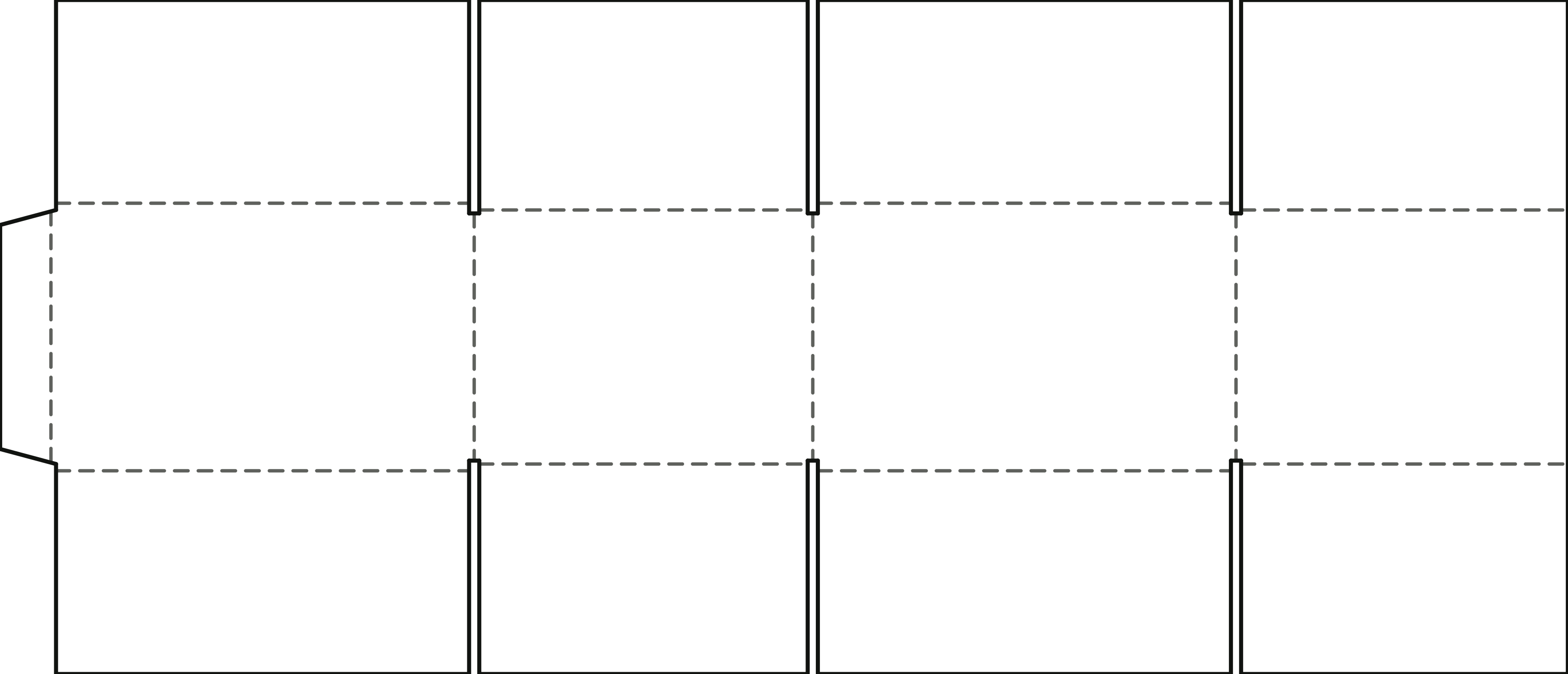
FEFCO 0202 · 4 configurable parameters
Create dieline
FEFCO 0202-1 · 4 configurable parameters
Create dieline
FEFCO 0202-2 · 4 configurable parameters
Create dieline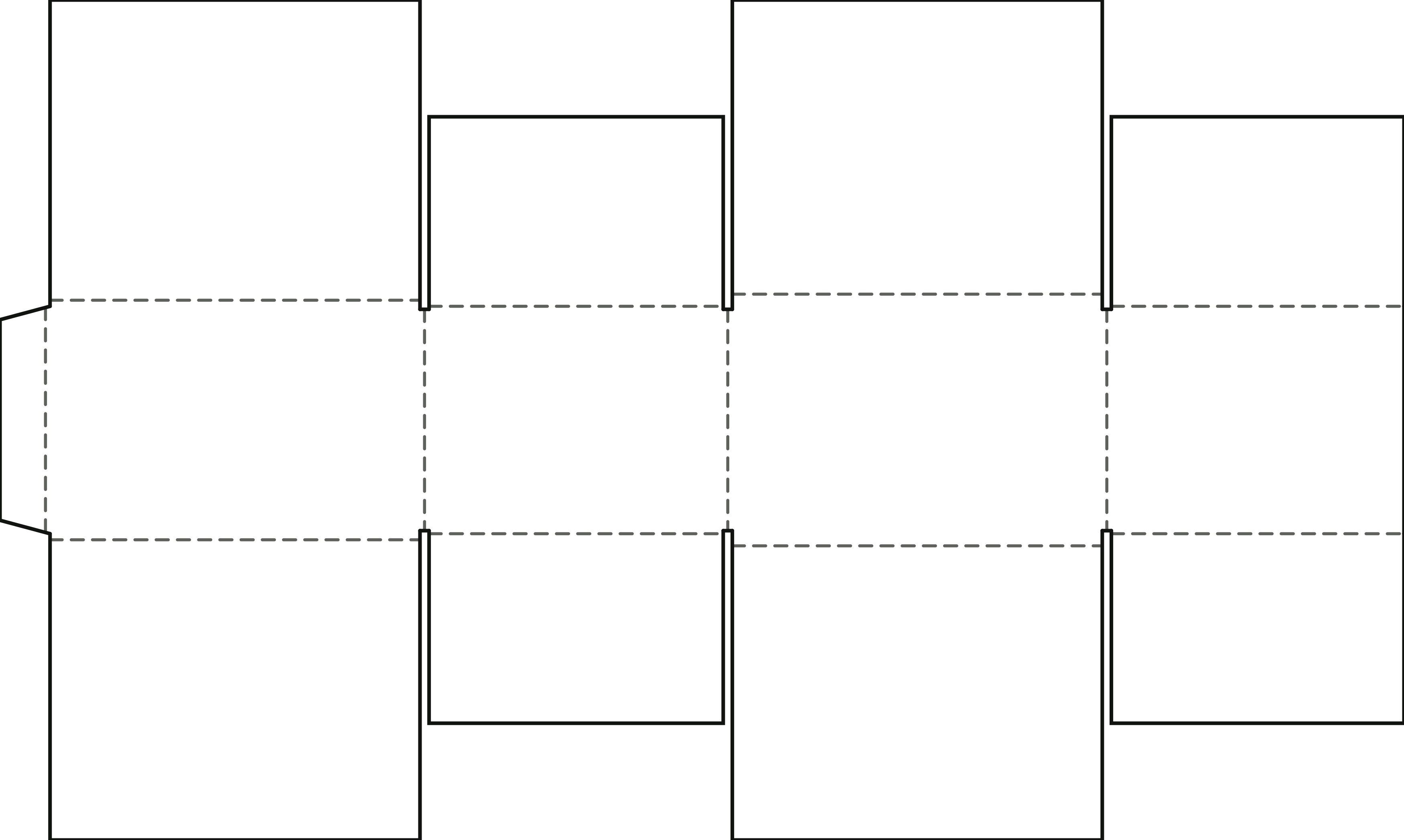
FEFCO 0203 · 4 configurable parameters
Create dieline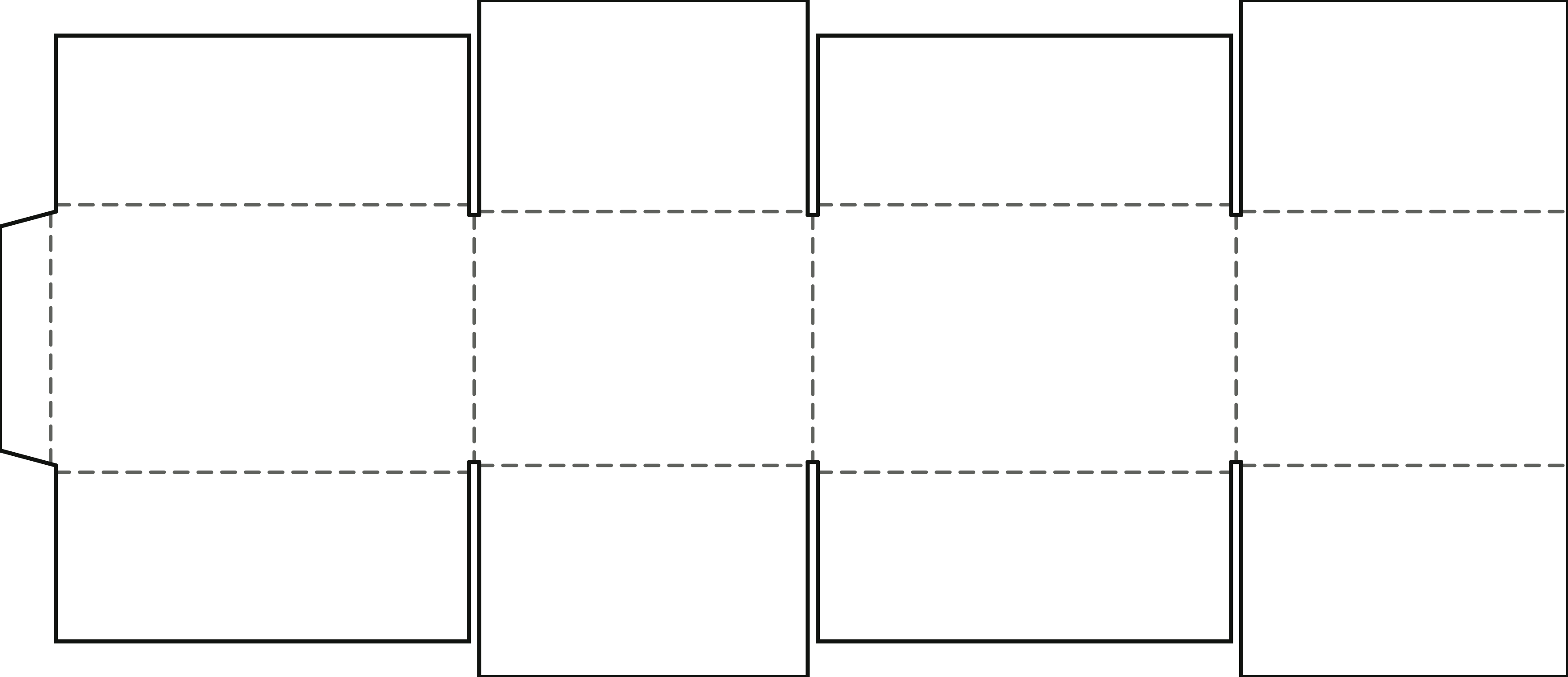
FEFCO 0204 · 4 configurable parameters
Create dieline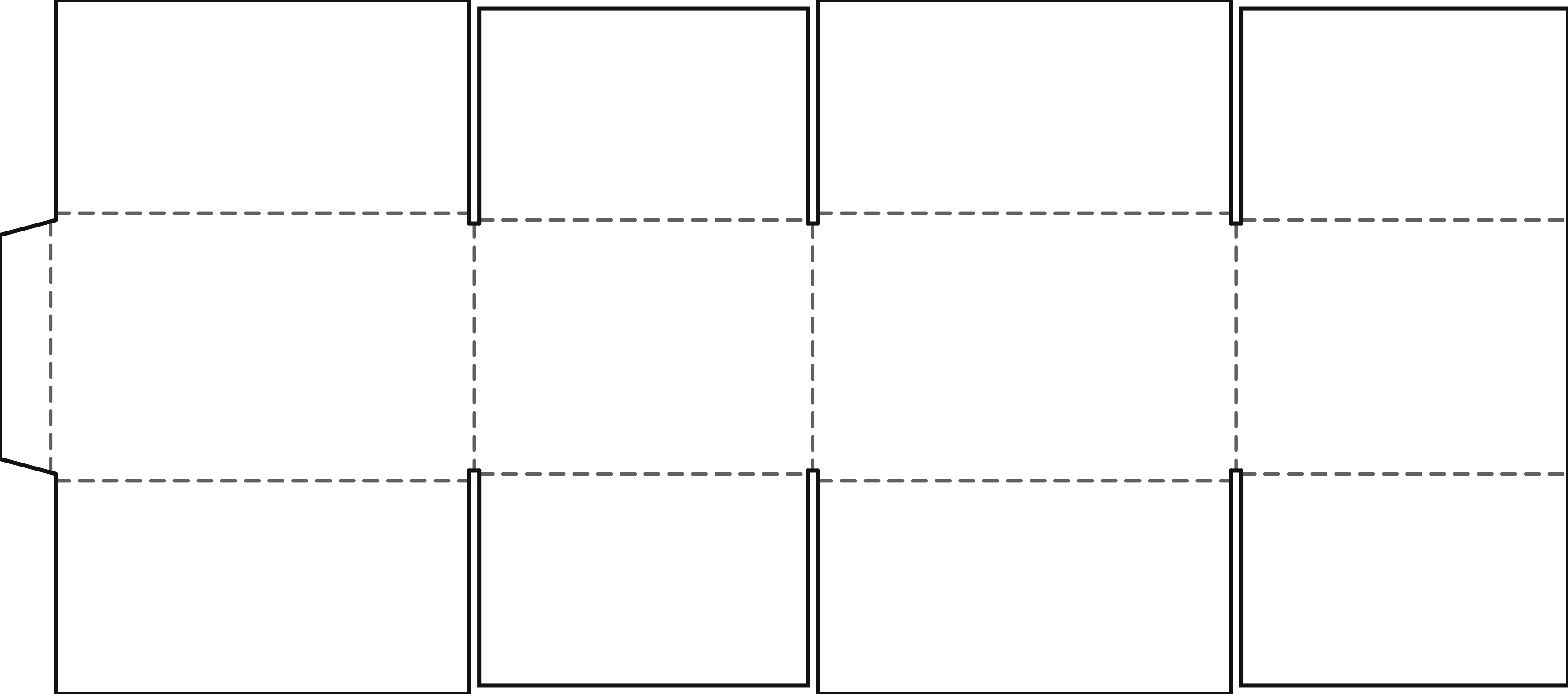
FEFCO 0205 · 4 configurable parameters
Create dieline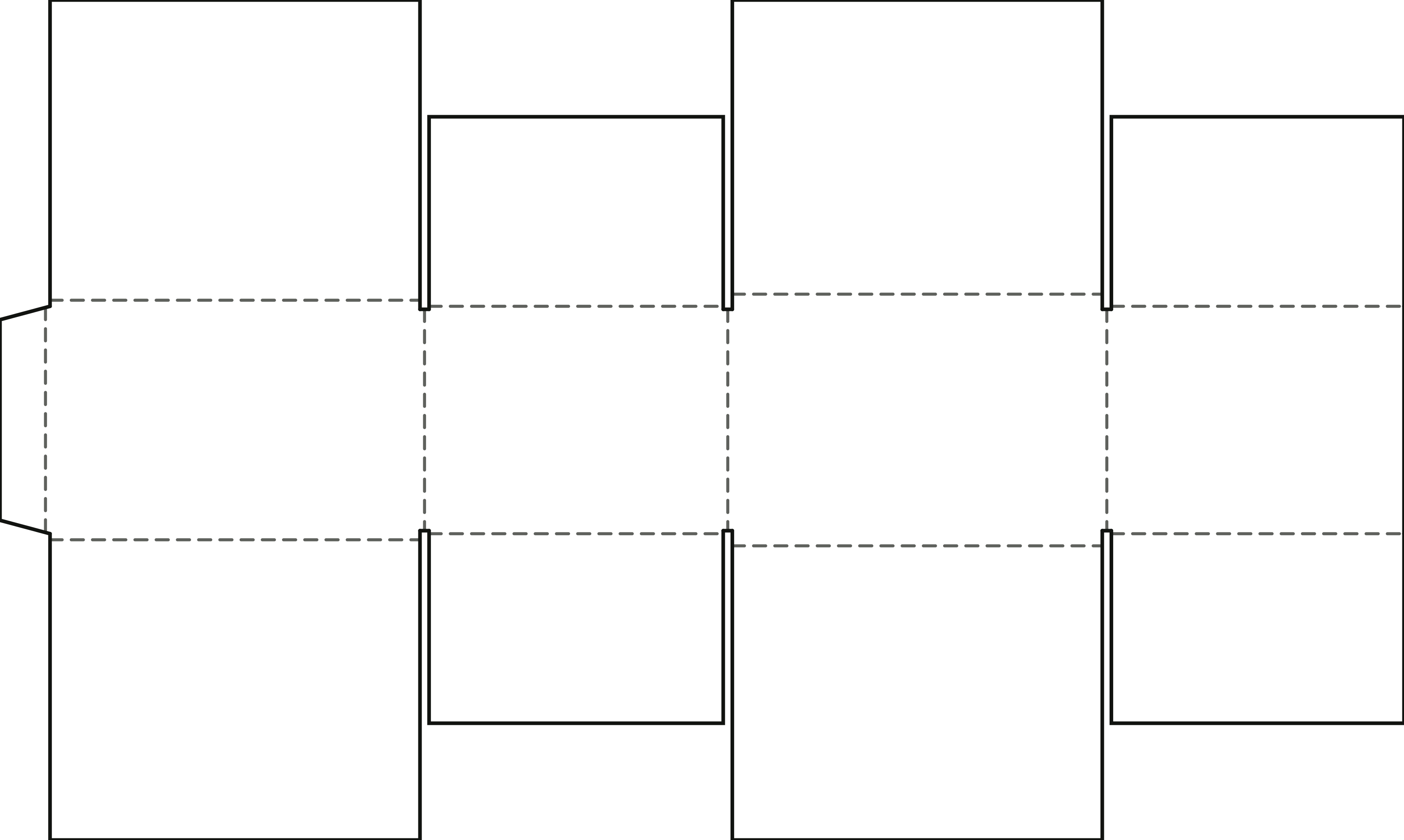
FEFCO 0206 · 4 configurable parameters
Create dieline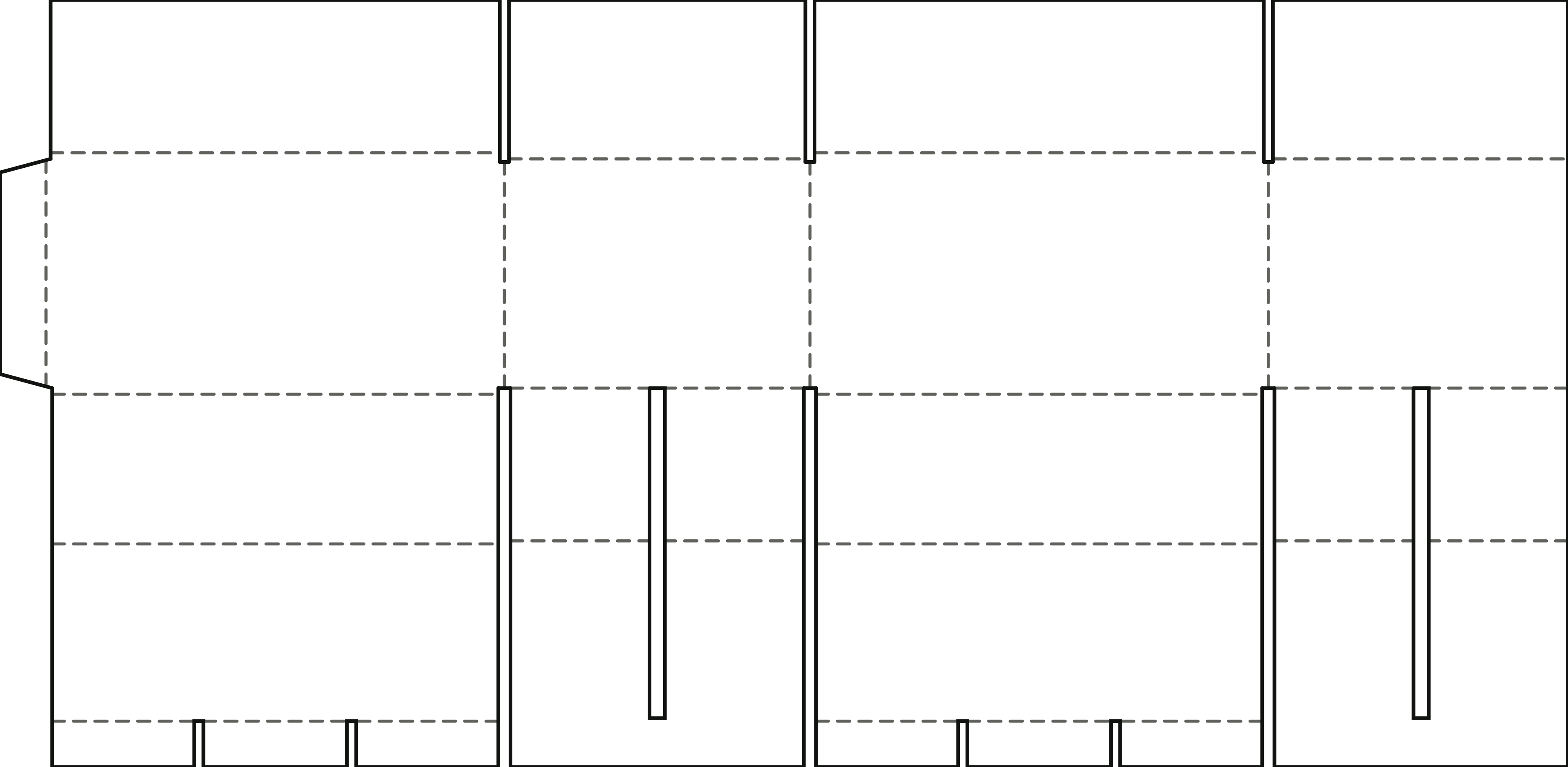
FEFCO 0207 · 4 configurable parameters
Create dieline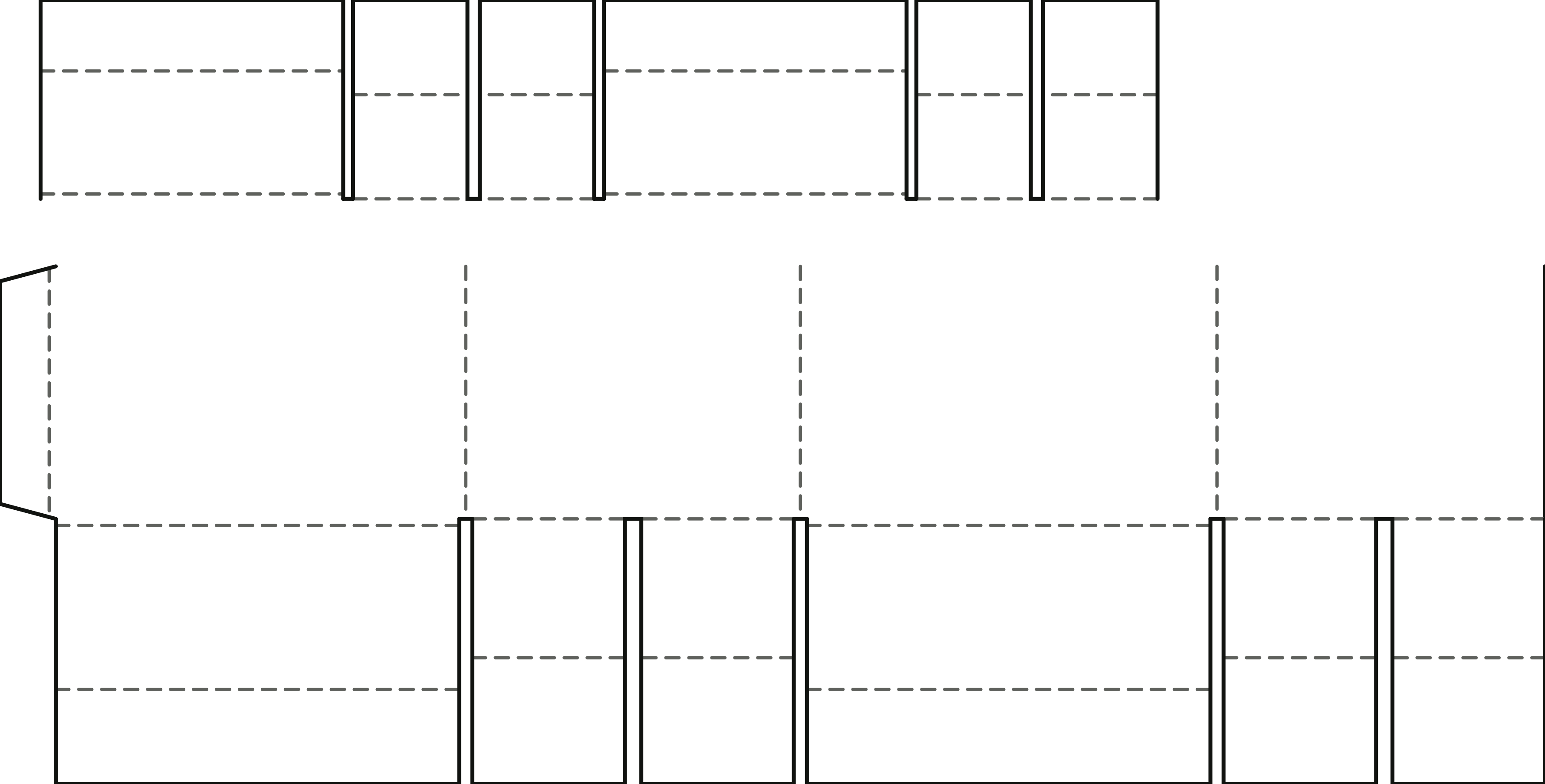
FEFCO 0208 · 4 configurable parameters
Create dieline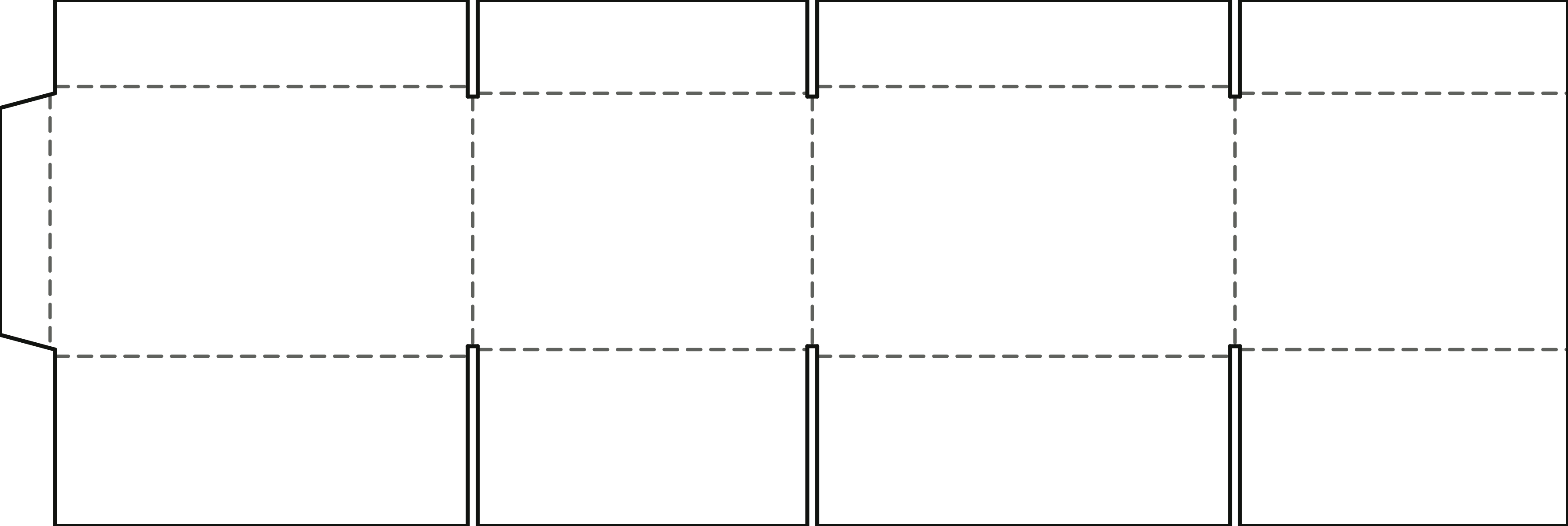
FEFCO 0209 · 5 configurable parameters
Create dieline
FEFCO 0210 · 4 configurable parameters
Create dieline
FEFCO 0211 · 4 configurable parameters
Create dieline
FEFCO 0212 · 4 configurable parameters
Create dieline
FEFCO 0214 · 5 configurable parameters
Create dieline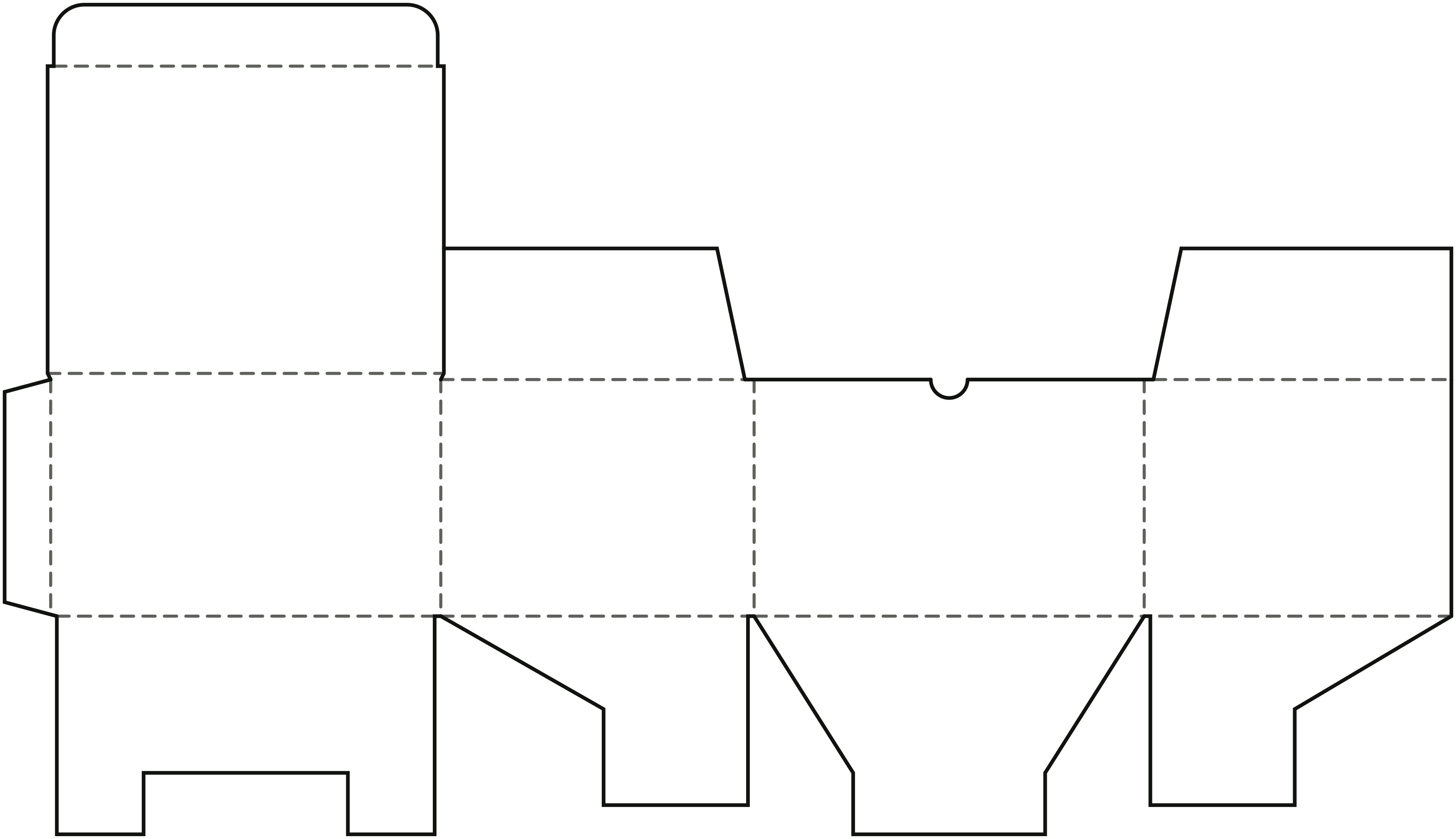
FEFCO 0215 · 4 configurable parameters
Create dieline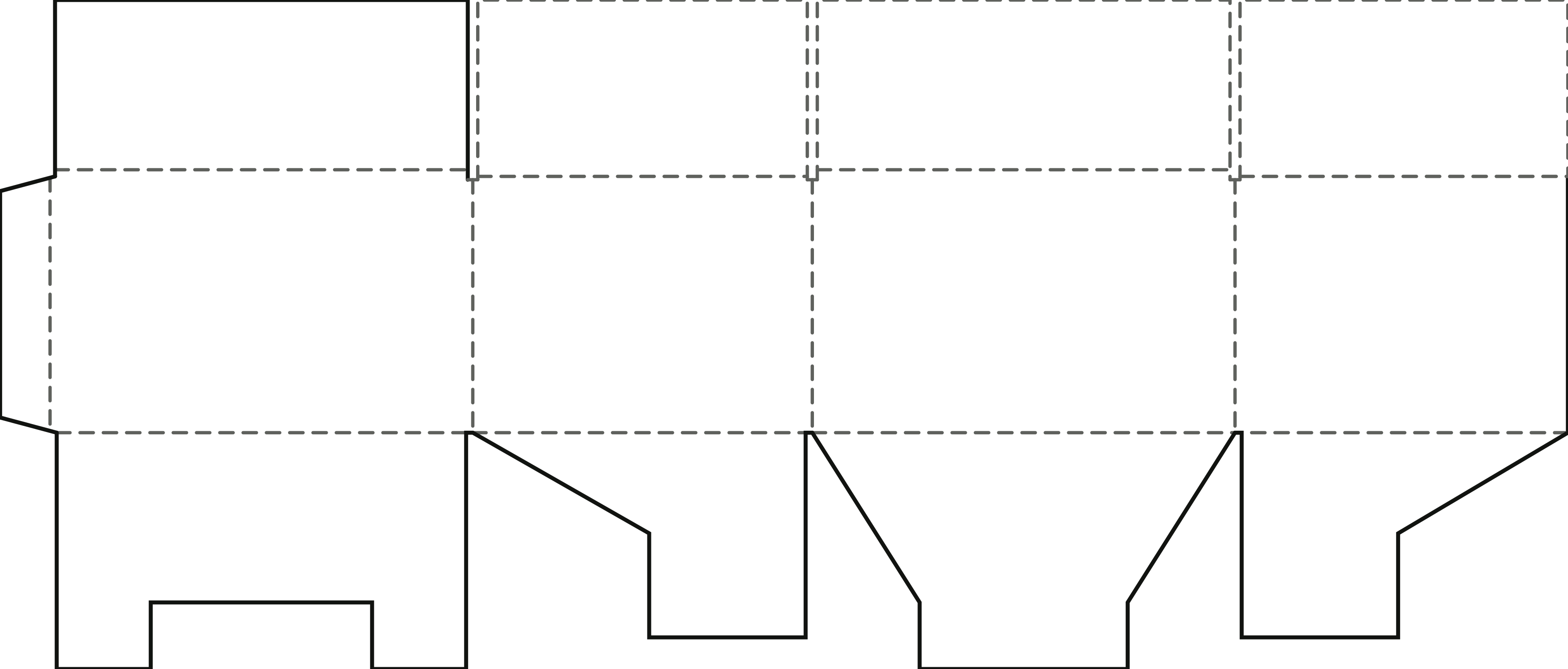
FEFCO 0216 · 4 configurable parameters
Create dieline
FEFCO 0218 · 4 configurable parameters
Create dieline
FEFCO 0400 · 4 configurable parameters
Create dieline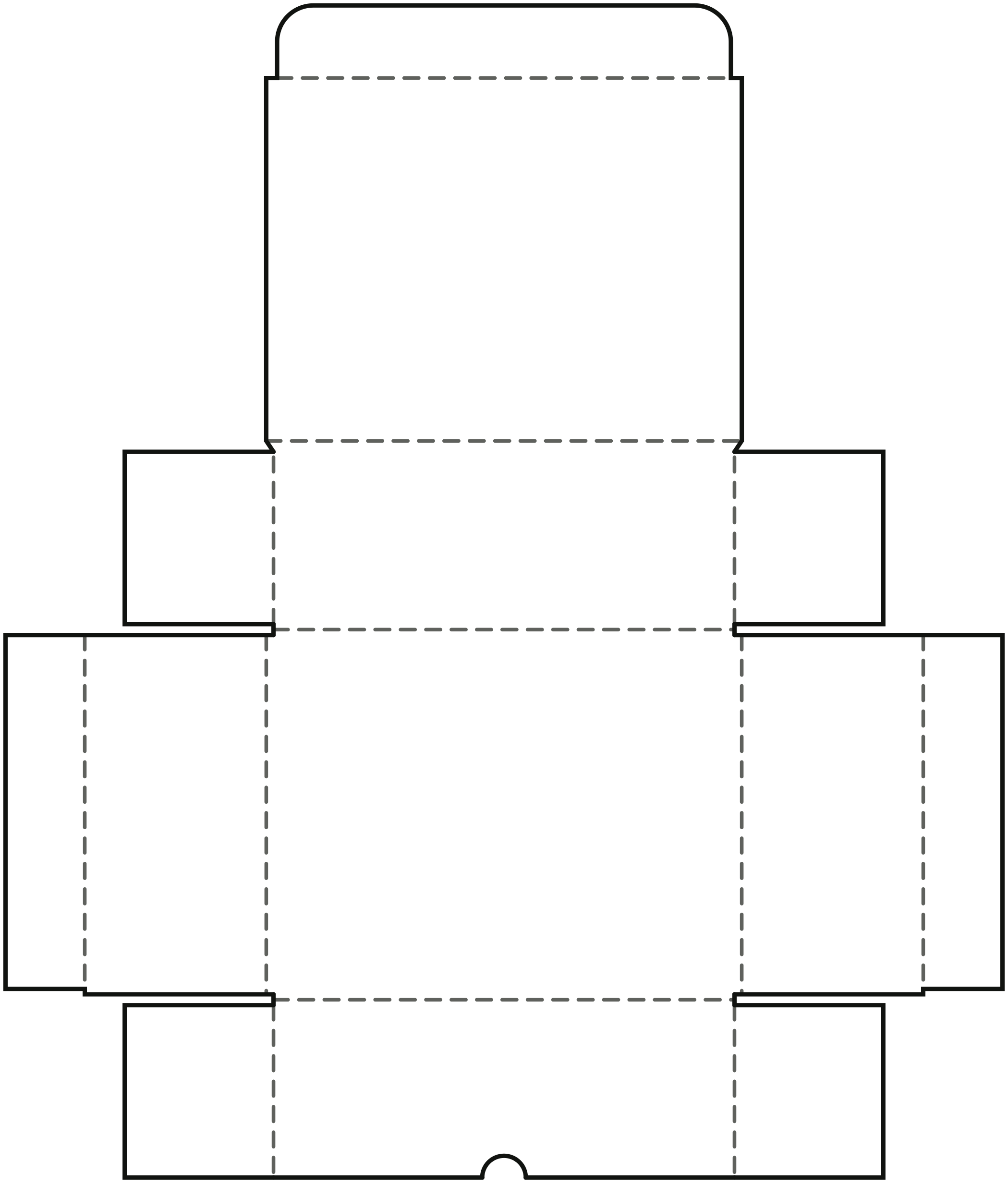
FEFCO 0420 · 4 configurable parameters
Create dieline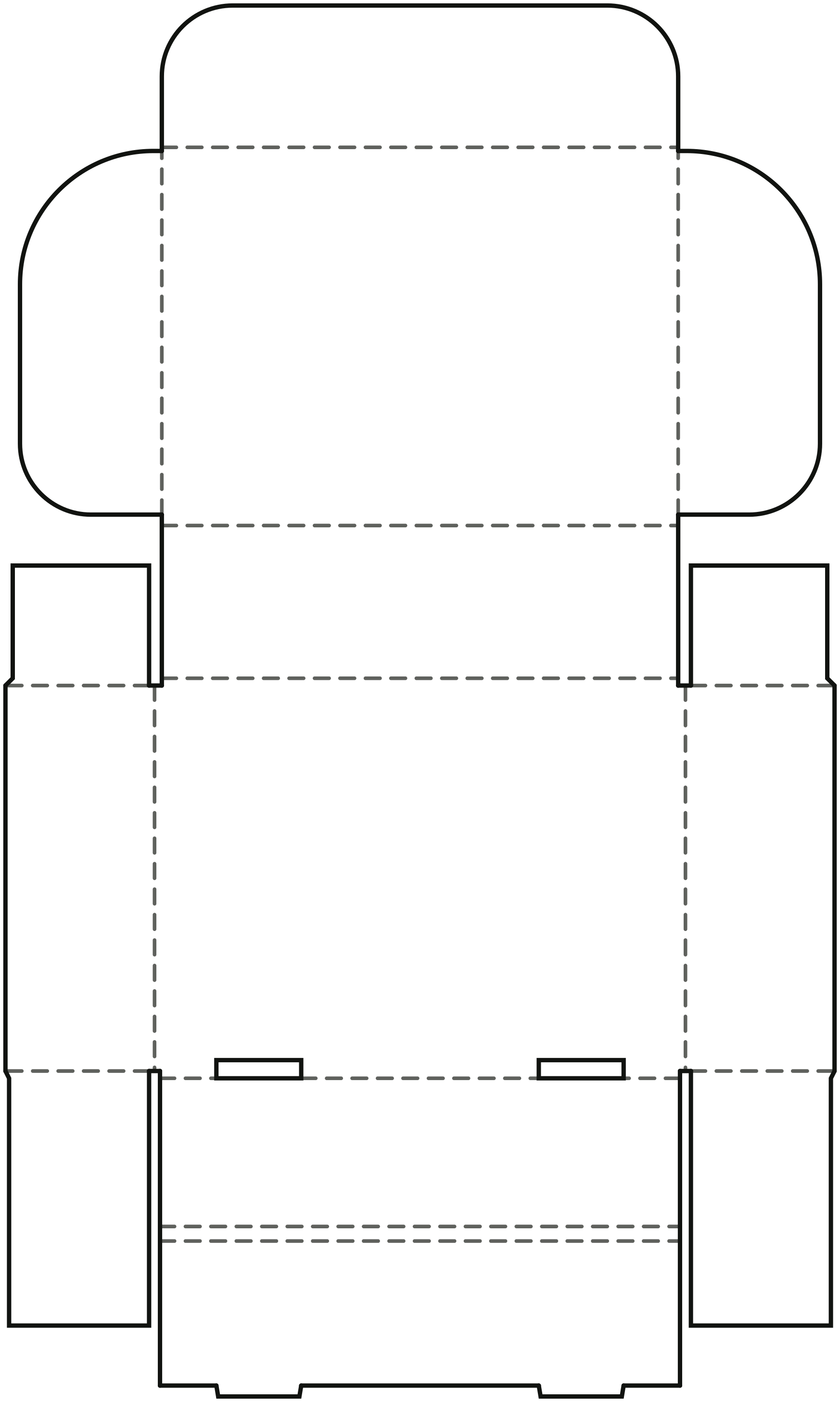
FEFCO 0426 · 4 configurable parameters
Create dieline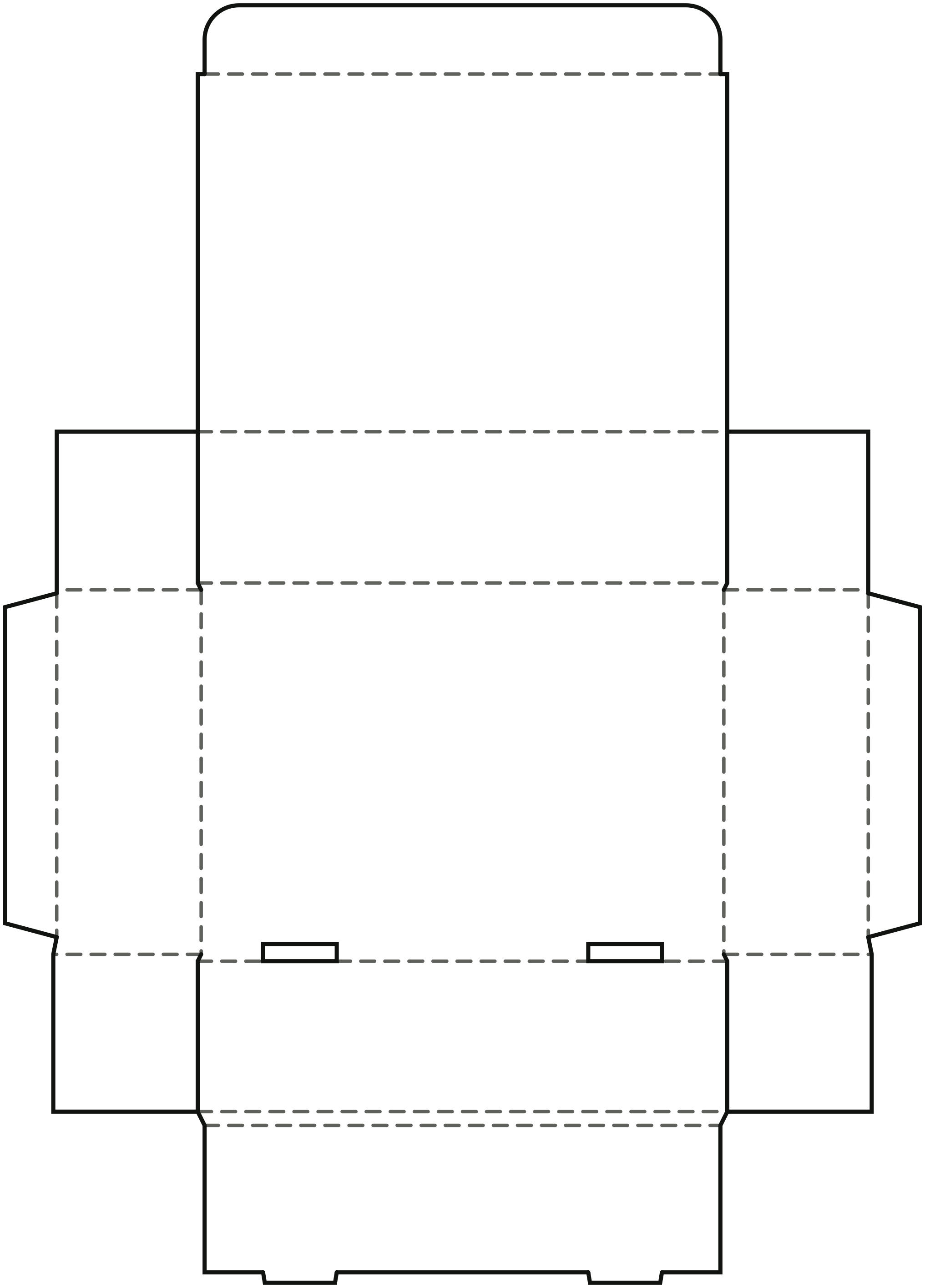
FEFCO 0426-1 · 4 configurable parameters
Create dieline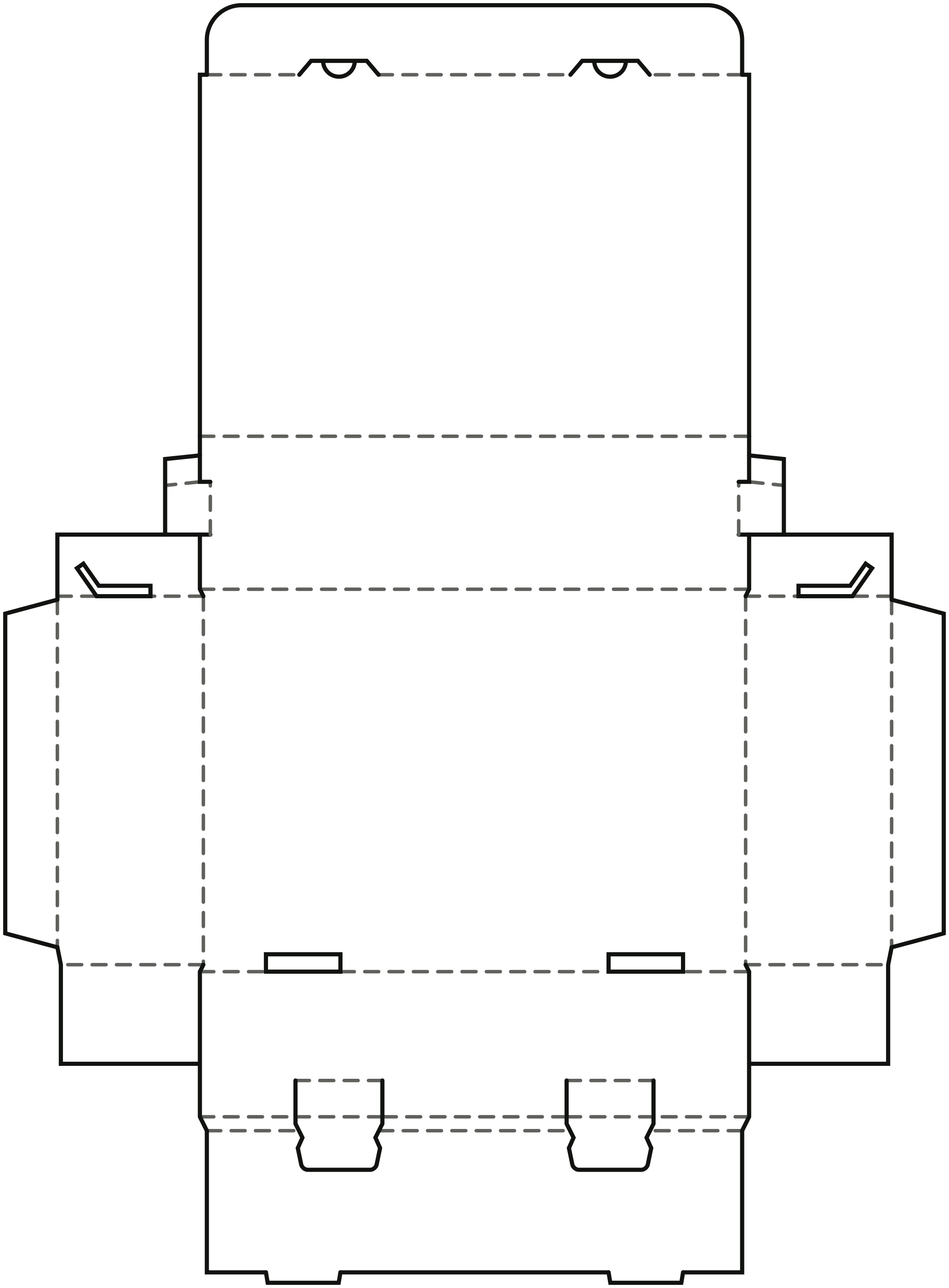
FEFCO 0426-2 · 4 configurable parameters
Create dieline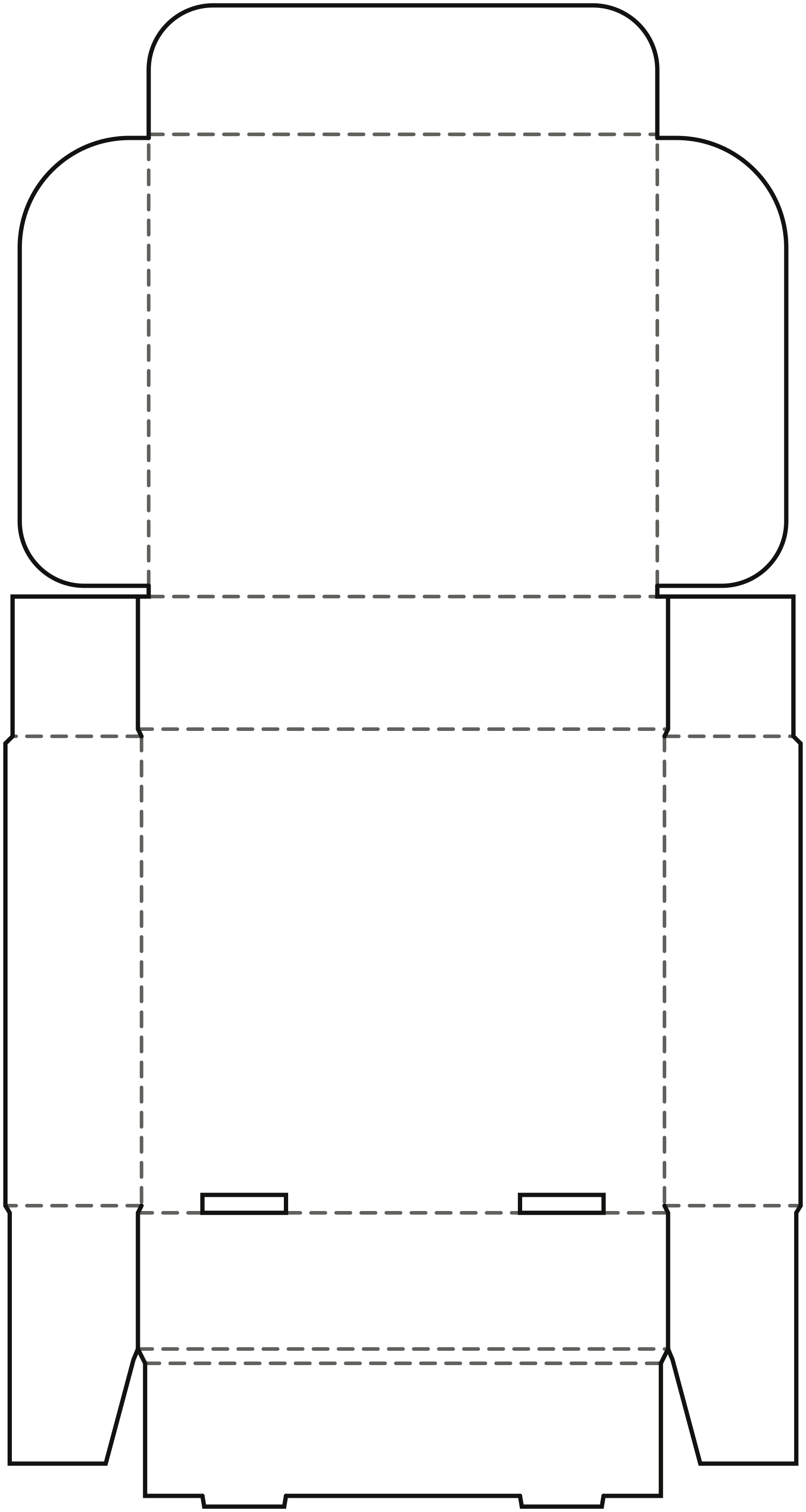
FEFCO 0426-3 · 4 configurable parameters
Create dieline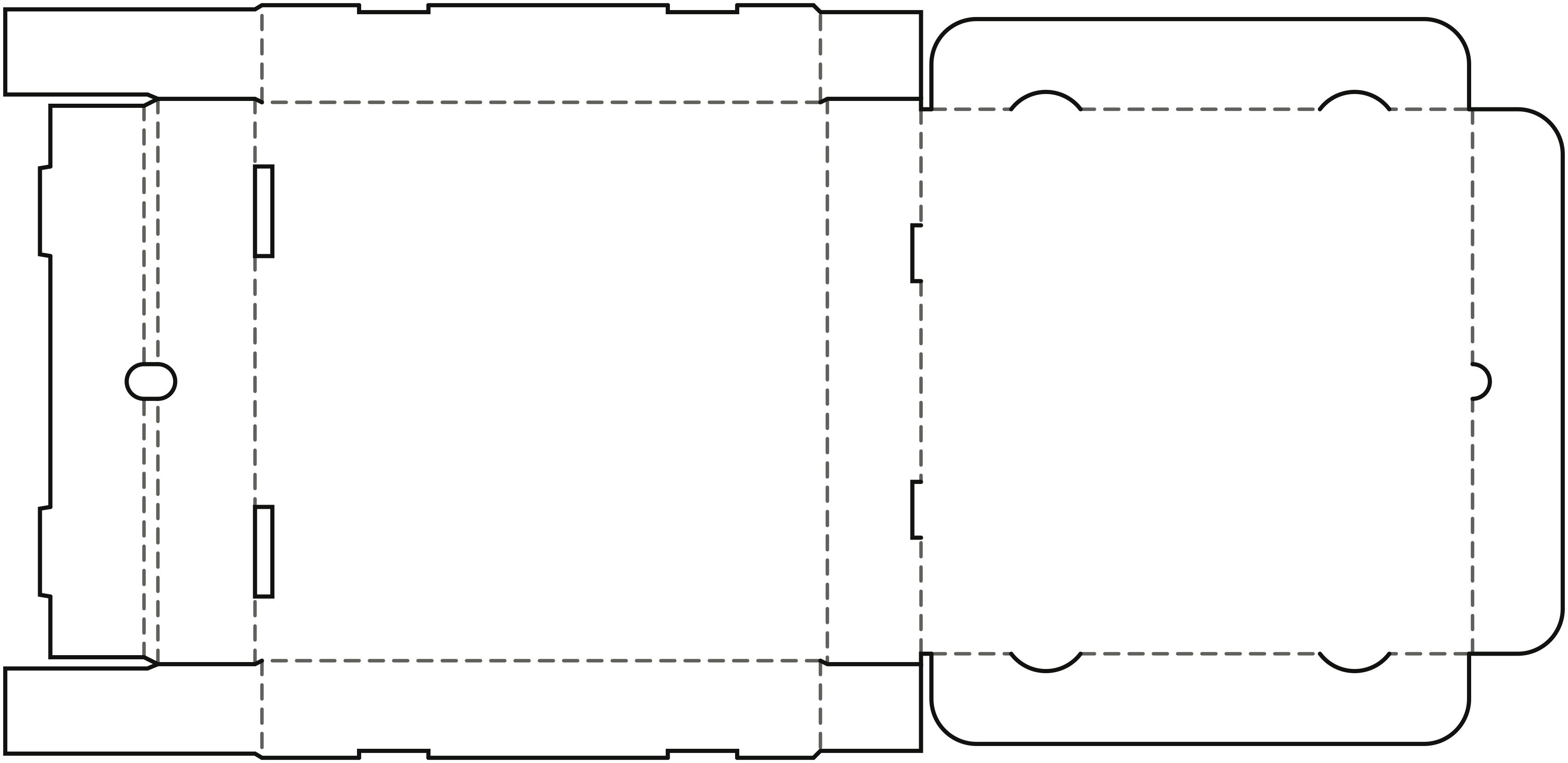
FEFCO 0426-Pizza · 4 configurable parameters
Create dieline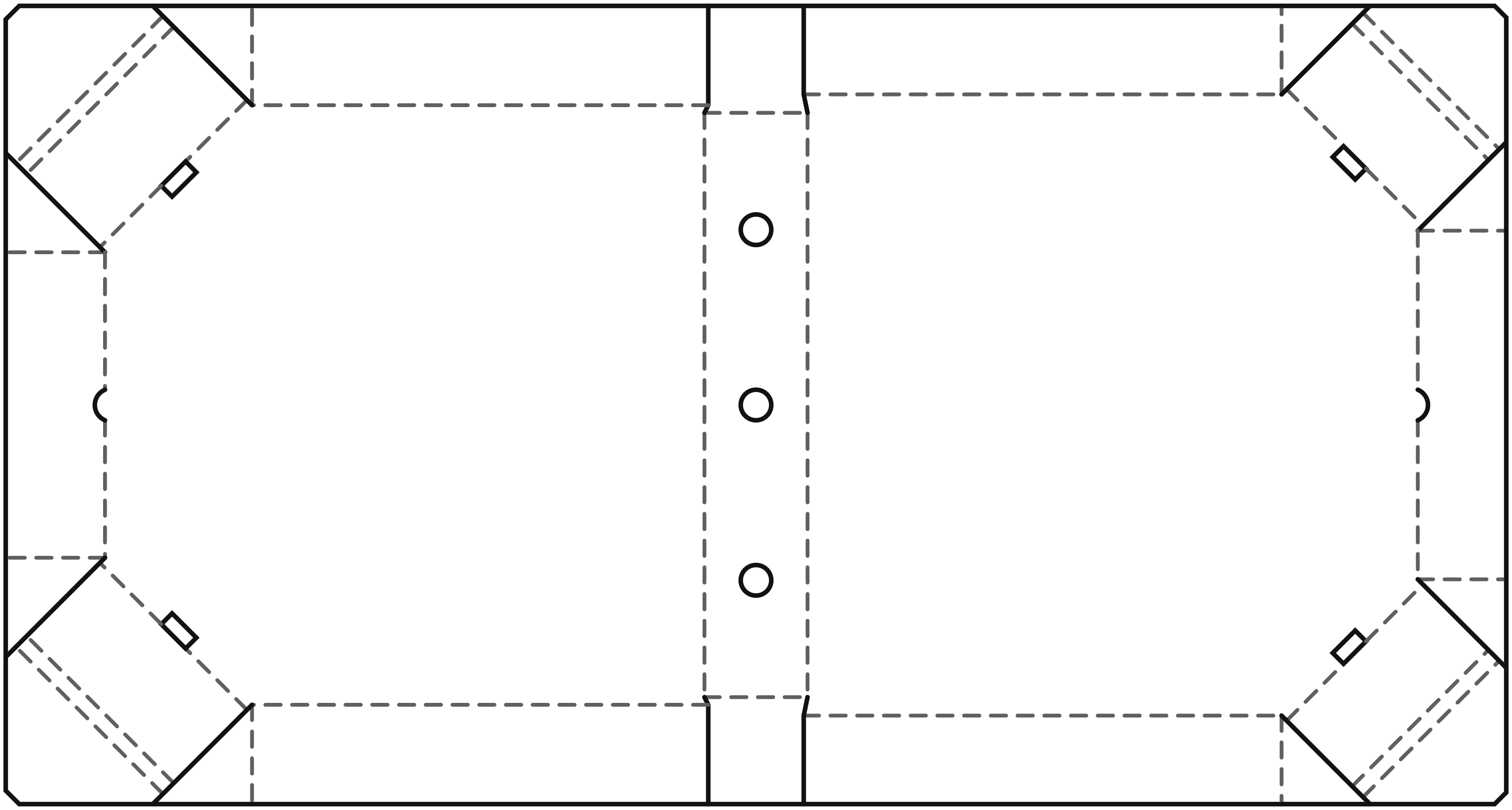
FEFCO 0426-Pizza-1 · 4 configurable parameters
Create dieline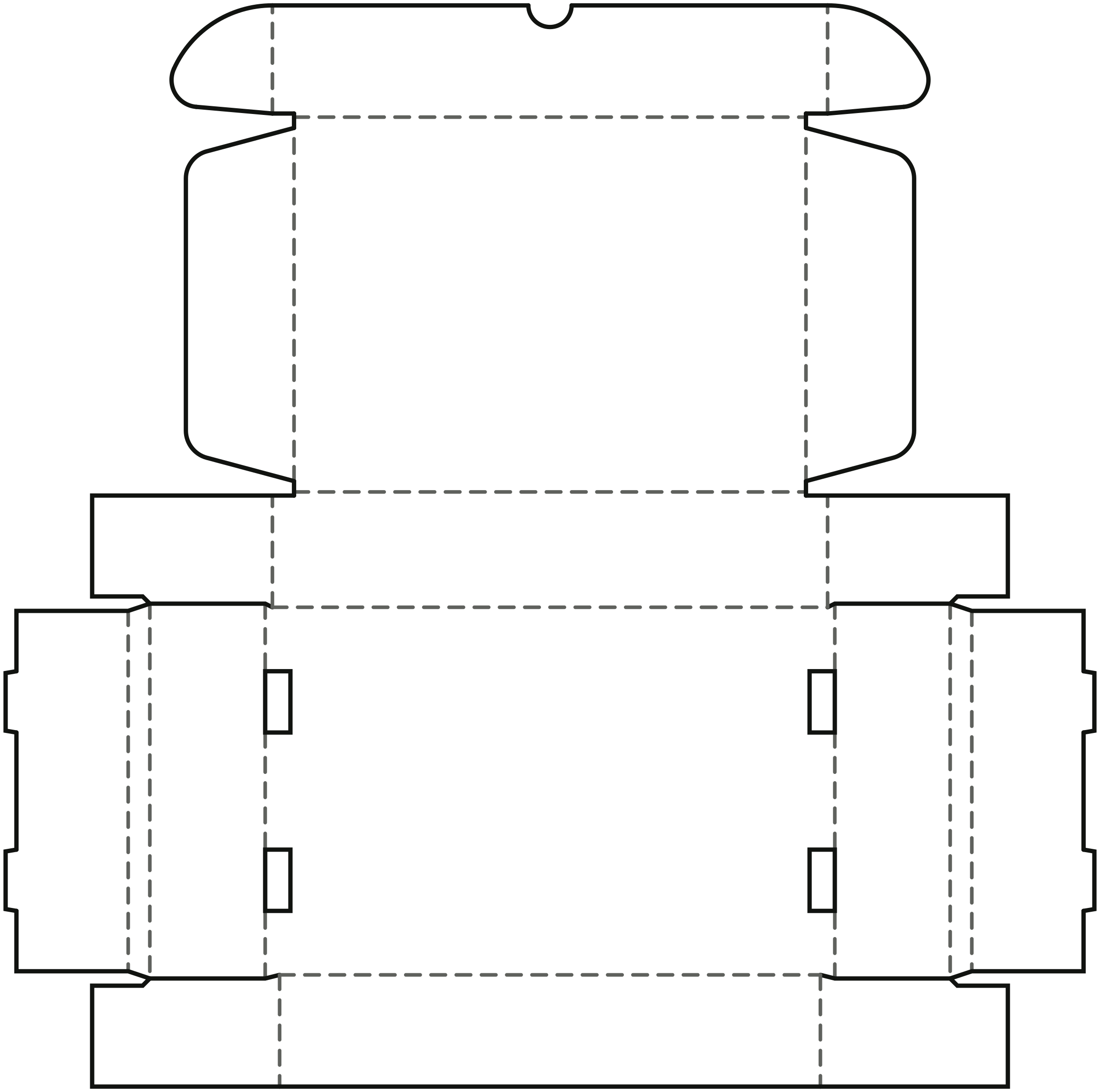
FEFCO 0427 · 4 configurable parameters
Create dieline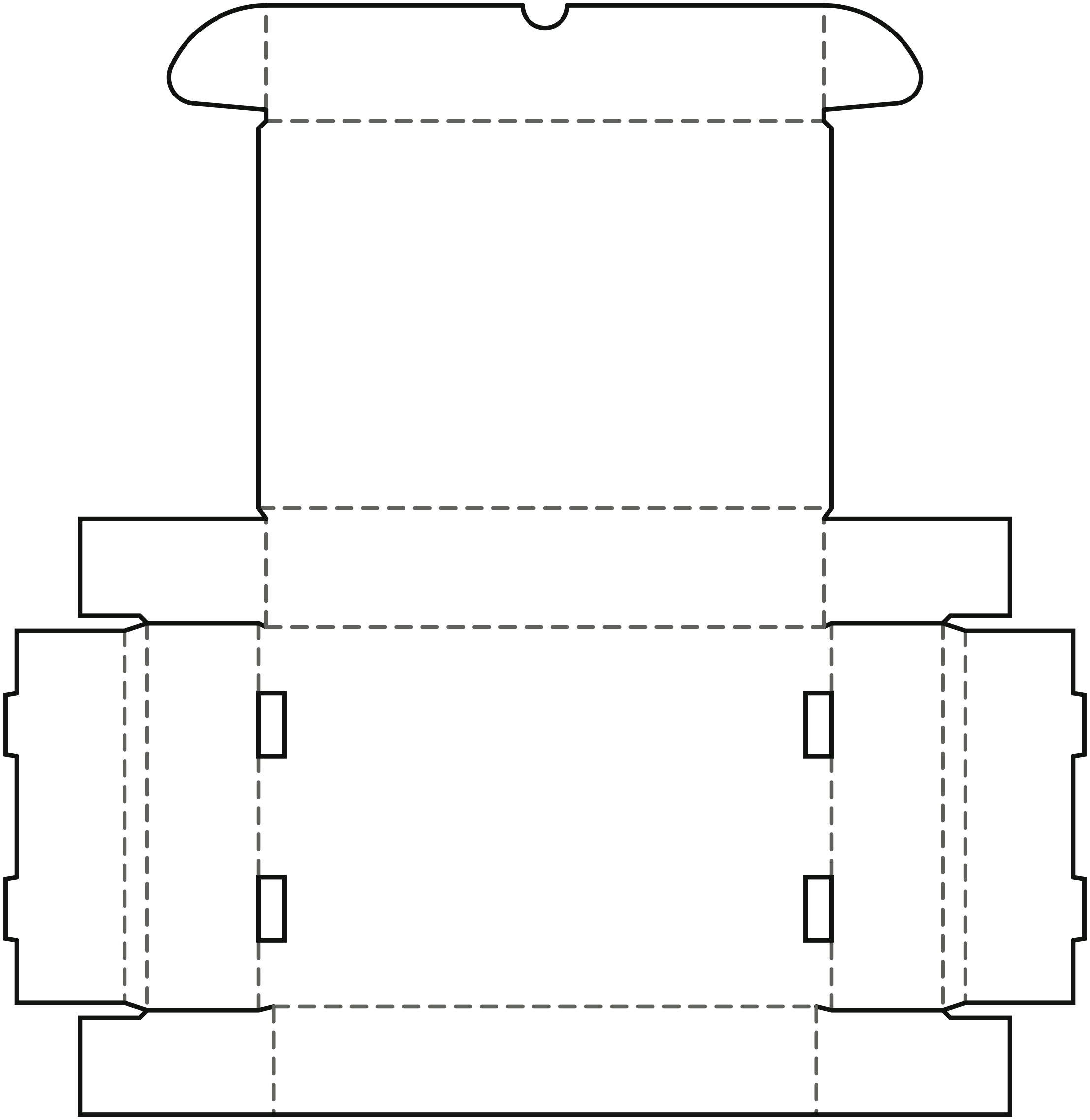
FEFCO 0427-1 · 4 configurable parameters
Create dieline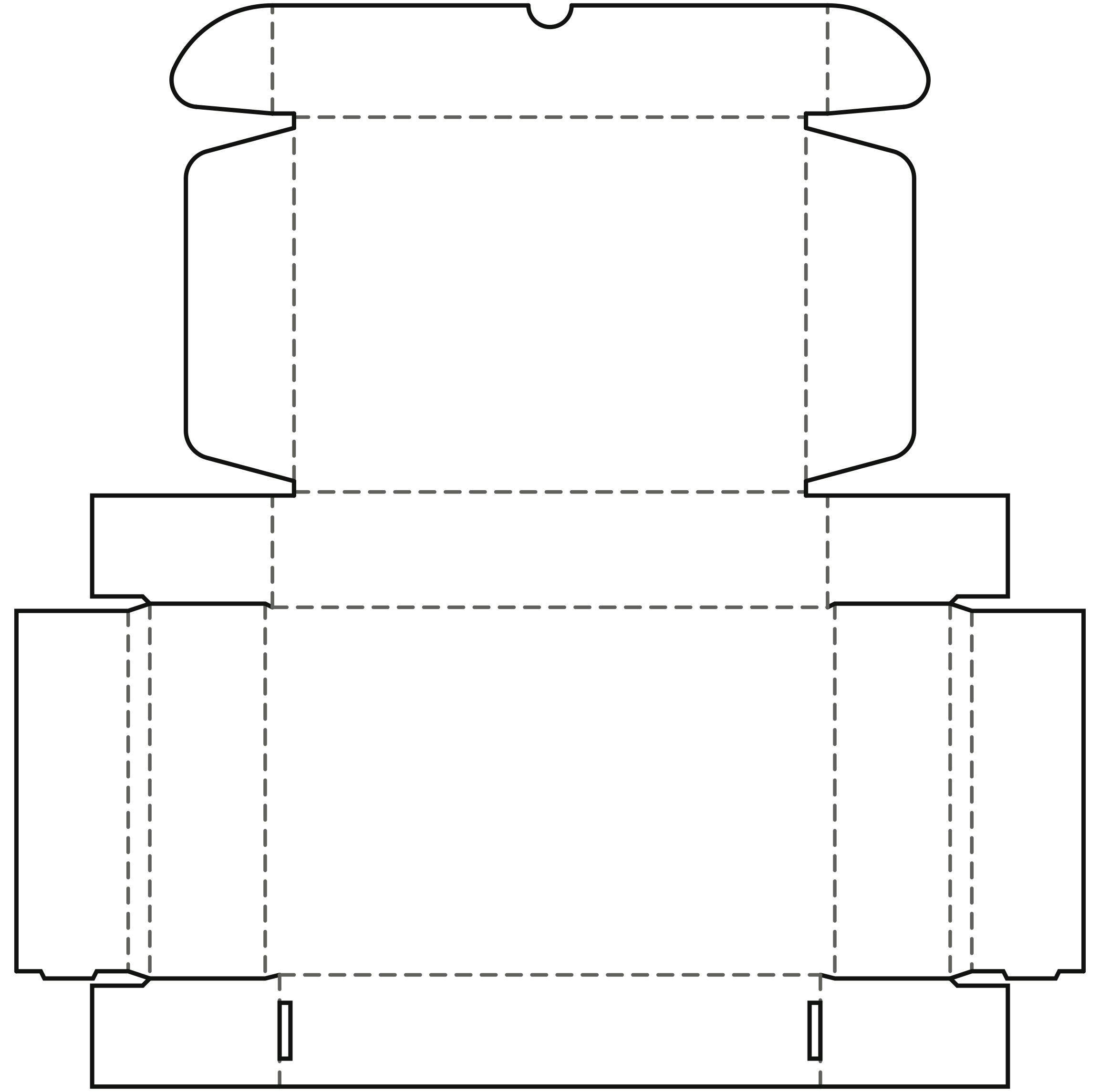
FEFCO 0427-2 · 4 configurable parameters
Create dieline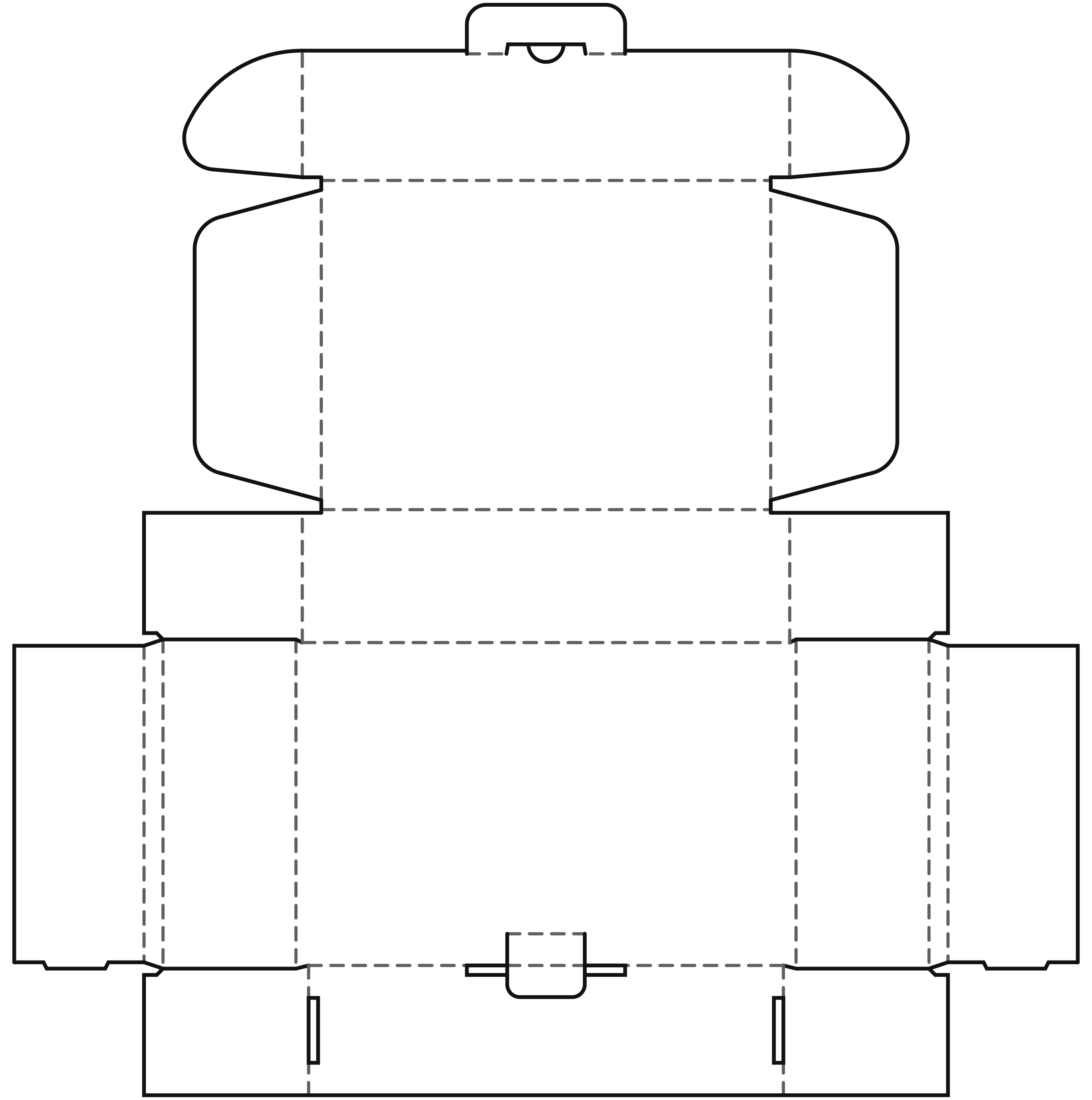
FEFCO 0427-3 · 4 configurable parameters
Create dieline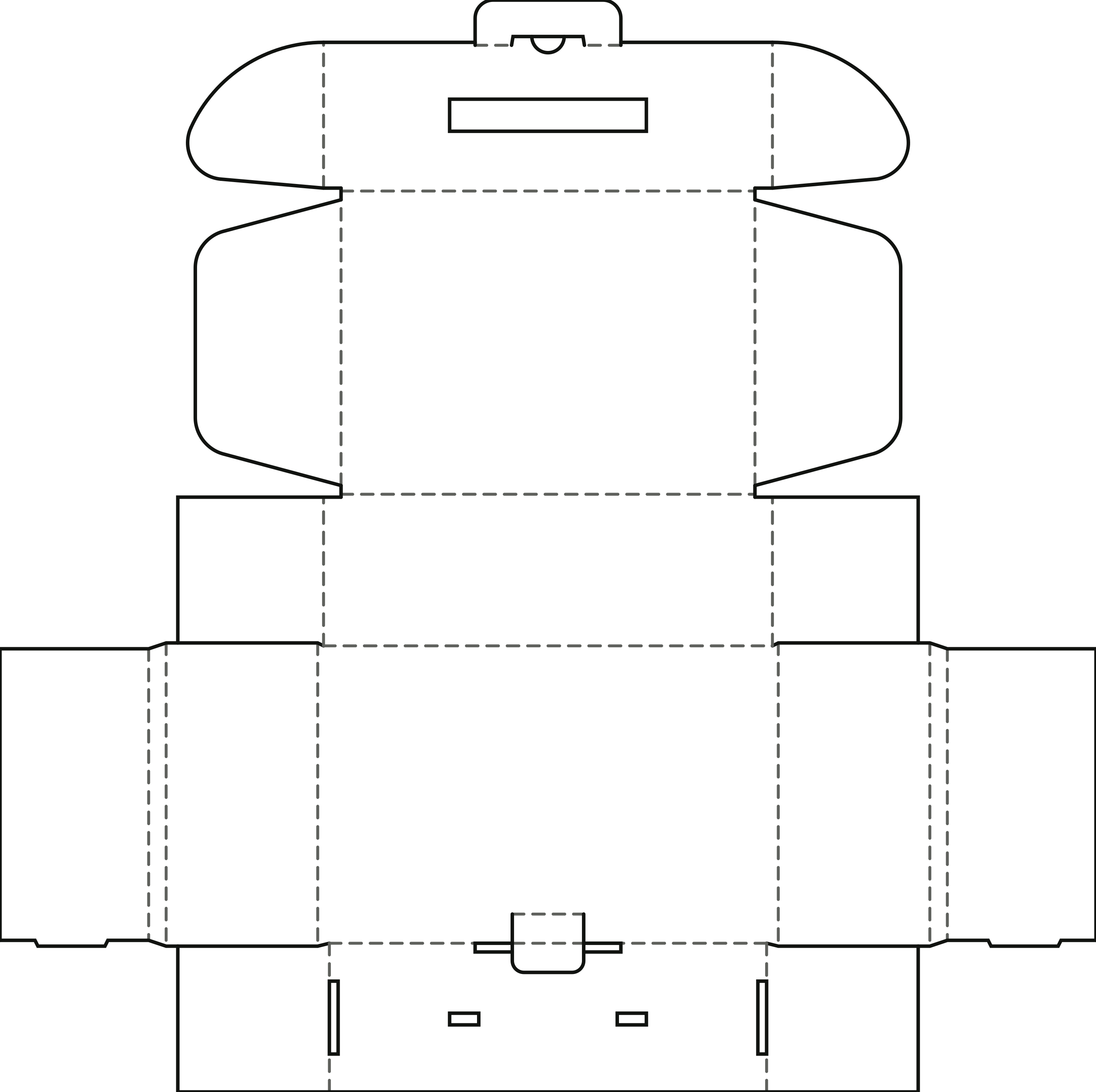
FEFCO 0427-4 · 4 configurable parameters
Create dieline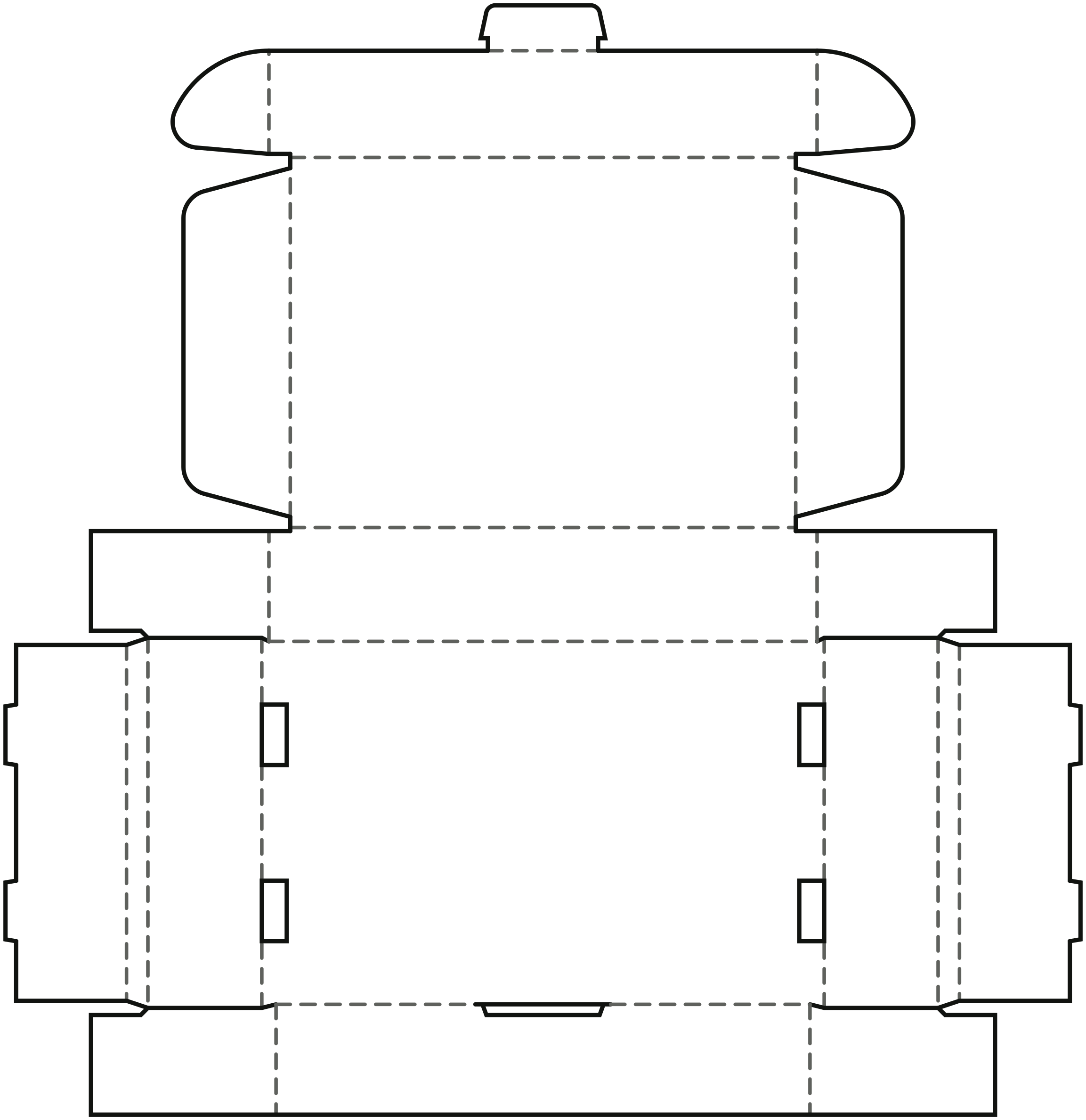
FEFCO 0427-5 · 4 configurable parameters
Create dieline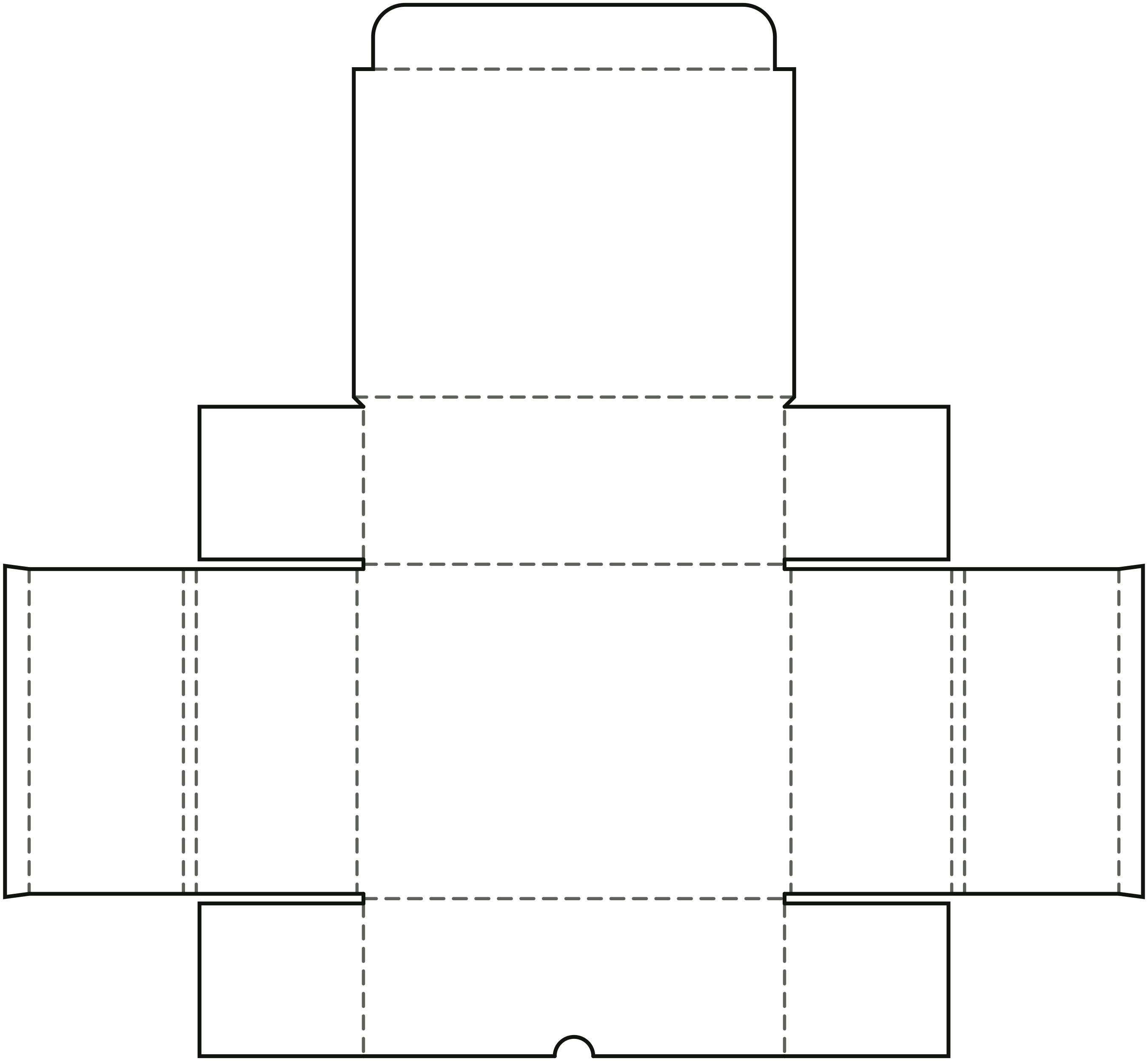
FEFCO 0428 · 4 configurable parameters
Create dieline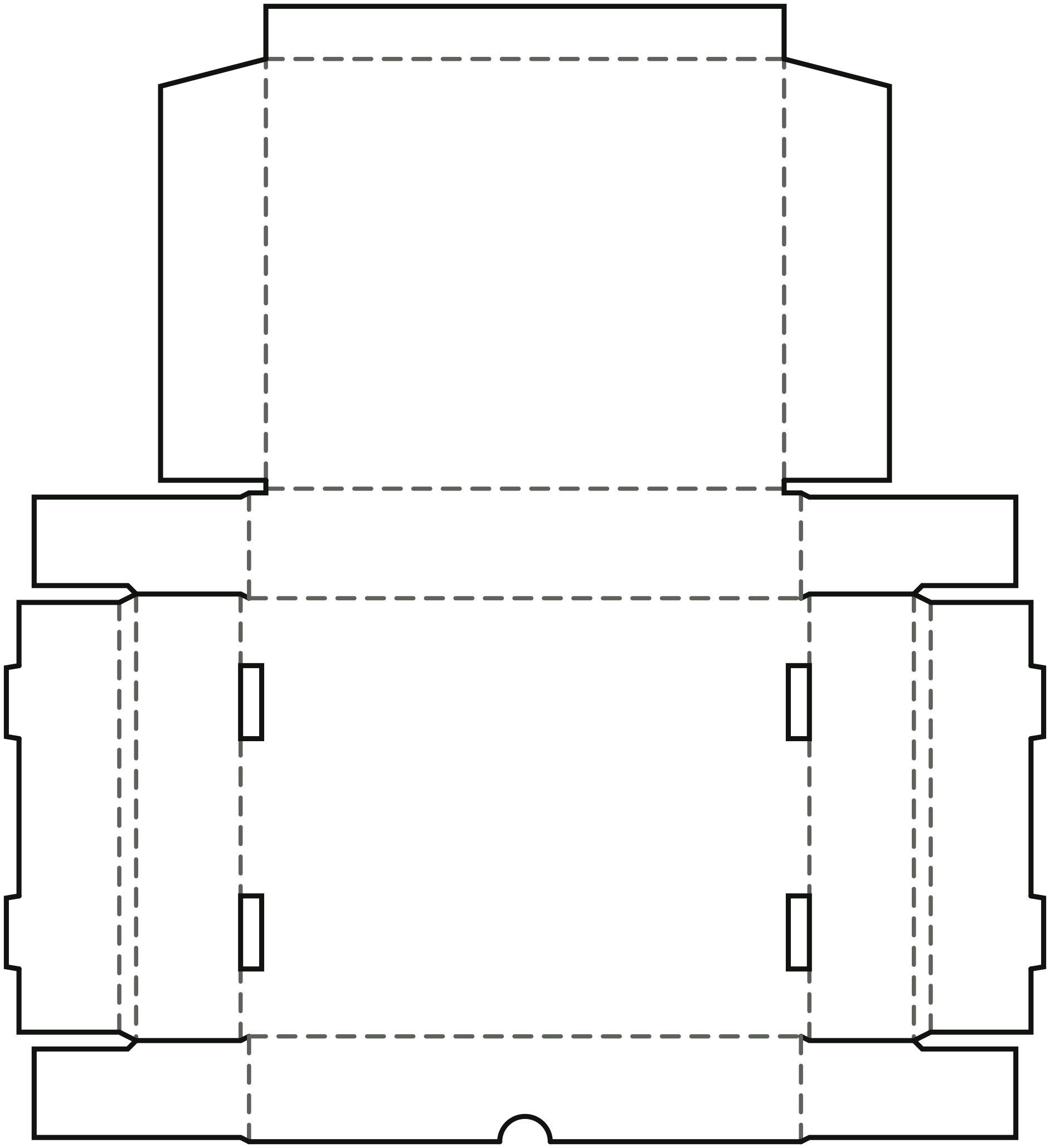
FEFCO 0429 · 4 configurable parameters
Create dieline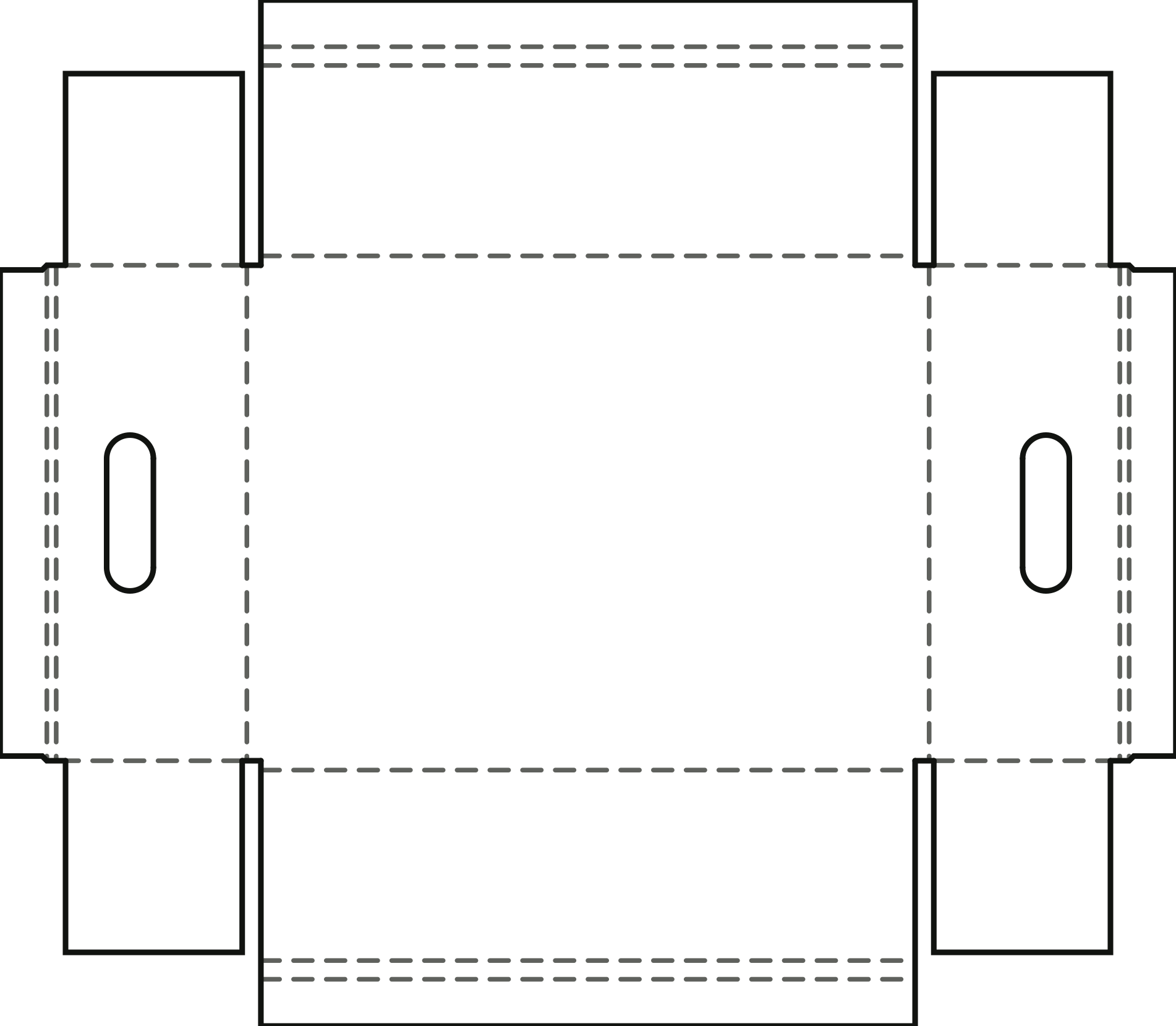
FEFCO 0430 · 4 configurable parameters
Create dieline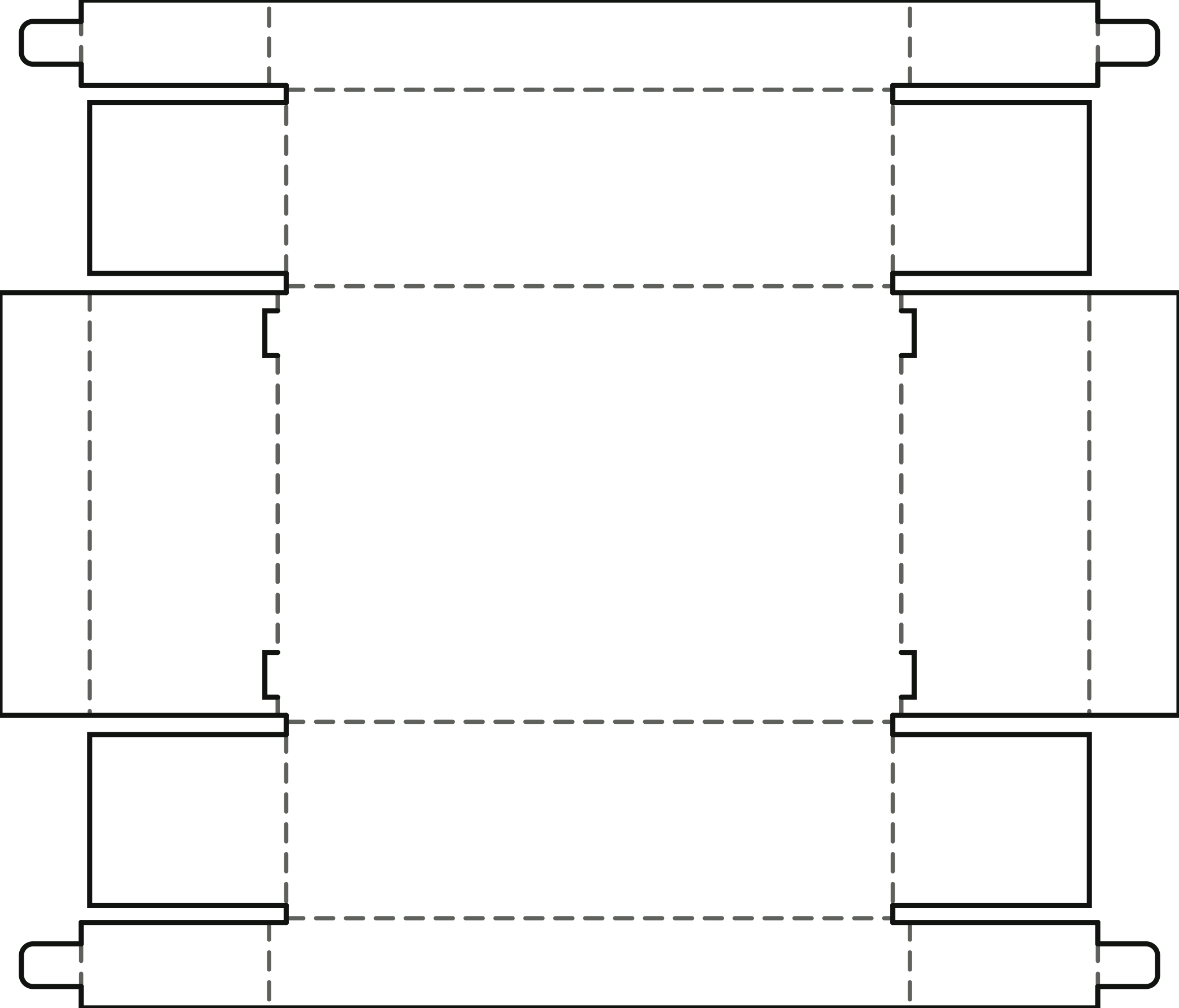
FEFCO 0431 · 4 configurable parameters
Create dieline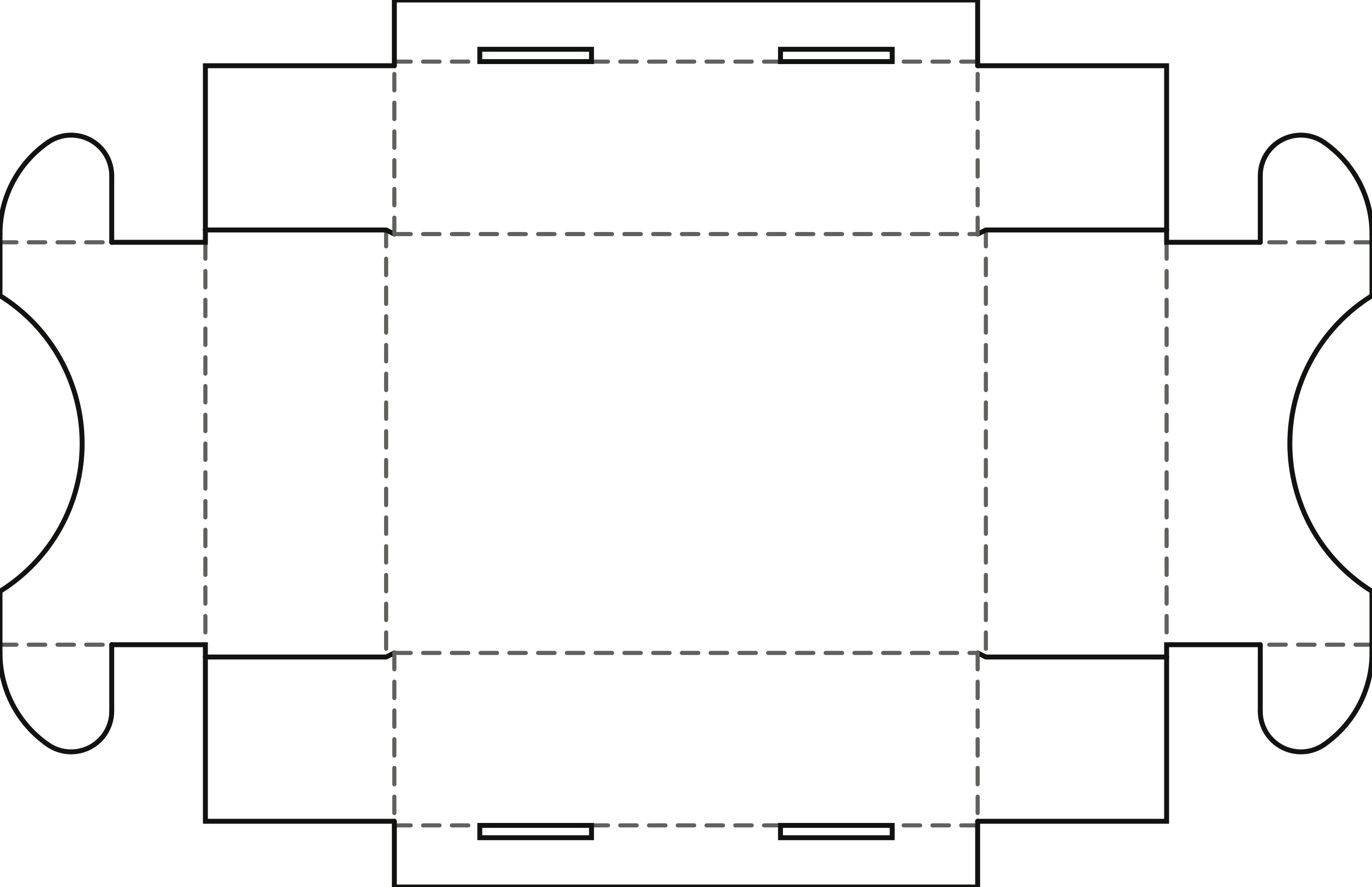
FEFCO 0431-1 · 4 configurable parameters
Create dieline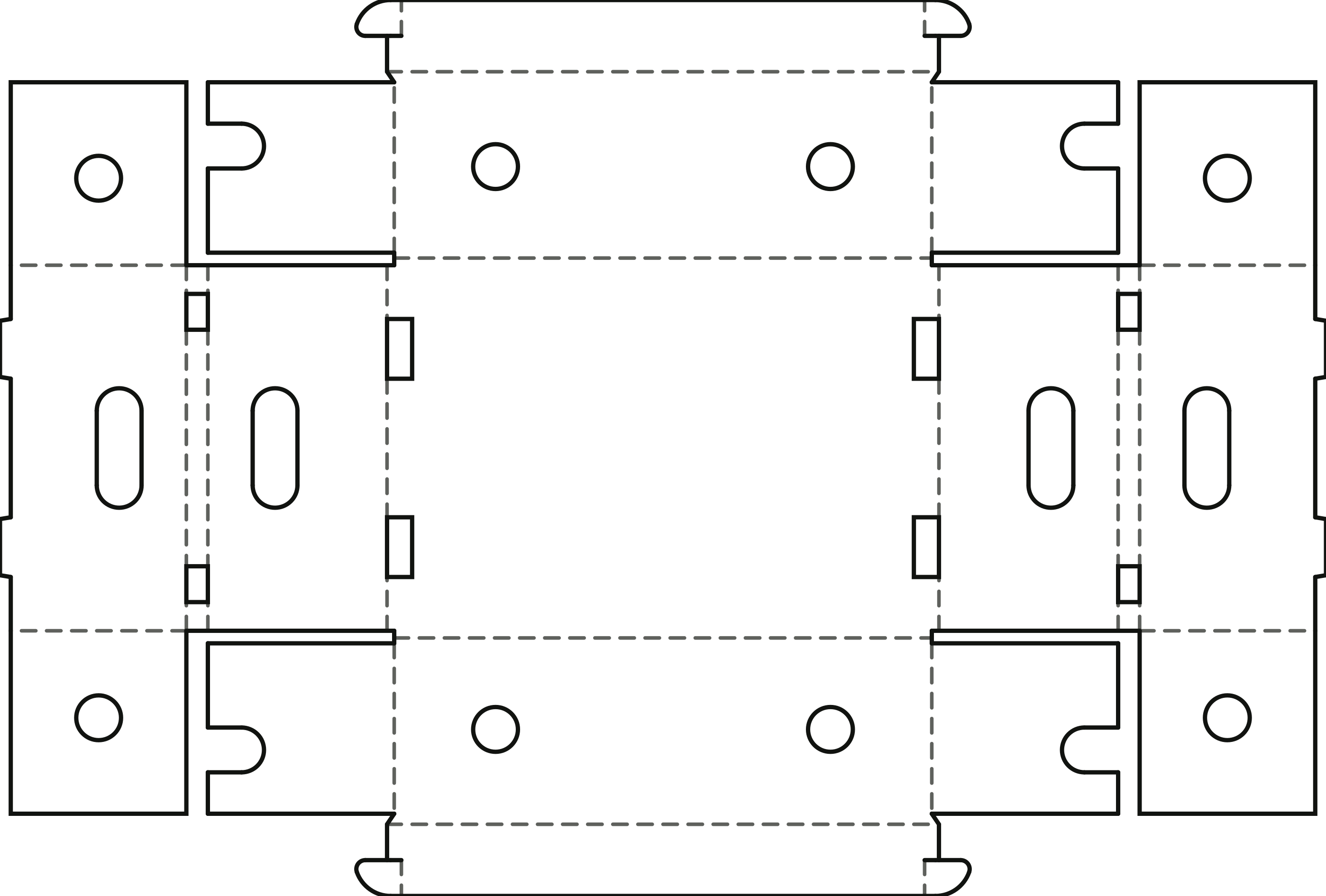
FEFCO 0432 · 4 configurable parameters
Create dieline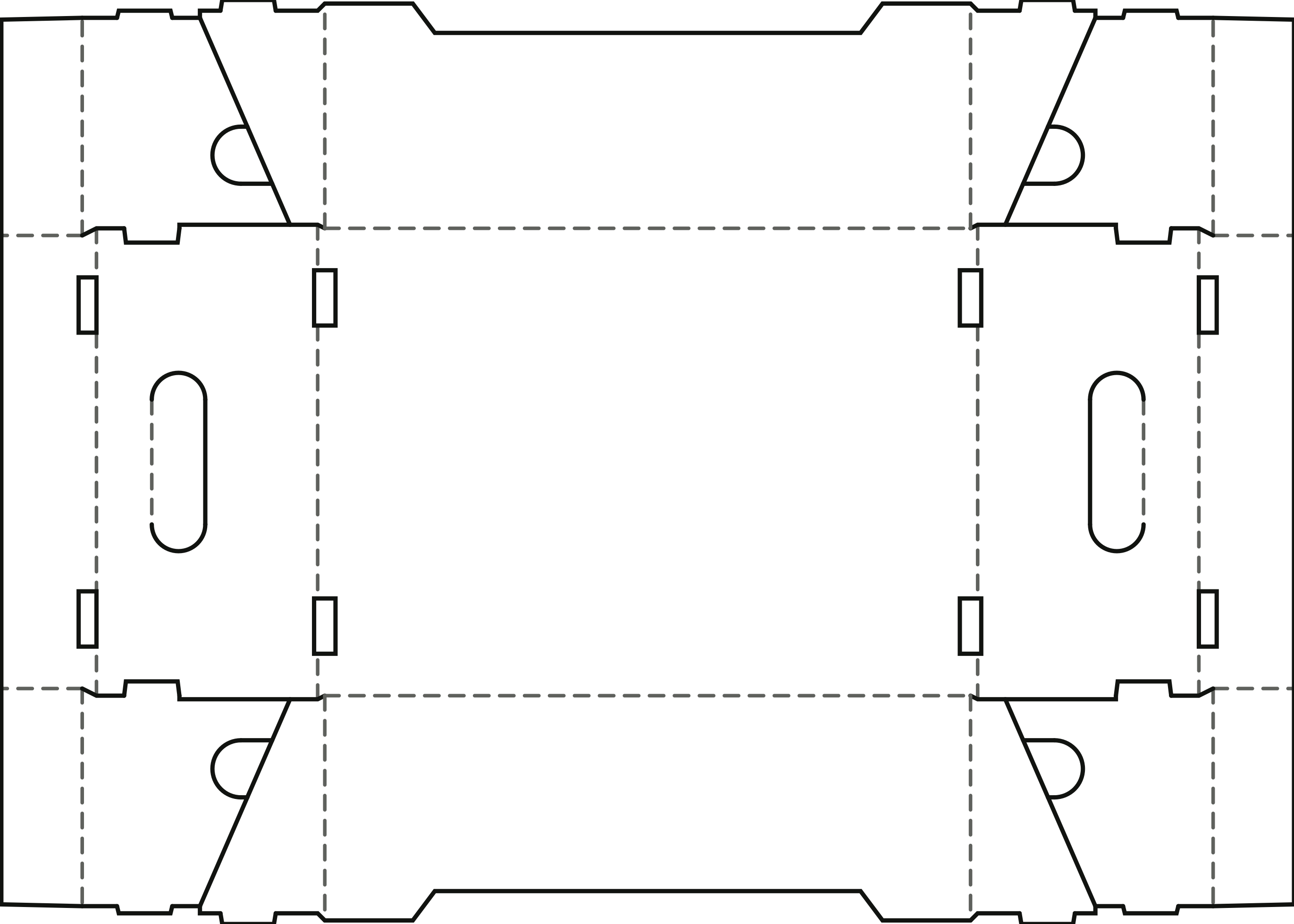
FEFCO 0432-1 · 4 configurable parameters
Create dieline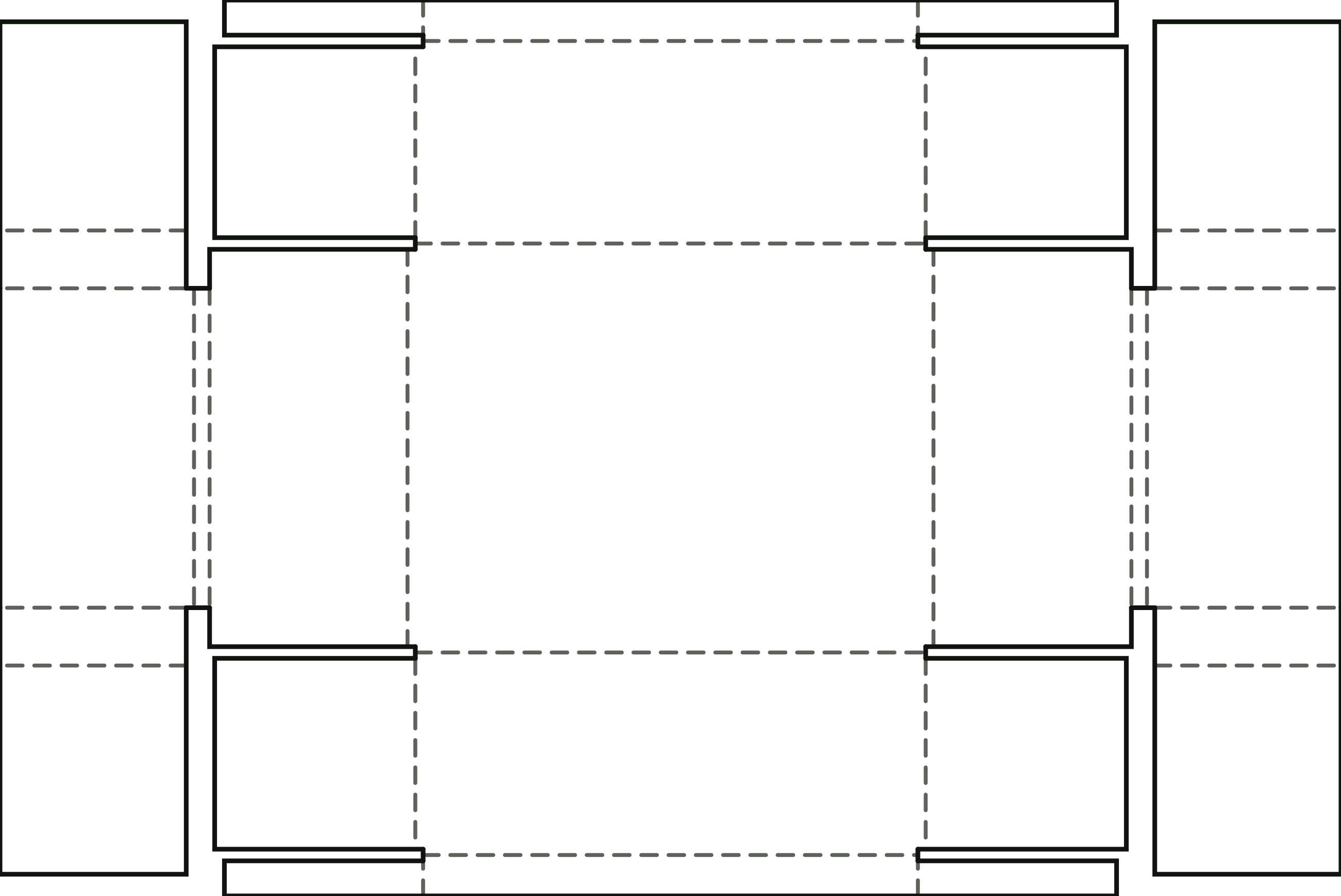
FEFCO 0433 · 4 configurable parameters
Create dieline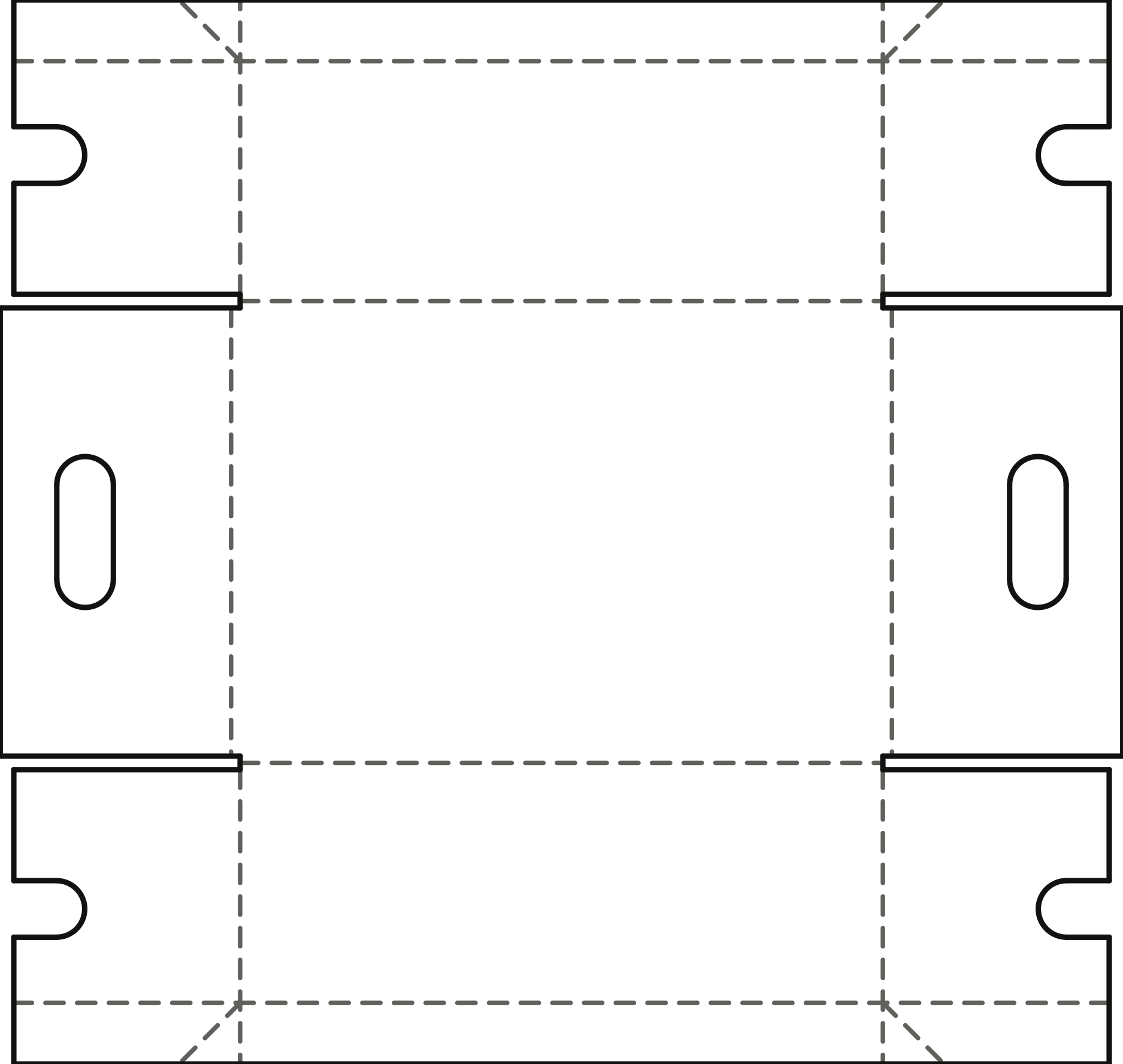
FEFCO 0434 · 4 configurable parameters
Create dieline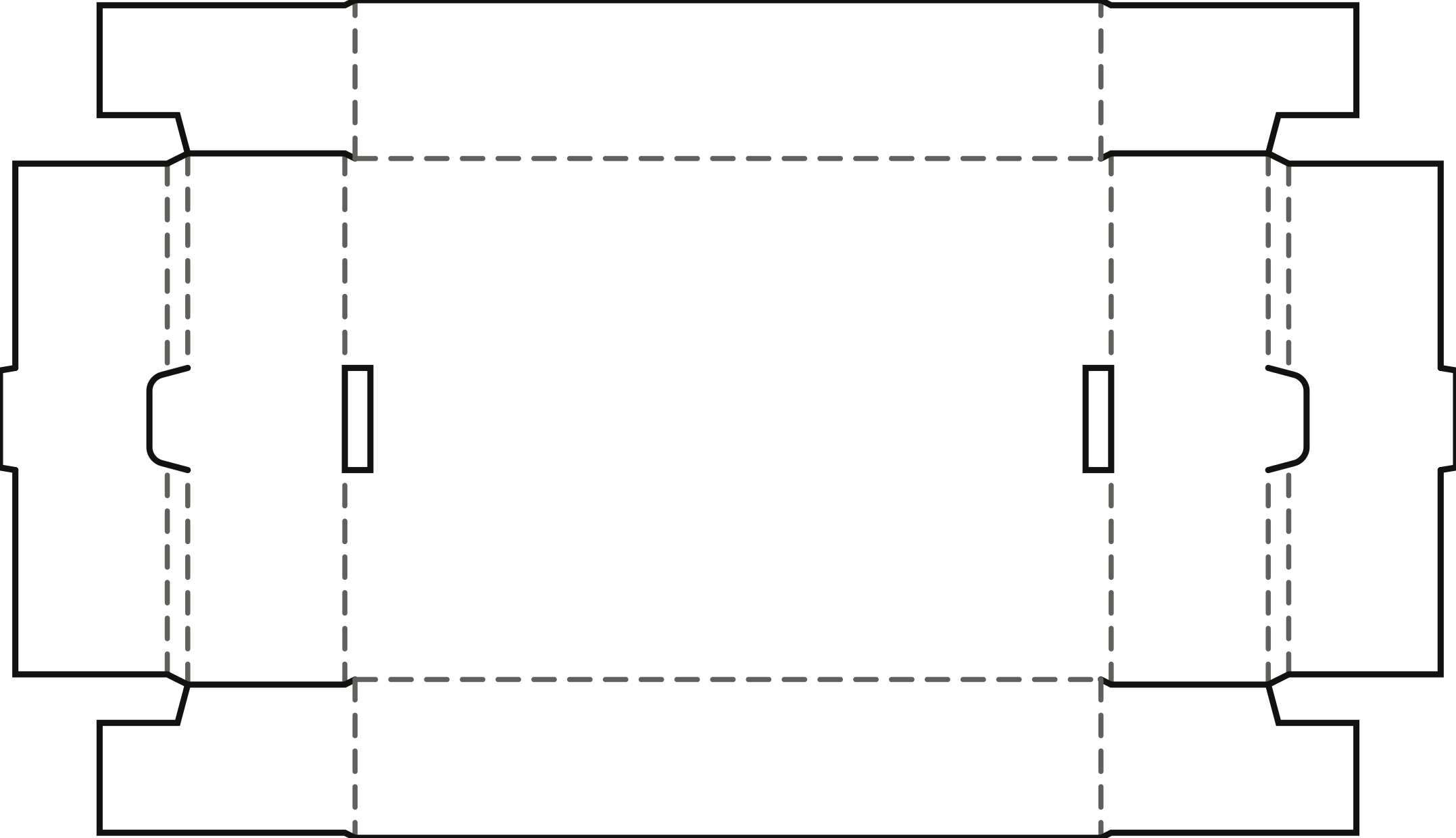
FEFCO 0435 · 4 configurable parameters
Create dieline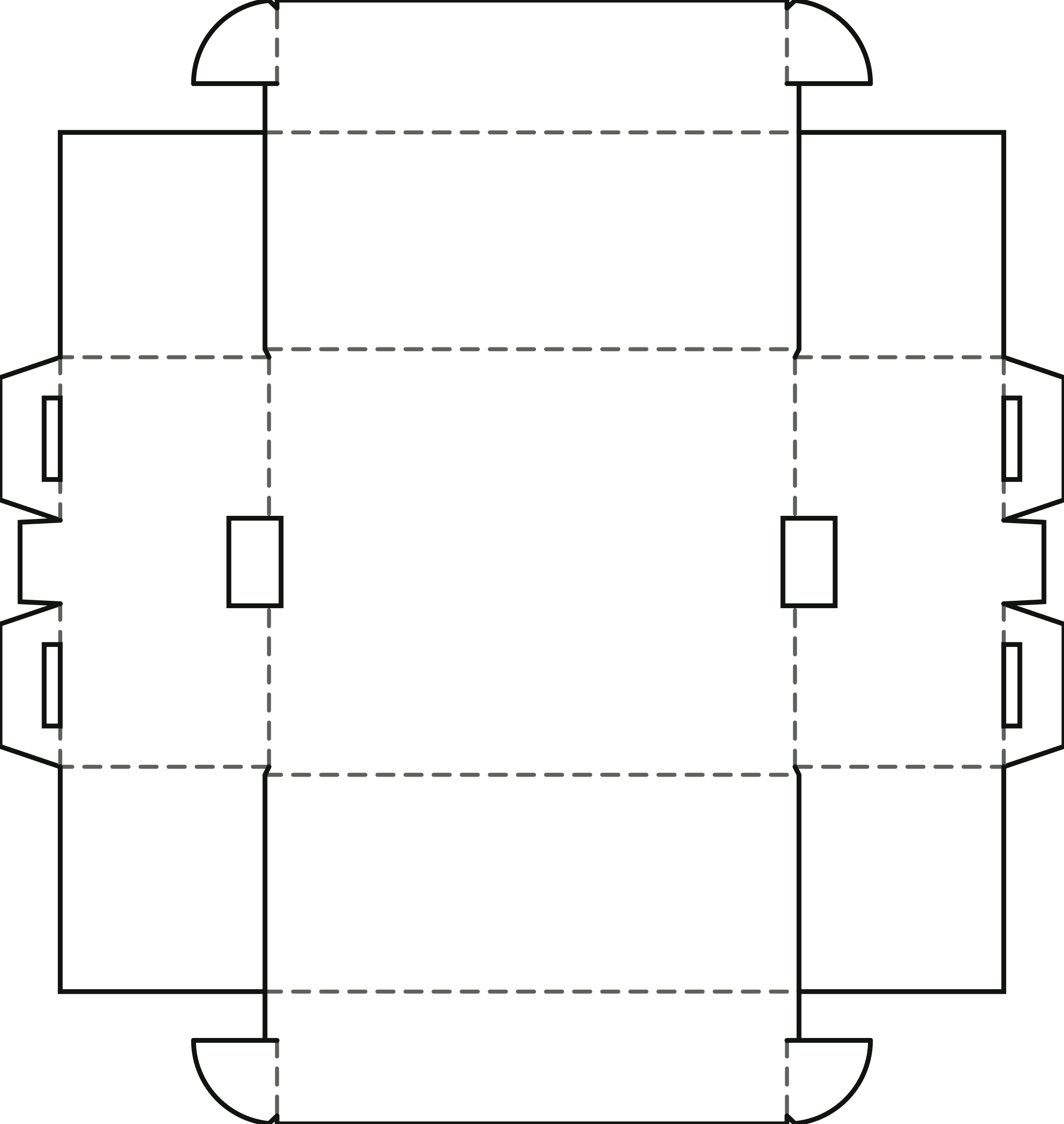
FEFCO 0436 · 4 configurable parameters
Create dieline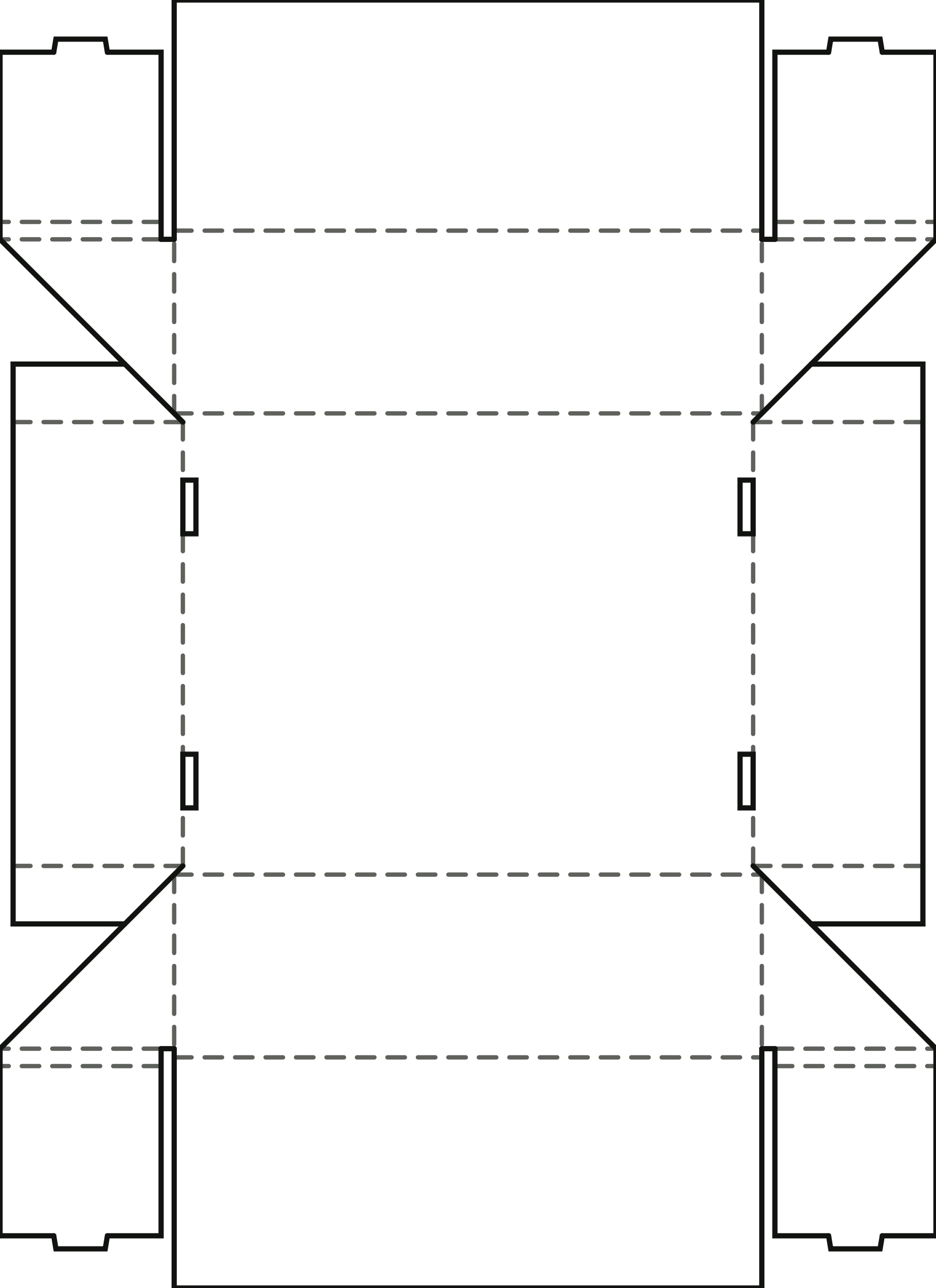
FEFCO 0437 · 4 configurable parameters
Create dieline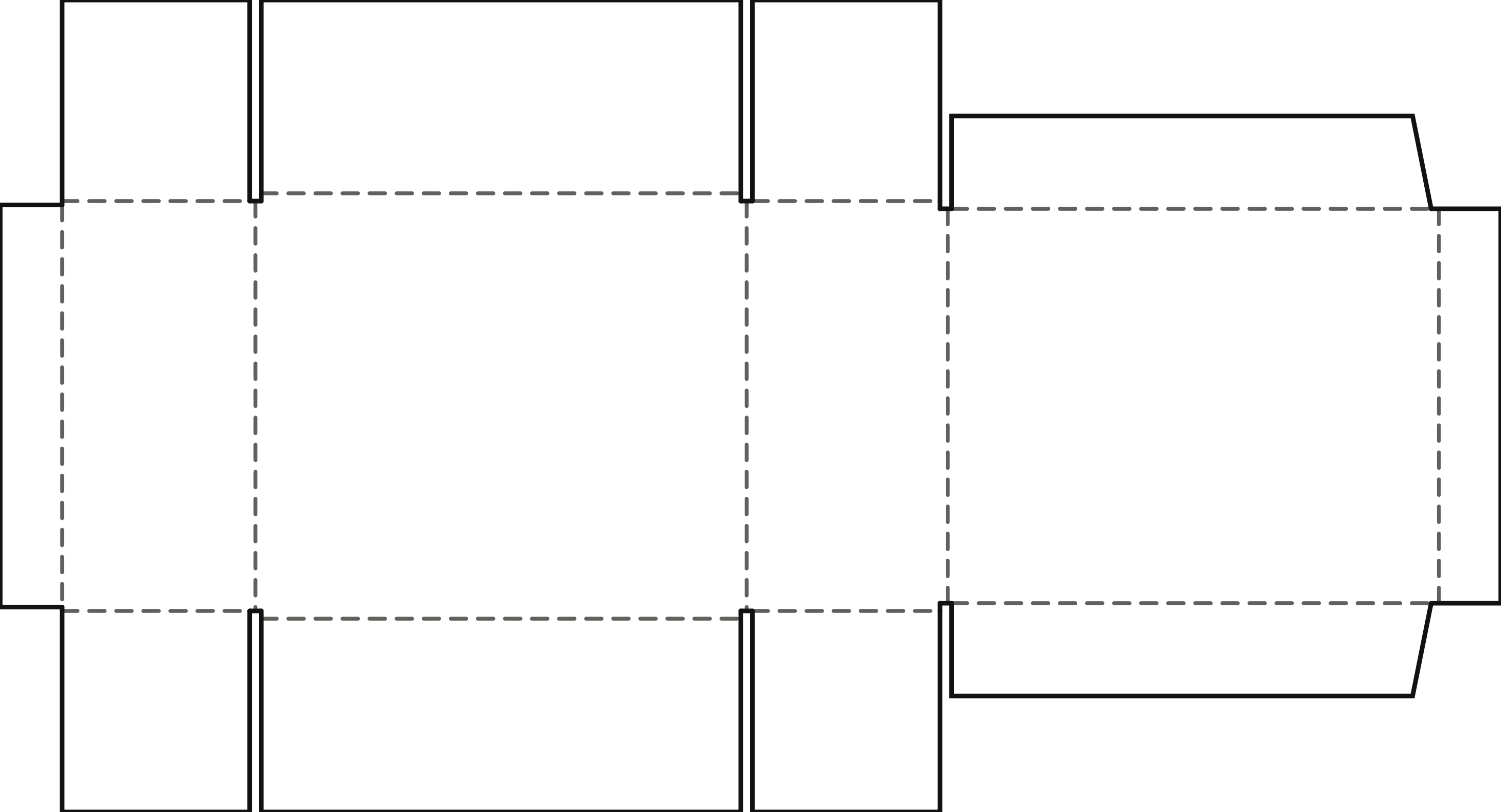
FEFCO 0440 · 5 configurable parameters
Create dieline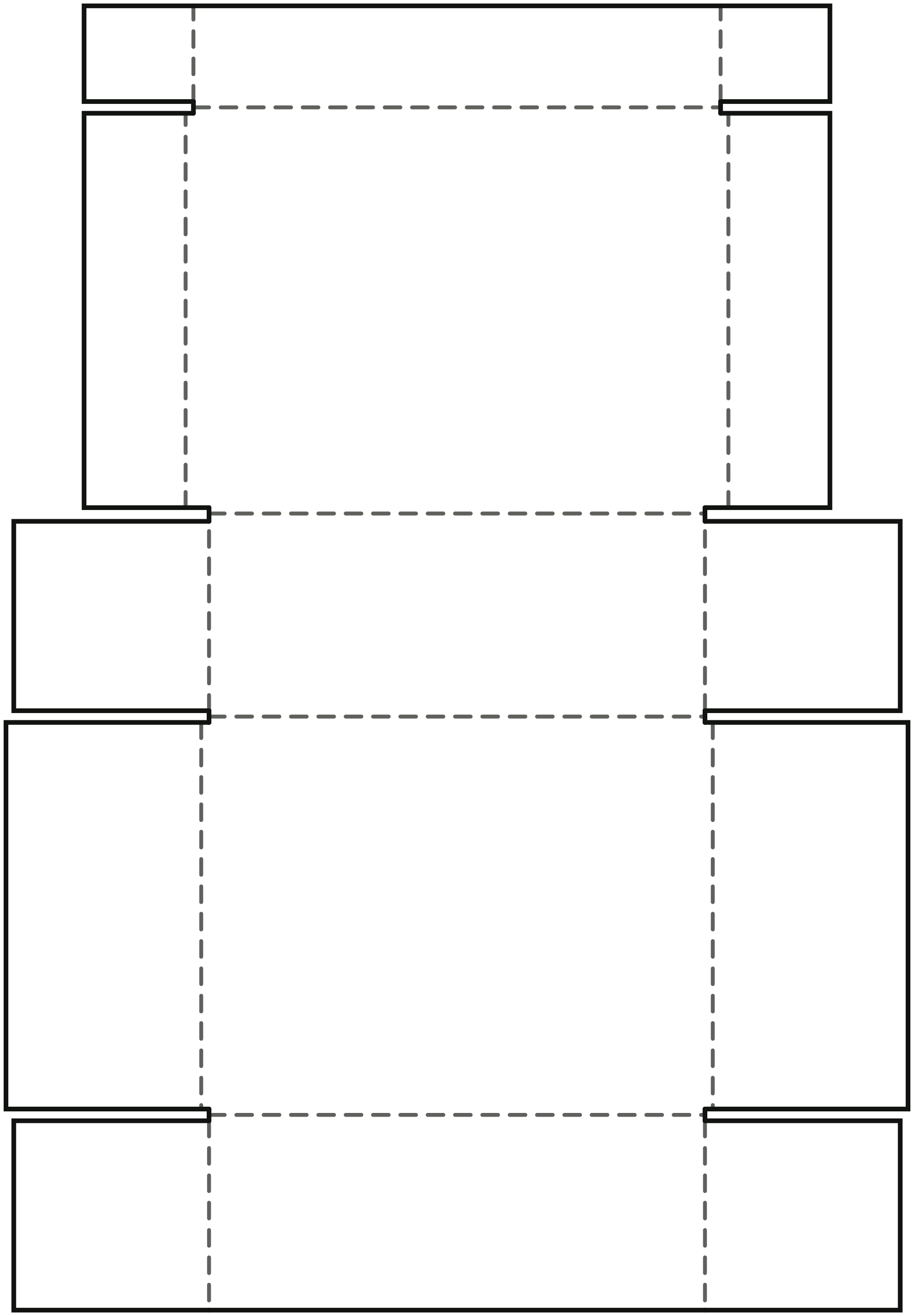
FEFCO 0441 · 4 configurable parameters
Create dieline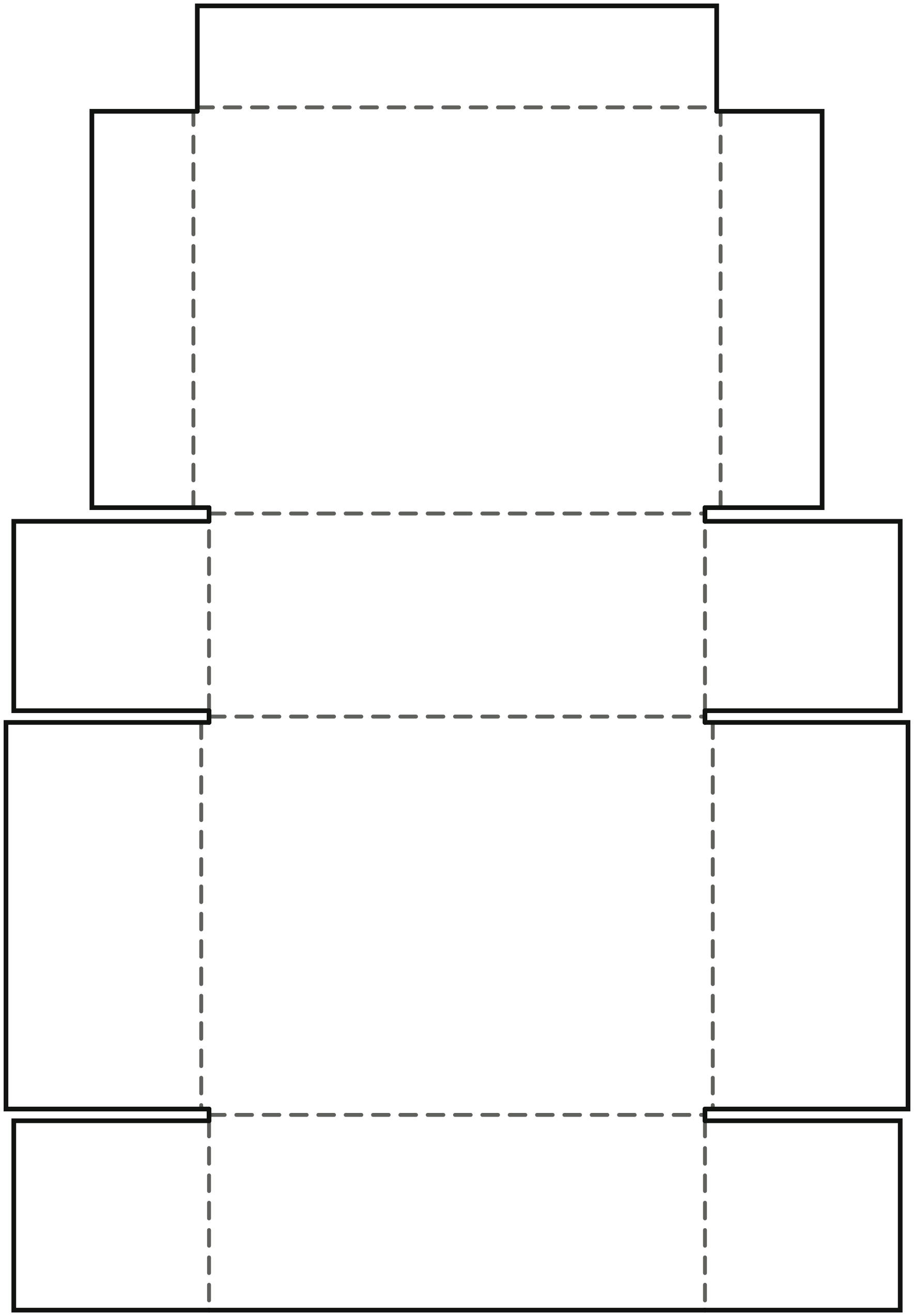
FEFCO 0441-1 · 4 configurable parameters
Create dieline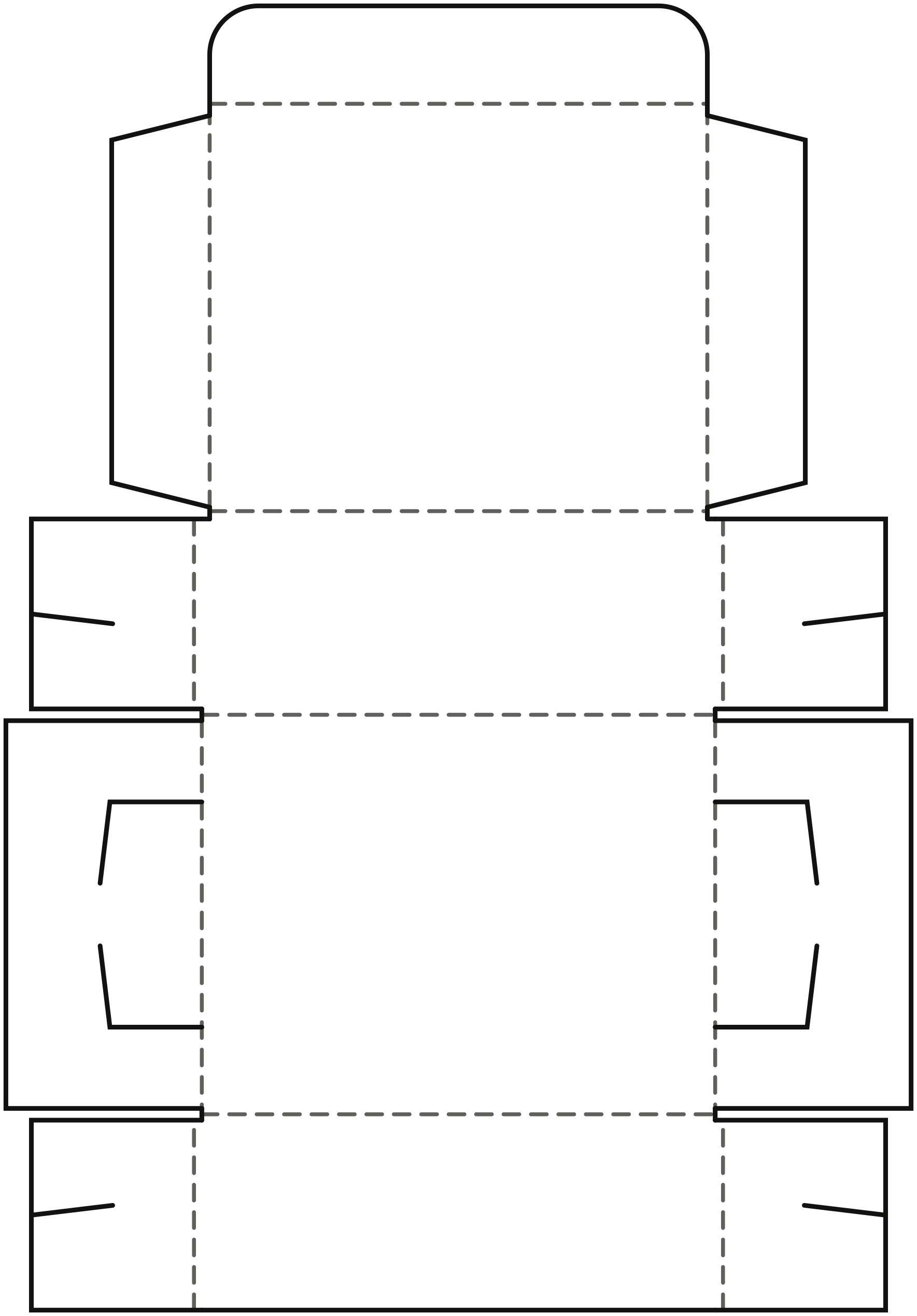
FEFCO 0442 · 4 configurable parameters
Create dieline
FEFCO 0443 · 4 configurable parameters
Create dieline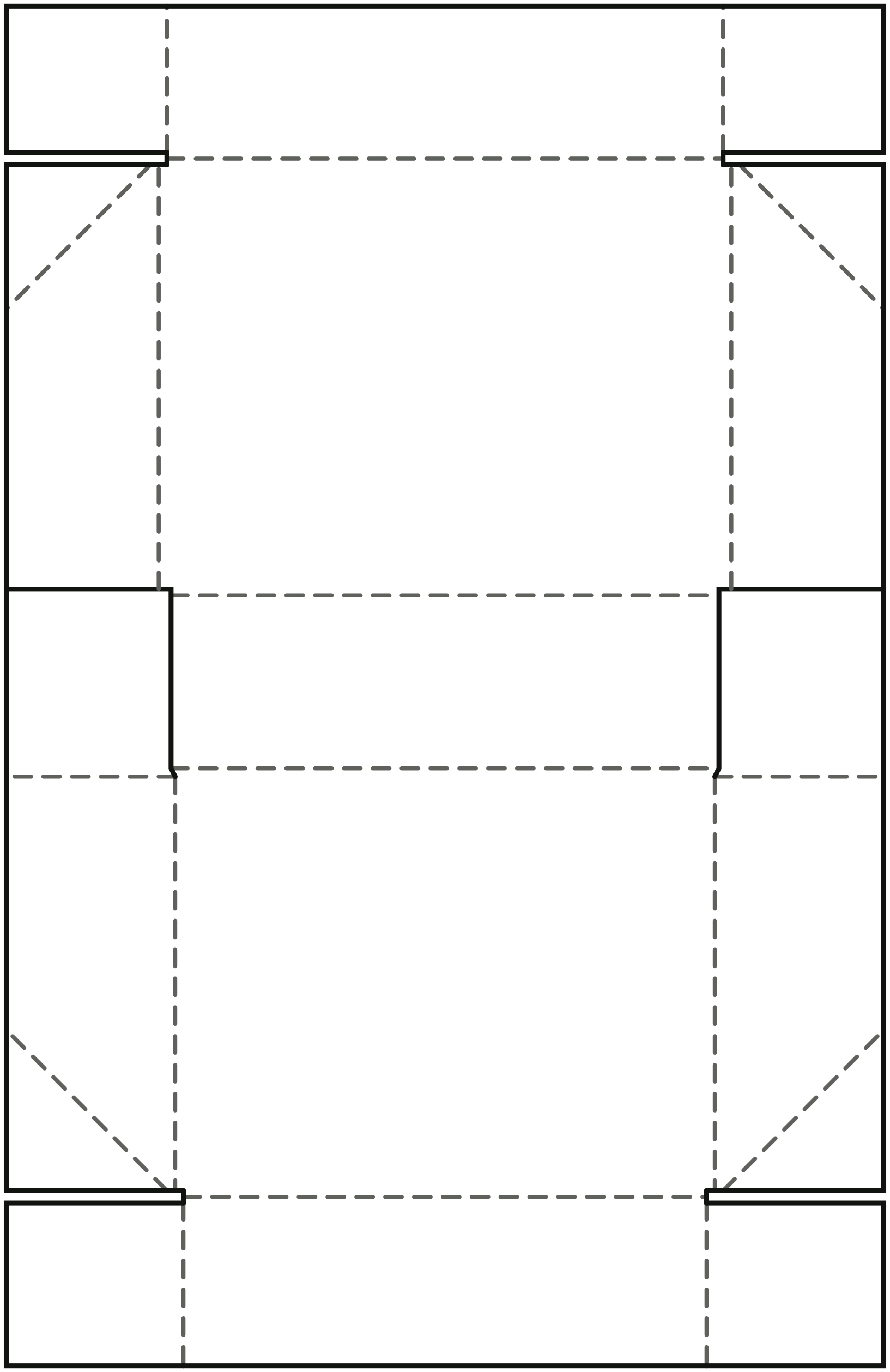
FEFCO 0759 · 4 configurable parameters
Create dieline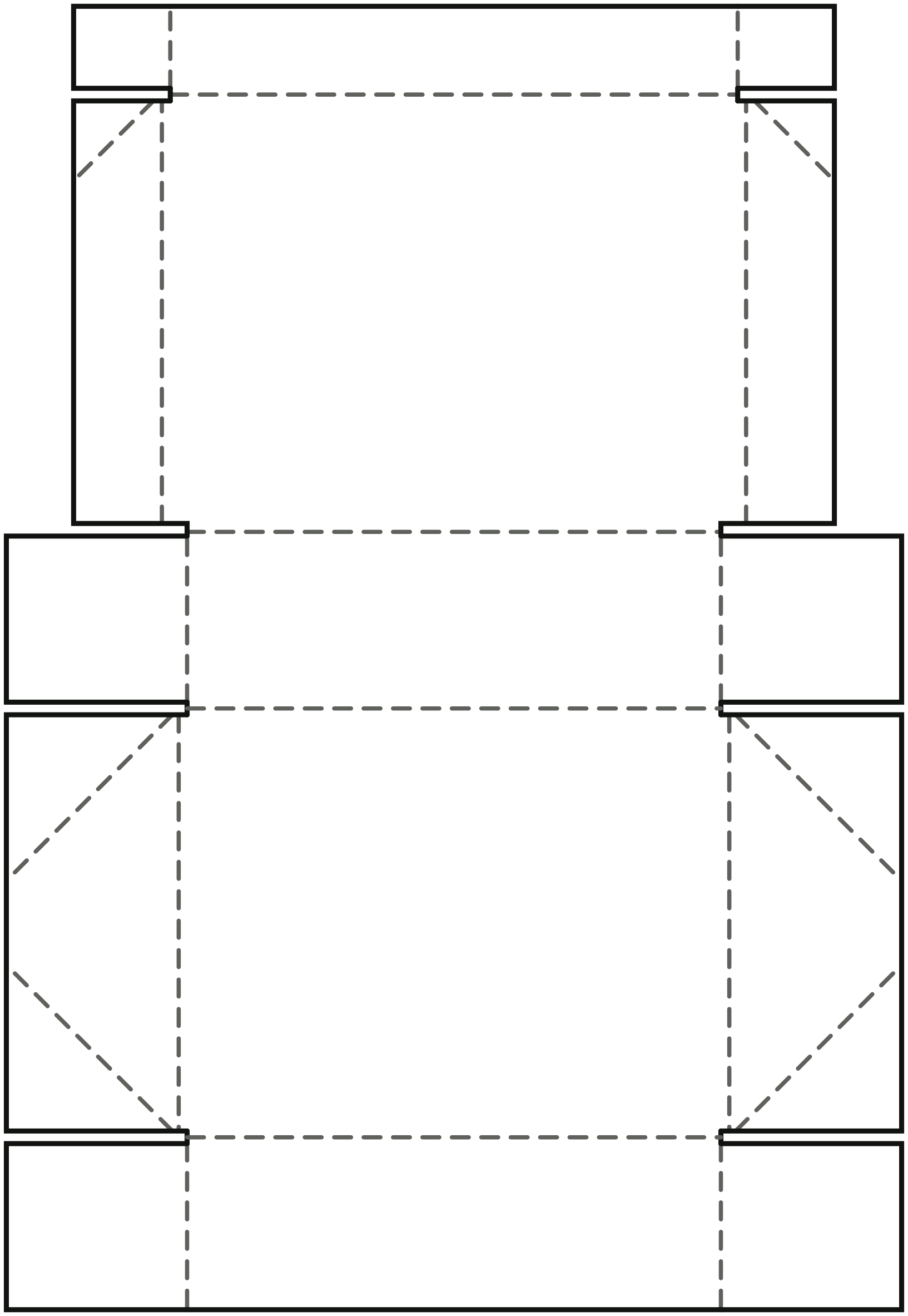
FEFCO 0761 · 4 configurable parameters
Create dieline