
ECMA · 2D DIELINE
ECMA A55.30.01.03
ECMA A55.30.01.03
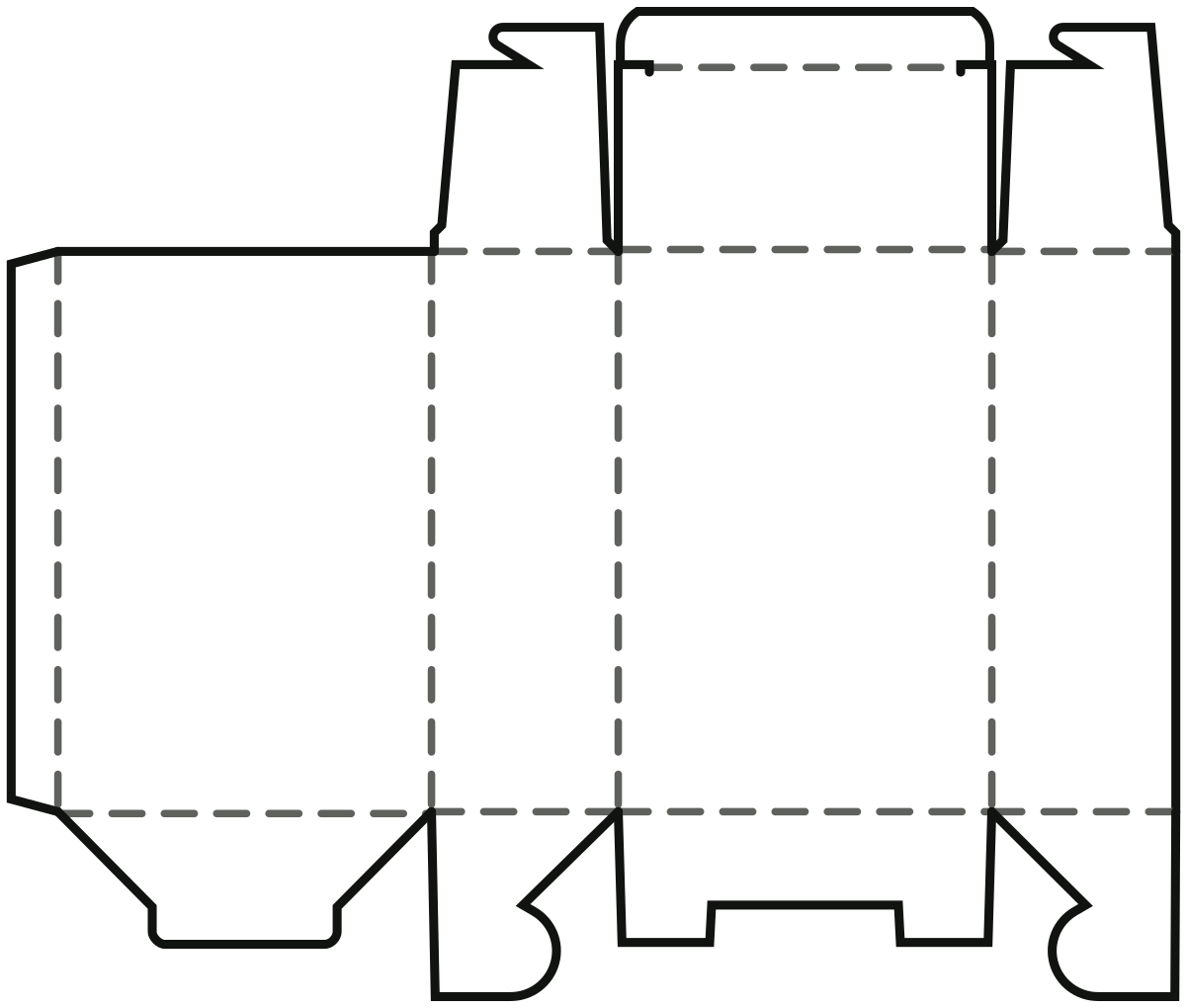
This structure is generated from the template-specific dimensions listed below. Change them in the editor and inspect the resulting cut and crease lines on the 2D canvas.
Create this dielineInteractive 3D folding is available in the preview studio.
STRUCTURE NOTES
About this construction.
Reading the code A55.30.01.03
A55.30.01.03 sits in ECMA group A: long-seam-glued folding cartons with rectangular surfaces. The carton is glued into a sleeve along its long seam, and the code's panels are numbered 1 to 4 starting from that glue seam. The two leading blocks describe the closure systems — the bottom first (55), then the top (30); the following blocks record which panel each closure's flap is connected to.
Here the bottom end uses the self-locking envelope closure system (55), and the top end uses the tuck-in flap closure with scissor lock (30).
Counting from the glue seam, the bottom flap hangs on panel 1 and the top flap hangs on panel 3.
How the closures behave
The closing panels fold in sequence and lock into each other without glue. The result holds itself shut through geometry alone — useful where adhesive at the point of packing is unwanted.
A tuck-in flap reinforced by interlocking dust flaps: the scissor lock resists the end being pushed open from inside, giving the closure noticeably more hold than a plain tuck without adding glue.
Typical uses
Self-locking envelope bases hold weight without glue at the packing point, a common choice for medium-weight retail goods packed by hand.
The scissor-locked variant suits contents that press against the closure — heavier or shifting products where a plain tuck could be pushed open in transit.
Dimensions and board
The parameters above — length, width, depth and paper thickness — drive the whole blank. Board caliper is not a footnote: tuck clearances, lock engagement and panel fit all scale with it, which is why it is a first-class input to the parametric model rather than an allowance you add by hand.
Every value is validated against the template's supported range, and the 2D dieline and 3D fold preview regenerate together from the same structure. Confirm final board grade, grain direction and tolerances with your converter before production.
COMMON QUESTIONS
Quick answers about this template.
What is ECMA A55.30.01.03?
ECMA A55.30.01.03 is a long-seam-glued folding carton in ECMA group A (base: self-locking envelope closure system; top: tuck-in flap closure with scissor lock).
Which dimensions does the ECMA A55.30.01.03 dieline need?
4 parameters drive the blank: L (length), W (width), D (depth), Paper thickness (mm, um). Each value is validated against the template's supported range, and the whole dieline regenerates from them.
Can I see how ECMA A55.30.01.03 folds before cutting it?
Yes. The interactive 3D fold preview and the 2D dieline are generated from the same parametric structure, so the fold you watch on screen is the geometry of the sheet you cut. Open the template in the preview studio to fold it at your own dimensions.